
By SHABAN MAKOKHA
July 30, 2026|For 62 years, Henry Okusinyo had made peace with misery.
Every dark cloud that gathered above Mumias West sent tremors through his frail body. Rain didn’t just mean muddy footpaths and wet clothes. It meant another sleepless night in his tiny grass-thatched house in Nyapeta village, Etenje ward—where water poured through countless holes like a sieve, drowning his bedding, his few possessions, and whatever remained of his dignity.
Many nights, he sat awake until dawn, even after the rain stopped. There was nowhere dry enough to lie down.
Neighbours watched his suffering in silence. Some offered prayers. Others wished they could do more. But poverty had become an unwelcome roommate that refused to leave.
That painful chapter ended this week.
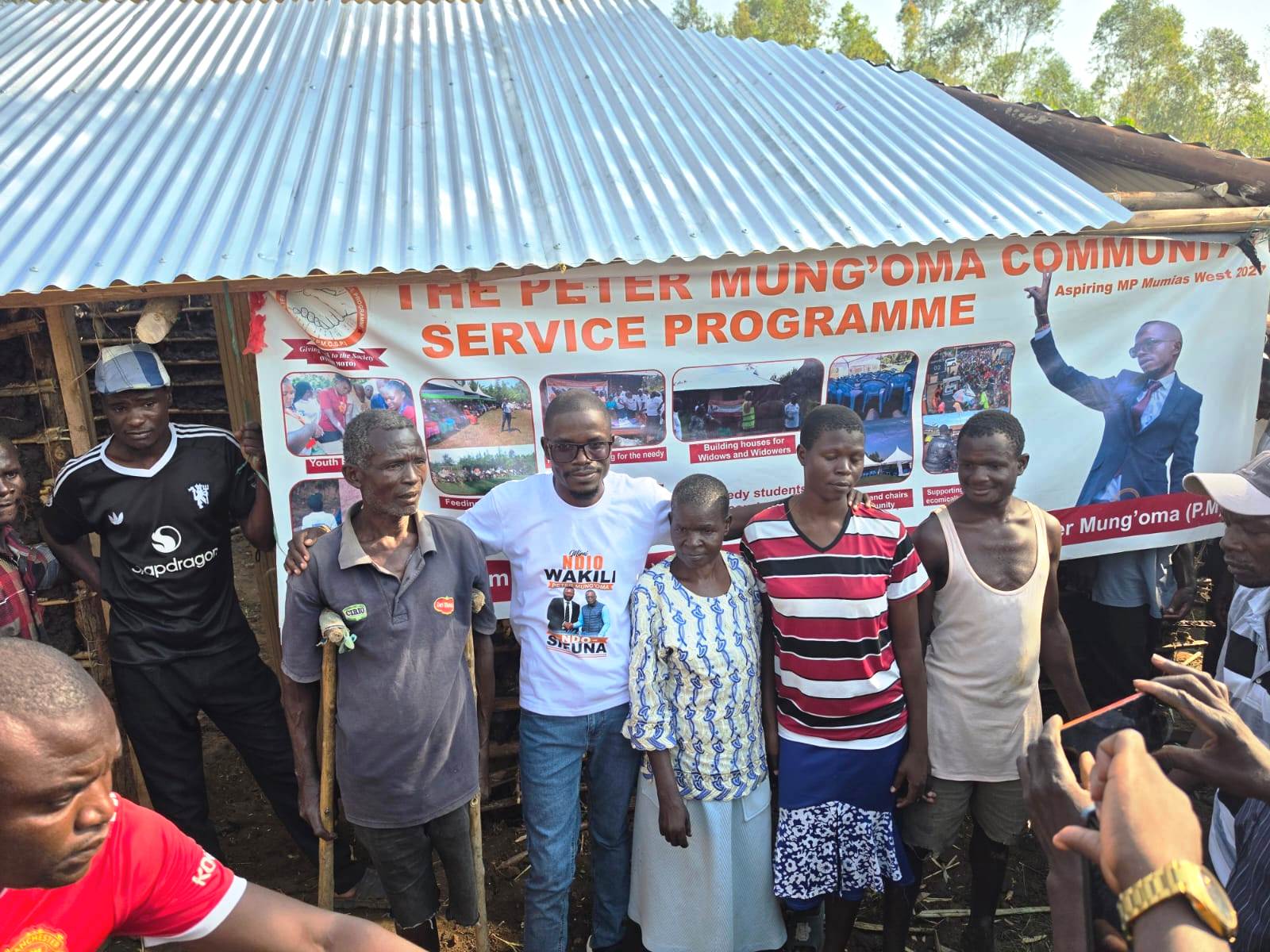
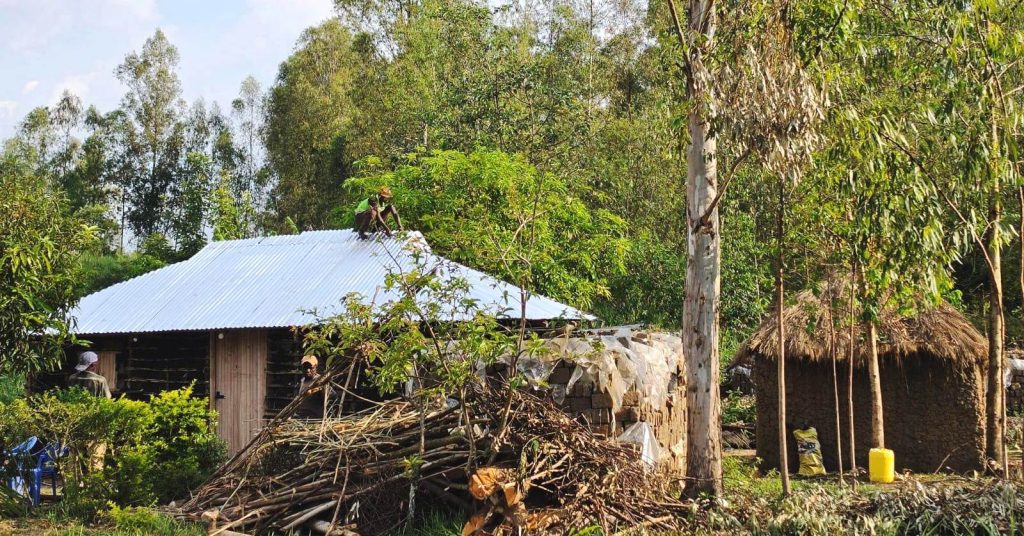
When Mumias West parliamentary aspirant Wakili Peter Mung’oma handed Okusinyo the keys to a brand-new 40-iron-sheet house, the elderly man received something he had long abandoned hope for—a safe, dignified place to call home.
As family and neighbours gathered for the emotional handover, Okusinyo’s tears flowed freely.
“For the first time in many years, I will sleep peacefully without worrying about rainwater pouring onto my bed,” he said, his voice cracking with emotion. “This is more than a house. It is a restoration of my dignity. I have suffered for many years, and today I feel that God has remembered me through Mheshimiwa Mung’oma.”
Outside, neighbours lingered as the evening sun painted the gleaming iron sheets in golden light. Inside, an elderly man arranged his bedding without once glancing upward. For the first time in years, the roof above him was no longer a symbol of despair—it had become a symbol of hope.
FOR MOST POLITICIANS, moments like these are campaign photo-ops. But for Mung’oma, the old leaking house awakened memories he has carried like scars since childhood.
Standing beside Okusinyo’s new home, he didn’t begin with politics. He began with his story.
A story of poverty. A story of sleeping on a cold floor because his family couldn’t afford beds. A story of rainy nights that stretched into eternity.
“When I see an elderly man living in a leaking house, I do not just see another poor family,” Mung’oma said, his voice heavy with recollection. “I see my own childhood.”
He recalled growing up in a modest home where every rainy season became a nightmare.
“When it rained, our house leaked everywhere. We spent nights moving from one corner to another trying to escape the water. Sometimes we never slept at all.”
Those memories, he said, forged his understanding of leadership. “I know what poverty looks like because I have lived it. I know the pain of watching your parents struggle and feeling helpless.”
For him, leadership is not merely about winning elections. It is about ensuring fewer families endure the hardships that defined his early years.
ACROSS MUMIAS WEST, Mung’oma has become known for acts of charity that supporters say transcend political mobilization.
He has opened constituency offices, insisting that leadership must remain accessible to wananchi year-round—not just during campaign season.
From these offices, residents seek assistance, advice, and support. His team has organized food donations for vulnerable families, paid school fees for bright but needy students, and repaired or rebuilt several crumbling homes.
Henry Okusinyo’s new house now stands as the latest symbol of that commitment.
Supporters describe these interventions as practical compassion, not campaign rhetoric. Critics may dismiss them as politics. But beneficiaries simply call them life-changing.
EDUCATION occupies the heart of Mung’oma’s vision for Mumias West.
No child should abandon school because of poverty, he insists. If elected, he has pledged to establish a robust bursary programme modelled on successful initiatives in Khwisero and Kiharu constituencies, where thousands of learners have received financial support.
“Our children should compete equally with others,” he declared. “Poverty should never determine who receives education.”
He believes investing in education is the surest path to breaking the cycle of poverty. Every child who stays in school, he says, represents another family with hope for a better tomorrow.
Beyond bursaries, Mung’oma wants to introduce school feeding programmes in public schools across the constituency.
“A hungry child cannot fully concentrate in class. If we feed our learners, we improve attendance, performance, and their future,” he noted.
Teachers have long argued that nutrition directly affects learning outcomes. For Mung’oma, ensuring children receive meals in school improves not only academic performance but also reduces absenteeism and dropout rates.
HIS DEVELOPMENT AGENDA also prioritizes basic infrastructure.
He wants more villages in Mumias West connected to clean water, reducing the burden on women and children who walk long distances in search of the precious commodity.
Electricity is another priority. Many students continue studying under dim kerosene lamps while businesses lose income because trading ends when darkness falls. Connecting more homes to electricity, he argues, would unlock economic opportunities, improve security, and give children a better environment to learn.
BEYOND CONSTITUENCY MATTERS, Mung’oma has entered the national political conversation.
He has drummed up support for Nairobi Senator Edwin Sifuna, describing him as one of the country’s most courageous and articulate leaders capable of strengthening Kenya’s opposition politics. The country, he argues, needs leaders willing to speak fearlessly on behalf of ordinary citizens and hold power to account.
WHETHER PETER MUNG’OMA eventually wins the Mumias West parliamentary seat will ultimately be decided by voters.
But as Henry Okusinyo prepares to spend his first rainy season under a roof that does not leak, one thing is already clear—for Okusinyo, this was never about politics. It was about sleeping peacefully again.
For Mung’oma, it was about remembering where he came from.
The memories of sleeping on a cold floor, listening helplessly as rainwater dripped through the roof, have never left him.
Perhaps that explains why every leaking house he encounters reminds him of the little boy he once was.
A boy who dreamed that one day, if life ever smiled upon him, he would ensure others never endured the suffering his family experienced.