
By SHABAN MAKOKHA
October 5, 2026| After more than eight decades of worship, Mumias Muslims are seeking Sh156 million to replace their ageing mosque with a landmark two-storey Islamic centre that will accommodate a growing congregation, serve generations to come and preserve the town’s rich Muslim heritage.
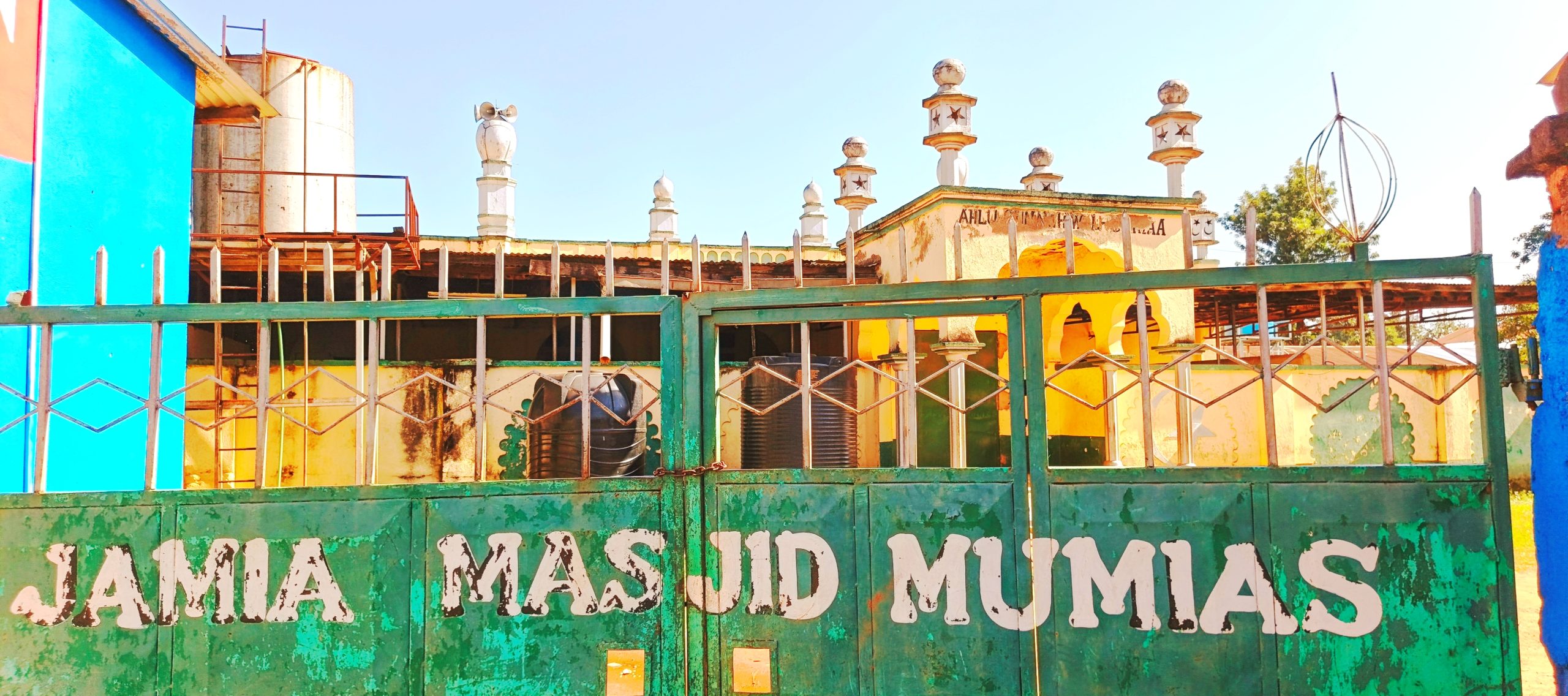
For more than 80 years, the call to prayers has echoed across Mumias from a mosque that has witnessed the town’s transformation and stood as a spiritual home for generations of Muslims who have walked through its doors.
Fathers brought their sons and daughters to learn the Qur’an. Families gathered for prayers. Scholars taught generations of believers. The faithful sought solace in its halls during moments of joy, grief and uncertainty.
But after decades of service, the historic mosque is facing a challenge its founders could hardly have imagined — the congregation has outgrown the facility.
The current building, despite numerous renovations over the years, is struggling to cope with the demands of a rapidly expanding Muslim population.
The Muslim population in Mumias has grown dramatically, while the space inside the old mosque has remained virtually unchanged.
The history of Islam in Mumias is closely tied to Arab-Swahili trade, the Wanga Kingdom and the leadership of Nabongo Mumia ranging from the mid-19th century to around 1870.
Islam reached Mumias area through Muslim traders and caravan networks moving inland from the East African coast, particularly from the Tanzanian, Zanzibar and coastal Kenya.
What was sufficient for a much smaller congregation in the 1940s is now struggling to meet the demands of a rapidly expanding Muslim community.
The present Jamia Mosque in Mumias is a major landmark in the history of Islam. The mosque structure was completed and inaugurated in 1947, with the launch reportedly associated with the Sultan of Zanzibar’s visit that year.
Now, Muslims in Mumias are daring to dream bigger. They want to replace the limitations of the old facility with a grand modern mosque — a landmark house of worship that will accommodate the growing faithful and leave a lasting legacy for generations to come.
But achieving the dream comes with a formidable price tag: Sh156 million.
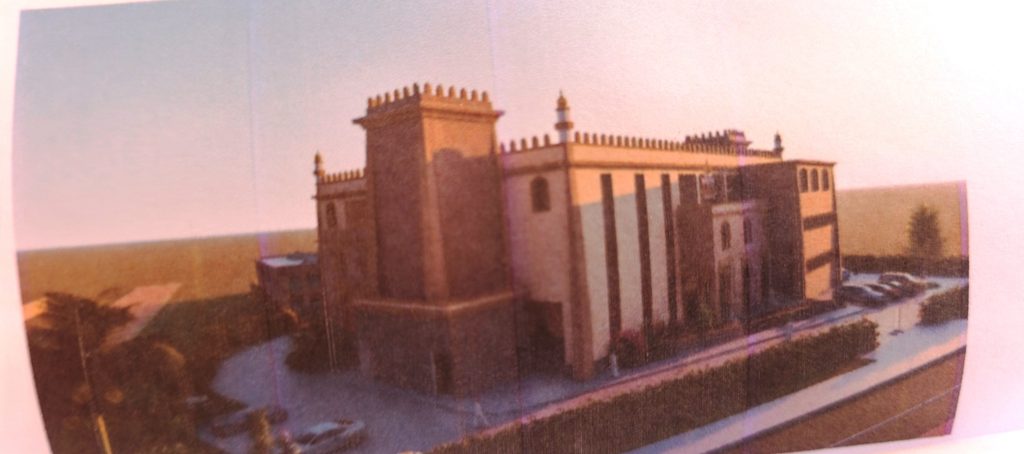
The ambitious project has already brought together a Modern Mosque Construction Committee, which is appealing to Muslims, well-wishers, organisations, businesses and friends of the Muslim community to help turn the vision into reality.
Committee chairman Rashid Mwanza said the need for a new mosque had become increasingly urgent as the number of worshippers continues to rise.
“The current mosque was built in the 1940s and has been renovated so many times to look what it is. The number of Muslims is growing yet the mosque space remains the same,” Mwanza said.
For the committee, the project is not simply about replacing an old structure. It is about building a mosque that reflects the aspirations of a growing Muslim community and provides a dignified, spacious and modern environment for worship.
Abdallah Musa, Imam of the Jamia mosque in Mumias said the structure should match the rich history of Islam in Mumias.
“The proposed two-storey building facility with a floor for men, another floor for women and another one with offices, hall and other amenities is envisioned as a long-term investment in the spiritual and social life of Mumias — a place where today’s Muslims can worship while laying a foundation for generations yet unborn,” observed Imam Abdallah.
The proposed facility is also expected to provide additional space for Islamic education, community gatherings and other activities, giving it a role beyond daily prayers.
The committee is now taking the fundraising appeal beyond Mumias, calling on Muslims across Kenya and abroad, organisations, businesses, philanthropists and other well-wishers to join the campaign.
With a Sh156 million target, the committee acknowledges that the project will require a massive collective effort.
Mwanza said the dream belongs to the entire community and cannot be achieved by a handful of individuals.
The fundraising campaign is therefore being framed as an opportunity for thousands of people to contribute towards a shared legacy.
“Any contribution, whether large or small, will bring the community a step closer to raising the walls of the proposed mosque,” noted Mr Mwanza.
The committee is also appealing to friends of the Muslim community who may wish to support the project as part of their commitment to community development and interfaith solidarity.
For the Muslims in Mumias, the Sh156 million fundraising campaign is therefore about more than bricks, mortar and concrete. It is about faith, heritage, community and legacy.
The new mosque is intended to mark the beginning of another chapter — one that honours the contribution of previous generations while responding to the needs of today’s worshippers.
And as the fundraising drive continues in earnest, the committee is sending a message to the Muslim faithful and well-wishers: the time to build the mosque for the future is now.
Mumias was then the political centre of the Wanga Kingdom, ruled by Nabongo Mumia. Muslim traders established commercial and personal relationships with the royal court.
Trade was an important vehicle for the spread of Islam. The traders brought commodities, established settlements and interacted extensively with local communities.
Mumias’ position along inland trade routes helped make it an important meeting point between coastal Muslims and communities in Western Kenya.
One of the most important episodes in the history of Islam in Mumias is the reported conversion of Nabongo Mumia to Islam.
His reported conversion was significant because of his political authority. Members of his family, chiefs and subjects were subsequently exposed to Islam, helping the religion gain a foothold among the Wanga.
By the late 19th and early 20th centuries, Mumias had developed into one of the major centres of Islam in inland Western Kenya.
Muslim scholars and traders used Mumias as a base from which Islam spread to surrounding communities.
Historical records mention Muslim teachers being sent from Mumias to other parts of the country like Kisumu, Bungoma, Nairobi and other parts of Western Kenya and Uganda placing Mumias not simply as a destination for Islam, but a point for Islamic missionary and educational activities.
Islam therefore became woven into the social and commercial life of Mumias rather than remaining solely a religion of visiting traders.
The establishment of mosques and Qur’anic/Madrasa education helped transform Islam from a trading-community religion into an established institution.