
By SHABAN MAKOKHA
October 16, 2026| Authorities have seized more than 30 tonnes of suspected counterfeit fertiliser in Matungu Sub-County, Kakamega County, in a dramatic multi-agency crackdown that has exposed an alleged scheme to divert government-subsidised farm inputs into the commercial market—just as thousands of farmers prepare for the planting season.
The operation has laid bare disturbing allegations of illegal repackaging, raising serious questions about those seeking to profit from a programme designed to ease the burden on Kenya’s hardworking farmers.
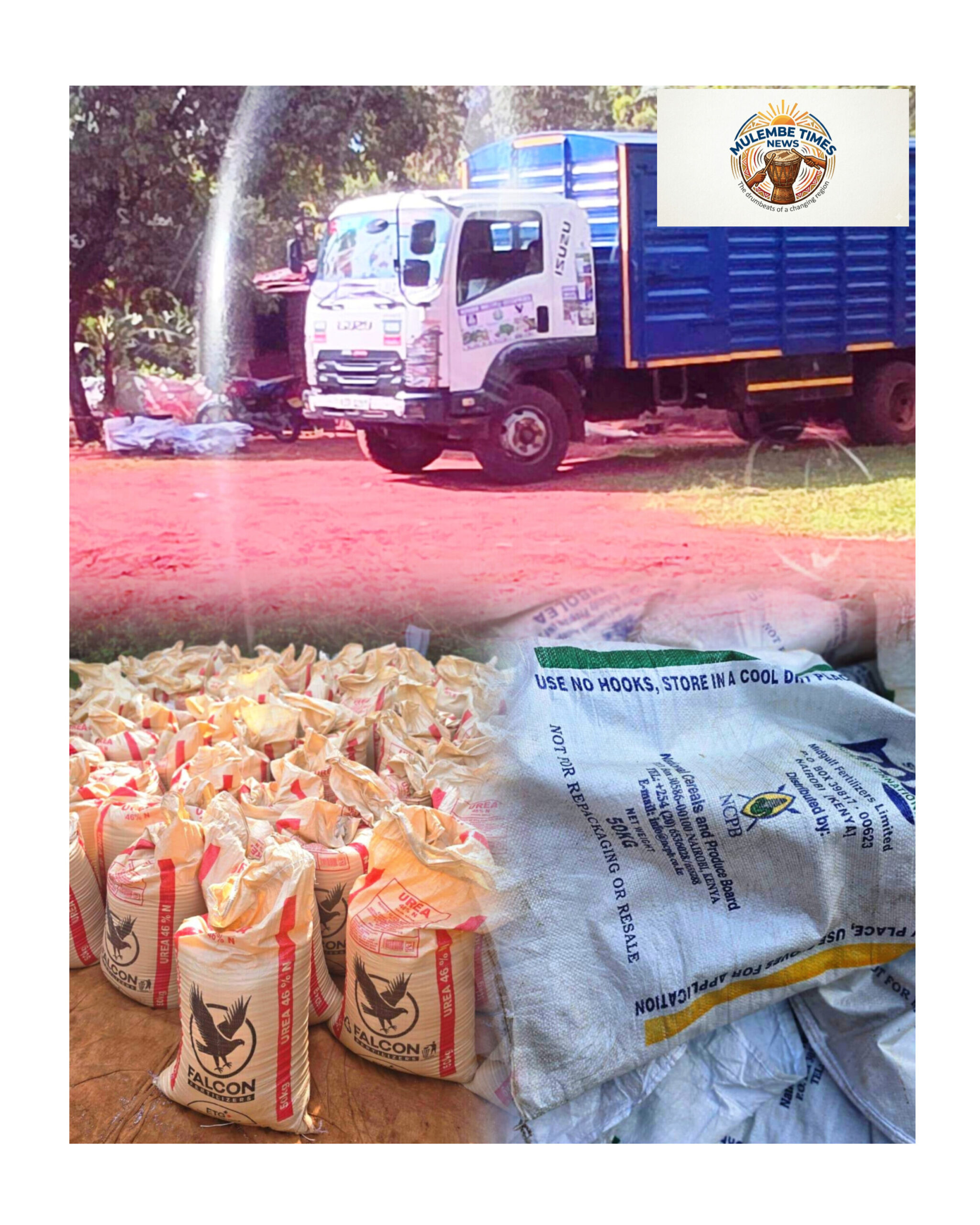
At the heart of the scandal is the alleged transfer of fertiliser marked “Not for Repackaging or Resale” into bags bearing the Falcon Fertiliser brand—an apparent attempt to channel subsidised agricultural inputs into unauthorised commercial distribution networks. Several 50kg bags had already been filled and were awaiting distribution to points of sale.
For farmers who rise before dawn, till the land under the scorching sun and depend on every shilling to feed their families, fertiliser is not merely an agricultural input. It is the difference between hope and despair, between a promising harvest and a season of devastating losses.
Tip-Off Leads to Dramatic Raid
The operation, led by Matungu Deputy County Commissioner Christine Kimaet, followed a tip-off about suspected repackaging activities in Eshirumbwe A village, Koyonzo, within Matungu Sub-County.
Acting on the information, security and administrative officers moved in on a compound reportedly belonging to a man identified as Francis Ochieng, where two lorries loaded with fertiliser from the Ministry of Agriculture were intercepted.
“We received a tip-off that there was repackaging of fertiliser in Eshirumbwe A village, in Koyonzo, Matungu Sub-County. We ambushed the village and seized two lorries that were loaded with the Ministry of Agriculture fertiliser in the home of a person identified as Francis Ochieng,” Ms Kimaet said.
Repackaging activities were reportedly taking place inside one of three houses within the compound, where fertiliser was being transferred from National Cereals and Produce Board (NCPB) bags into Falcon Fertiliser bags.
The premises were littered with hundreds of bags of government fertiliser, alongside numerous empty sacks bearing the Falcon Fertiliser and Solai Fertiliser labels. A bag-sealing machine and a labelling machine were also seized, further intensifying investigations.
Four Arrested as Probe Widens
The crackdown resulted in the arrest of two men allegedly involved in the repackaging activities, alongside the two drivers of the intercepted lorries.
“The four suspects are assisting authorities with investigations as officers work to establish the origin of the fertiliser, its intended destination and the possible extent of the suspected distribution network,” the DCC explained.
The lorries were handed over to officers from the Anti-Counterfeit Authority, who arrived at the scene to strengthen the operation and support further investigations.
Authorities are now seeking to establish whether the intercepted fertiliser was part of a wider scheme involving the diversion, repackaging and unauthorised sale of subsidised agricultural inputs.
A Betrayal of Farmers’ Hopes
Across rural Kenya, farmers invest their limited savings, borrow money and sacrifice family needs in the hope that their farms will produce enough food and income to sustain their households.
Government-subsidised fertiliser is intended to make farming more affordable, strengthen food production and give small-scale farmers a fairer chance of succeeding.
The government has repeatedly insisted that state-subsidised fertiliser must be sold strictly in its original, official branding and sealed bags through authorised channels—such as the NCPB and digital voucher registries—to stop cartels from tampering with, diluting or repackaging the product.
Suspected counterfeit or improperly repackaged fertiliser also raises concerns about product quality, soil health and crop performance, particularly when farmers cannot reliably verify what they are buying.
For a farmer who has spent months preparing the land, the discovery that an expensive bag of fertiliser may not be what it claims to be could mean more than financial loss. It could mean a failed harvest, mounting debt and a family struggling to put food on the table.
That is why the fight against counterfeit agricultural inputs is not simply about enforcing regulations. It is about defending livelihoods, protecting food security and ensuring that the benefits of public investment reach the people they were meant to serve.
“We Shall Not Let Them Thrive”
Ms Kimaet condemned the alleged exploitation of the government’s fertiliser subsidy programme, warning that authorities would not allow unscrupulous traders to undermine the initiative.
“The President has made every effort to ensure Kenyans get subsidised fertiliser, but unscrupulous traders are turning it into a cash cow. We shall not let them thrive,” she said.
Her remarks underscore the determination of local authorities to pursue those suspected of manipulating a programme intended to support farmers and strengthen the country’s agricultural sector.
The operation also sends a strong warning to individuals and networks suspected of engaging in illegal fertiliser repackaging, diversion and distribution.
However, sustained enforcement will be critical. Farmers need not only dramatic raids and arrests but also reliable access to genuine agricultural inputs, transparent distribution systems and accountability wherever public resources are misused.
Call for Vigilance
Authorities have urged farmers to remain vigilant and report suspicious storage facilities, unauthorised repackaging operations and unusual fertiliser distribution activities.
Farmers have also been advised to purchase agricultural inputs exclusively from authorised dealers and to carefully check packaging, labelling and product details before making purchases.
“We encourage the public to share credible information that could help investigators uncover other suspected illegal distribution points,” added Ms Kimaet.
As investigations continue in Matungu, the seizure of more than 30 tonnes of suspected counterfeit fertiliser stands as a powerful reminder of the vulnerabilities that can threaten Kenya’s agricultural supply chain.