
By SHABAN MAKOKHA
November 24, 2026| Behind every cane field is a family counting on the harvest to pay school fees, put food on the table, meet medical bills and keep its hopes alive.
For years, the livelihoods of thousands of sugarcane farmers in lower catchment areas around Busia have been tied to the fortunes of a struggling sugar industry. Delayed payments, rising production costs, transportation challenges and uncertainty over the future of local milling have increasingly turned sugarcane farming from a dependable source of income into a risky venture.
Now, a new chapter is unfolding. Mumias Sugar Company has taken over the running of Busia Sugar Industries, sparking fresh optimism among farmers, factory workers and businesses that depend on the sugar industry in the lower western region.
For a region whose economic fortunes are closely intertwined with sugarcane farming, the development offers renewed hope that the industry can reclaim its place as a major source of jobs, household income and economic growth.
The new management is promising more than simply restarting factory operations. It is pledging a comprehensive revival of the sugarcane value chain, with farmers at the centre of its plans—faster payments, expanded cane development, improved transportation, employment opportunities and renewed investment.
A Reliable Market for Growers
Mumias Sugar Operations Manager Stephen Kihumba said the company was determined to build on the vision of the previous Busia Sugar management and turn the factory into a dependable market for local sugarcane growers.
He said Mumias was introducing a well-planned, continuous and structured cane development programme designed to guarantee adequate raw materials and sustain factory operations throughout the year.
“We come with a clear commitment—to improve livelihoods of sugarcane farmers in this region, create sustainable employment opportunities, empower local communities and make Kenyan sugar affordable,” said Mr Kihumba.
For farmers who have endured uncertainty over the market for their cane, the promise of a reliable buyer could mark an important turning point.
Kihumba challenged growers to increase production and supply adequate quantities of mature, quality sugarcane, assuring them that the company would walk with them through every stage of the farming cycle. The support package will include ploughing and land preparation services, quality seed cane, fertiliser support, technical guidance and extension services through the company’s cane development supervision programme.
“We want to make sugarcane farming attractive, productive and economically rewarding. Our approach will be to work with farmers from land preparation and planting through to harvesting and delivery,” he added.
Seven-Day Payment Pledge
Perhaps one of the most significant promises to farmers is the commitment to pay for cane delivered to the factory within seven days.
For households that depend on sugarcane proceeds to educate their children, provide for their families and reinvest in farming, timely payment could make a considerable difference. It means farmers will not have to wait for extended periods to access money earned through months of hard work—provided the company delivers on its promise. For many growers, getting paid on time is just as important as the price offered for their crop.
Addressing Transport Woes
The new management has also acknowledged the transportation challenges that have frustrated farmers, particularly those in low-lying areas where heavy rains have made roads and access routes difficult to navigate.
Kihumba said the company was deploying winches and other appropriate interventions to improve cane evacuation and ensure farmers do not suffer unnecessary losses because of difficult weather and terrain.
“We are aware of the current challenges experienced in cane transportation, particularly in deep lowland areas where the ongoing heavy rains have made access difficult,” he noted. “The incoming management is addressing these challenges through deployment of winches and other appropriate interventions to facilitate cane evacuation and ensure that farmers are not unnecessarily disadvantaged by difficult weather and terrain conditions.”
Olive Branch to Outgrowers
Beyond the farms, Mumias is also seeking to rebuild confidence among organised farmer groups, recognising that their cooperation will be essential in restoring the industry’s fortunes.
Kihumba extended an olive branch to the leadership of Busia Outgrowers Company (BOCO), urging it to spearhead the registration of more farmers and accelerate cane development across the region. He pledged to establish a productive working relationship based on consultation, transparency, cooperation and a shared commitment to improving farmers’ livelihoods.
Workers Recalled
The revival is also bringing renewed hope to workers who have faced uncertainty over their jobs during the transition in factory management. For many of them, the return to work represents more than a job—it is an opportunity to restore financial stability to their families and regain the security that comes with regular employment.
Kihumba confirmed that the majority of Busia Sugar Industries employees had been retained, appreciating their experience, dedication and contribution to the factory.
“Majority of employees have been recalled to resume their duties. Those who are yet to receive their recall communication are requested to remain patient as the process continues. We appeal to all staff to extend a supportive hand to the incoming management, embrace teamwork and demonstrate renewed commitment, discipline and professionalism,” he said.

22 New Tractors Deployed
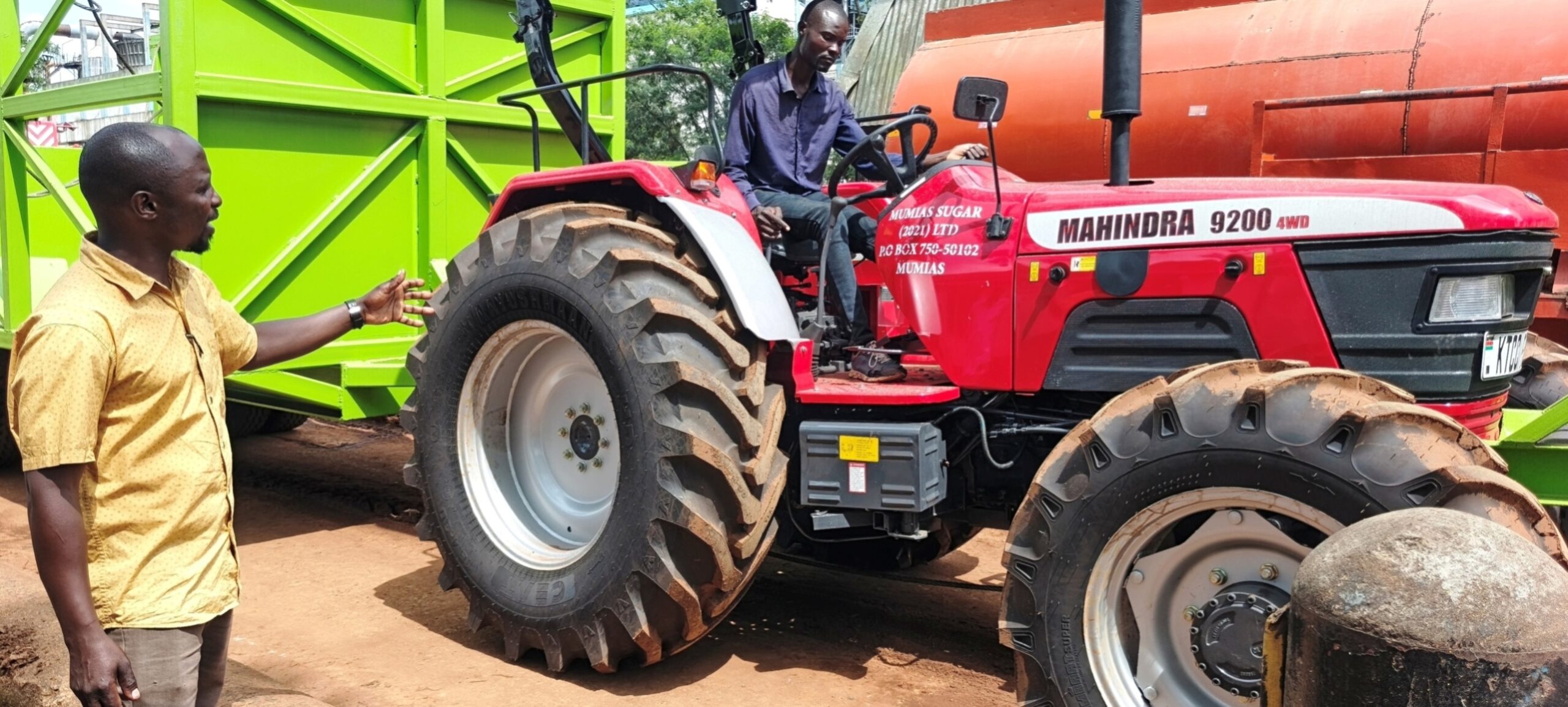
Mumias has taken a significant step towards restoring operations by releasing a fleet of 22 new tractors to Busia to strengthen cane transportation and improve the movement of harvested crop to the factory.
The investment is expected to address one of the longstanding challenges facing farmers: harvested cane remaining in fields for too long because of inadequate transport. For growers, the availability of tractors could mean faster evacuation of their crop, reduced delays and greater confidence that their months of labour will not go to waste after harvesting.
Busia Sugar Industries Agriculture Services Manager Gerald Songok said the western region had enormous potential as a sugarcane-producing area, but farmers needed reliable transportation to ensure their crop reached the factory while still fresh. He said the new tractors would help bridge the transportation gap and improve the efficiency of cane deliveries.
50 Percent Employment Growth Projected
Beyond improving farm operations, Songok projected that the revival of Busia Sugar Industries would increase employment in the local sugar industry by 50 percent, opening up opportunities for residents beyond the factory gates.
“The income in the county is also expected to grow. More people will be employed in the farms, factory and businesses will thrive,” said Mr Songok.
The expected economic benefits could extend across the county—from cane-cutting crews and tractor operators to transporters, traders, suppliers and small businesses whose survival depends on the spending power of farming households.
Huge Expansion Potential
Busia currently has approximately 14,000 hectares under sugarcane cultivation against a target of 50,000 hectares, highlighting the enormous potential for expansion.
Songok said the region had so far utilised only a fraction of its available land for cane development, but the entry of Mumias management was expected to accelerate investment in farming and introduce improved agronomic practices.
“We have only utilised a quarter of land available for cane development. With the takeover by Mumias, we project to achieve 100 percent of land under cane. The takeover is coming with improved agronomic practices,” he said.
The figures point to an enormous opportunity for Busia. Expanding the area under cane could translate into more farmers entering commercial production, increased raw material supplies, more harvesting and transportation jobs and greater economic activity across rural communities.
Busia farmers already account for approximately 60 percent of the sugarcane supplied to Mumias Sugar Company, making the county a critical pillar of the miller’s operations. The new management believes that strengthening cane production in Busia will not only secure a steady supply of raw materials but also deepen the economic relationship between the two factories and the communities that sustain them.
Kihumba said Mumias Sugar and Busia Sugar Industries would continue operating independently, a move he said would promote competition, create more employment opportunities and protect farmers from exploitation.
The Real Test
For Busia, the takeover represents an opportunity to rebuild an industry whose fortunes are inseparable from the economic survival of thousands of households.
The signs of change are already beginning to emerge: 22 new tractors have been deployed, workers are returning to their duties, farmers are being promised support from planting to harvesting, and a seven-day payment commitment has raised expectations of a more dependable market.
But beyond the machinery, management changes and promises, the real measure of success will be the difference farmers feel in their homes and communities. It will be measured by a farmer who receives payment on time and can comfortably take a child back to school, a worker who regains the dignity of earning a regular salary, and a rural trader whose business begins to flourish as money circulates through the local economy.
For farmers who have waited anxiously for the industry to recover, the hope is simple but profound: that sugarcane will once again become a crop that rewards hard work, sustains families, educates children, creates jobs and gives rural households a reason to believe in tomorrow.
For Busia’s sugar belt, the promise is no longer just about reviving a factory. It is about restoring livelihoods, rebuilding confidence and giving thousands of families a fresh reason to hope.