
By SHABAN MAKOKHA
April 11, 2026| In the often-overlooked depths of Kenya’s grassroots football structure—where talent is abundant but opportunity scarce—a compelling new model is emerging: disciplined, community-driven, and ruthlessly ambitious.
At the centre of this shift is Bunge FC, a young club from Mwitoti area, Mumias East sub-county in Kakamega. They are not just winning matches; they are challenging long-held assumptions about how football development in Western Kenya should be structured.
What started as a fallout with Eluche FC in 2022 has become an evolving case study in how grassroots football can be organised, funded, and scaled. Barely two years since its official formation in 2023, Bunge FC has climbed from sub-location level to represent Mumias East at the FKF Kakamega County League summit—sitting on 26 points with a game in hand.
On the surface, it is a story of an unbeaten run—eight wins, two draws. But beneath the numbers lies a deeper narrative: a club that has combined structure, leadership, and local identity to build a sustainable football ecosystem.
In lower-tier football, early success is often dismissed as a fleeting “good run.” But Bunge FC’s dominance appears anything but accidental.
Three Pillars of Success
The team’s unbeaten record is anchored on three critical pillars: technical discipline, resource stability, and player identity.
Under Head Coach Eugene Akwata, assisted by Dennis Eshitemi, the team has adopted a structured approach rarely seen at this level—clear tactical organisation, fitness consistency, and defined roles. This explains why Bunge FC is not merely edging games—it is controlling them.
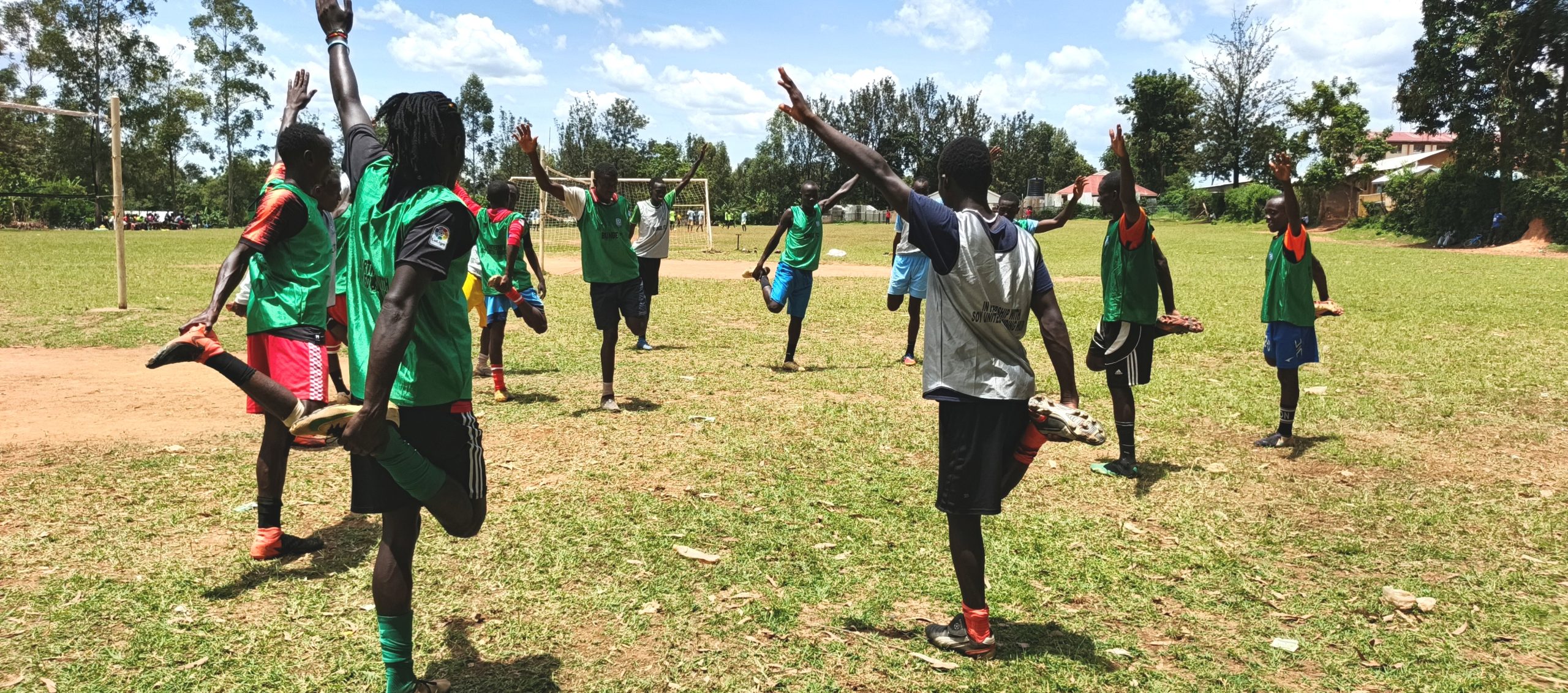
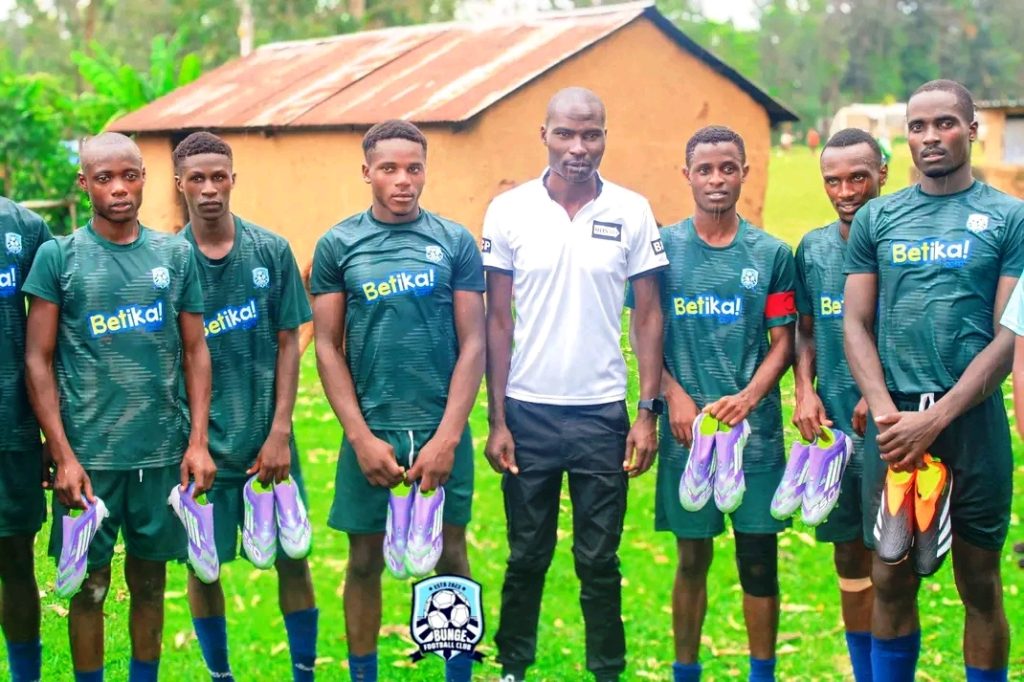
At the heart of operational stability is its patron, Hamisi “Don” Waswa—a figure whose influence extends far beyond symbolic leadership. While many grassroots teams crumble due to lack of basic resources—balls, kits, transport, player welfare—Waswa has systematically eliminated these constraints.
By investing in training equipment and ensuring players have boots and uniforms, he has professionalised an otherwise informal environment. Match allowances and performance incentives have subtly shifted player mentality from participation to competition. Waswa has closed the “resource-performance gap” that cripples most rural teams.
The Local Advantage
Perhaps the most radical element of Bunge FC’s model is its near-total reliance on local talent—99.9 percent of the squad sourced from Khumwitoti locale. While many teams constantly recruit externally in search of quick success, Bunge FC has taken a long-term view: build from within, then refine.
This approach is delivering multiple advantages. Shared social and cultural bonds translate into better on-field chemistry. The community sees itself in the team, driving stronger support. And players earning trials at clubs like Soy United (a National Super League side) signals that Bunge FC is evolving from a team into a feeder system—a rare status at the county level.
Testing Against the Best
Understanding that dominance at county level can create a false sense of superiority, Bunge FC has deliberately sought higher-level opposition. Friendly matches against St Joseph’s Kitale (JOBO) FC, Compel FC, and Soy United have served a dual purpose: benchmarking performance and increasing visibility.
“Only JOBO managed to beat us 3-2,” Coach Akwata told the media. “Other teams like Compel suffered a 1-0 loss. The mood changed completely when we beat a National Super League side—Soy United 2-0. My boys became more confident.”
The Squad
Akwata’s squad comprises Sylvester Kafuna in goal; Brian Juma (right back), Duncan Muchesia (left back), Ezra Chepkech and Emmanuel Juma (centre defence); Ridhwan Tulesi and Brian Ngaywa in midfield; Byron Okumu and Bruce Mukaha on the wings; and Juma Muramba with Kevin Odongo leading the attack.
Community Backing
The support of St Martha’s Mwitoti Secondary School, led by Principal Samuel Ogola, provides critical infrastructure: a training ground and transport logistics through the school bus. But beyond institutional backing lies something more powerful—emotional investment. Match days have evolved into community events, transforming ordinary fixtures into high-energy contests where players carry the identity of an entire community.
What Next?
With Bunge FC targeting FKF Division One by 2027, the key question is no longer whether they can win the county league—but whether their model can scale. Historically, many promising grassroots teams collapse under the weight of promotion when financial demands increase, players are poached, and competition intensifies.
For decades, Western Kenya has been acknowledged as a talent-rich region that consistently underperforms structurally. Bunge FC’s rise challenges this narrative. If sustained, this model could redefine how grassroots football is approached—not just in Kakamega, but across the region.