
By BOB WASWANI
May 9, 2026| A man who waited more than three decades to claim his “father’s” land has lost his appeal, with the Court of Appeal ruling that he failed to prove he was even a son to the deceased.
Abisalom Kayera Misigo had been fighting since 2012 for ownership of land parcel Kakamega/Lusiola/1096, which belonged to Aluoch Obara, a man who died in 1975. Misigo claimed that Obara was his father because his mother was “inherited” by the deceased under Luhya custom.
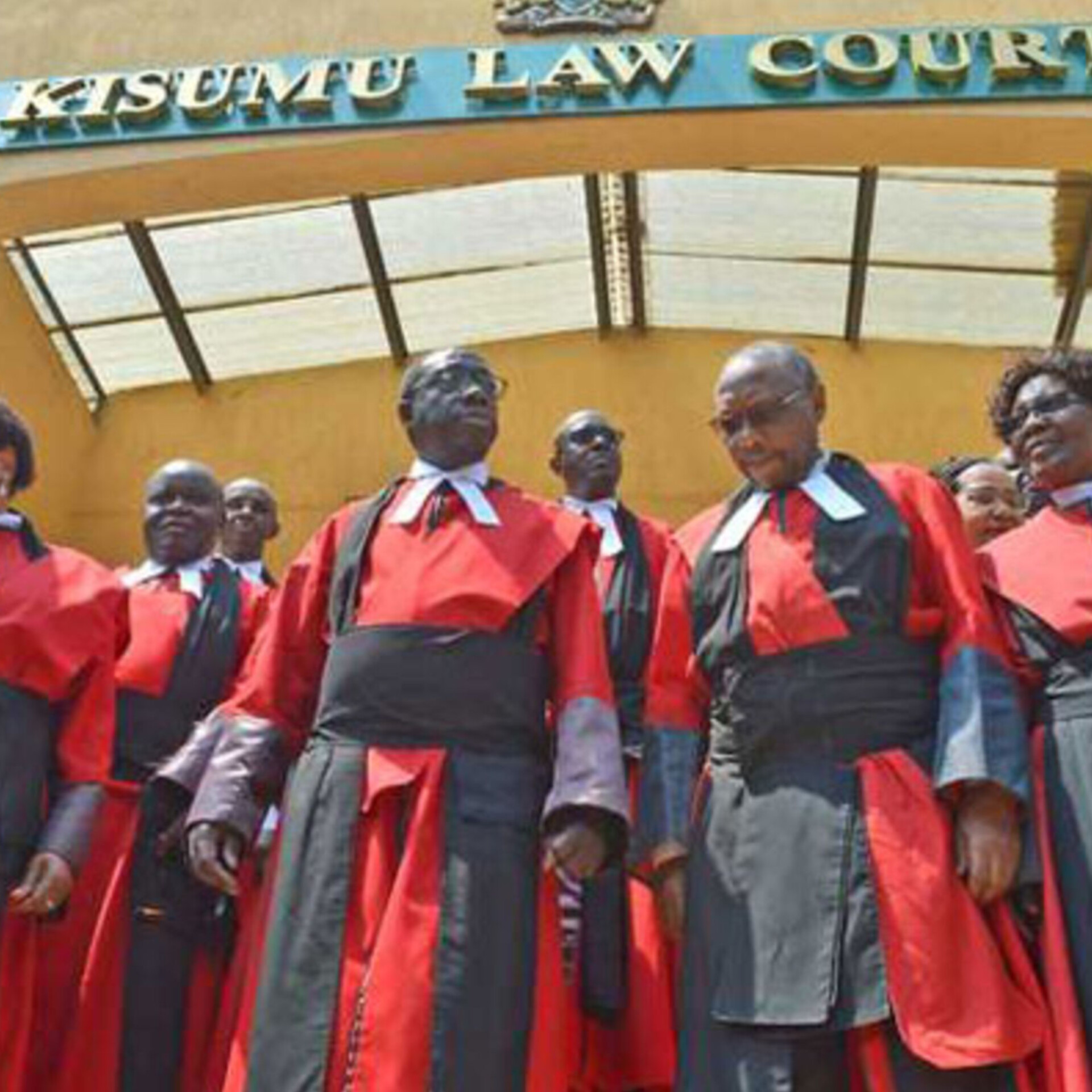
But the Court of Appeal, in a ruling delivered on 24th April 2026 by Justices Milton Asike-Makhandia, Hannah A. Omondi, and Luka K. Kimaru, saw things very differently.
A painful family truth
The court heard testimony that broke Misigo’s case apart. His own identity card bears the last name “Misigo”—the name of the deceased’s brother, not the deceased himself. As the judges pointedly observed, “He did not assume the name of the deceased Aluoch Obara when he registered for an identity card. He instead assumed the name of Misigo.”
Three witnesses, including the deceased’s own daughter Zipporah Kanaiza Ayende and a clan elder, testified that Obara had only three children, none of whom was Misigo. The respondent, Tom William Onguka, is the grandson of the deceased through Obara’s son William Nguka Alwoch. He has lived on the suit land since birth, built a home there, and raised his family.
The painful wait
Perhaps most damning was the timeline. The deceased died in 1975. Misigo moved to Migori in 1980. He only returned to claim the land in 2012—32 years later.
“Why would he have stayed away from the land for 32 years and come back to stake his claim?” the trial judge had asked, a question the Court of Appeal found entirely reasonable.
The appellate judges noted that Misigo, who was born in 1943, was making claims about events that allegedly took place more than 70 years ago, relying merely on his own word.
What the law says
Misigo had argued that even if not a biological son, he qualified as a “dependant” under Section 29 of the Law of Succession Act because his mother was “inherited” by the deceased. But the court was unforgiving.
“It is trite that he who alleges must prove,” the judges stated. They noted that Misigo failed to call any expert in Luhya customary law to prove the inheritance practice existed. Moreover, a dependant must prove they were being maintained by the deceased immediately before death—something Misigo never attempted to show.
The emotional core
For Onguka, the grandson who has lived on the land his entire life, the ruling brings closure. For years, he faced the threat of eviction after Misigo obtained letters of administration and tried to transfer the land to himself—once even under the false pretext of having “purchased” it from a man who had been dead for 35 years.
The Court of Appeal dismissed Misigo’s appeal with costs, affirming the High Court’s finding that the late Misigo—the appellant’s actual father—was given his own land by their grandfather, and that is where the appellant’s portion rightfully lies.
“There is no merit in this appeal,” the three judges ruled in a unanimous decision.
For a family dispute that has dragged across five decades, the gavel has finally fallen. Blood, the court has reaffirmed, is not proved by mere assertion—and a man cannot wait half a lifetime to remember he had a father.