

By SHAABAN MAKOKHA.
February 23, 2026| In a powerful show of unity, over 500 students from primary, junior secondary, and secondary schools across Kakamega County converged at St John’s Khwisero Secondary School over the weekend. They were there for the Debating for Peace Championship, a vibrant platform where they delivered speeches championing peace and national cohesion.
The event, themed “Dialogue over Division: Youth Voices for a United Country,” was organized by the National Cohesion and Integration Commission (NCIC) in partnership with school-based Amani Clubs. It is the centerpiece of a broader “Debating for Peace Program – Kenya Edition,” a national calendar running from January 17 to April 12, 2026. The roadmap includes training judges, followed by sub-county and county championships, culminating in a national final.
Amani Clubs, established by the Ministry of Education and NCIC, are vital school programs designed to nurture an appreciation for diversity, peace, and conflict resolution from a young age. By empowering students as peace ambassadors, they act as a crucial countermeasure to youth involvement in chaos, especially during election cycles.
Mr Kennedy Kunani, the national chairman of Amani Clubs, explained that the initiative intentionally targets young people, who are often most vulnerable to being used as instruments of violence.
“We use debates, workshops, and peace corners in schools to promote dialogue. That is the essence of our theme this year, ‘Dialogue over Division’,” said Mr Kunani. “As we approach the 2027 General Election—a period that has historically brought divisions—we want our youth to lead the charge in sending a message that keeps our country peaceful.”
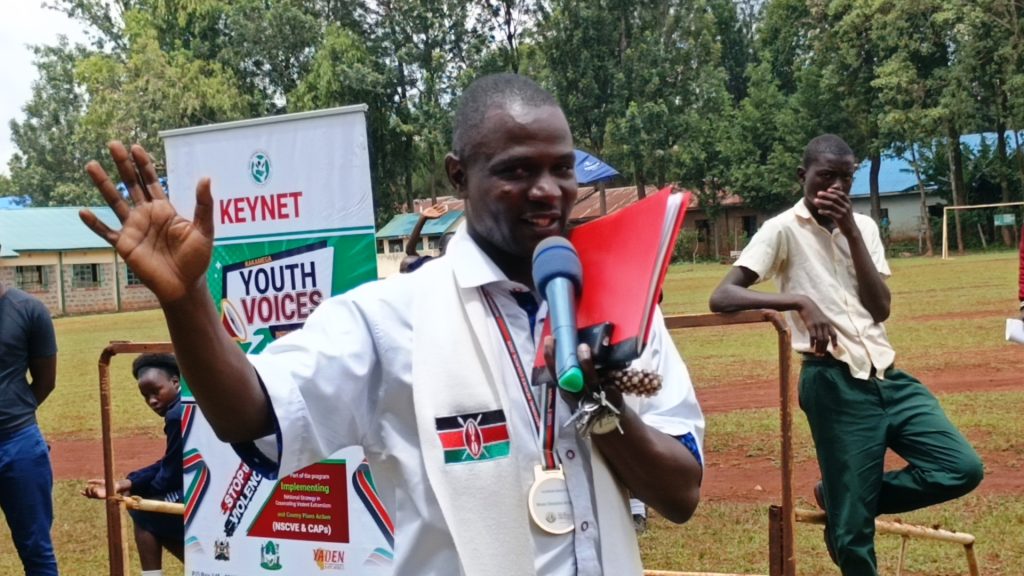
He noted that the clubs have already made a tangible impact, instilling positive cultural values and personal responsibility in students, which has helped minimize unrest in schools. “By addressing negative ethnic tendencies at an early age, we are creating a ripple effect. These students influence their peers, their communities, and even their parents, driving national cohesion,” he added.
However, Mr Kunani called on the Ministry of Education to provide direct funding for these peace programs to sustain their impact on discipline and tolerance. He also appealed to partners to support the initiative as plans advance for the East African Debate, scheduled for August 2026 in Kigali, Rwanda.
Mr Moses Buriri, the County Administration Coordinator for the Ministry of Education in Kakamega, lauded the Amani Clubs as a cornerstone for shaping peace in schools. “You are our peace ambassadors,” he told the students. “Carry these messages wherever you go to ensure discipline and peaceful co-existence, both in school and in the larger society.”
The call for early cultivation of peace was echoed by Moses Mang’eni, a gender officer at Amukura Police Station in Busia County. For the past three and a half years, Mang’eni has voluntarily visited 415 schools in the Western region to sensitize students on responsible citizenship.
“We must instill a culture of responsible behavior and peaceful co-existence at an early age,” said Mang’eni. He highlighted common pitfalls for youth, including drug abuse and defilement, and warned that many young boys end up in trouble with the law due to underage relationships. His mission is to equip young people with discipline, conflict-resolution skills, and the ethical values needed to become the nation’s future peacemakers.
