
By BOB WASWANI
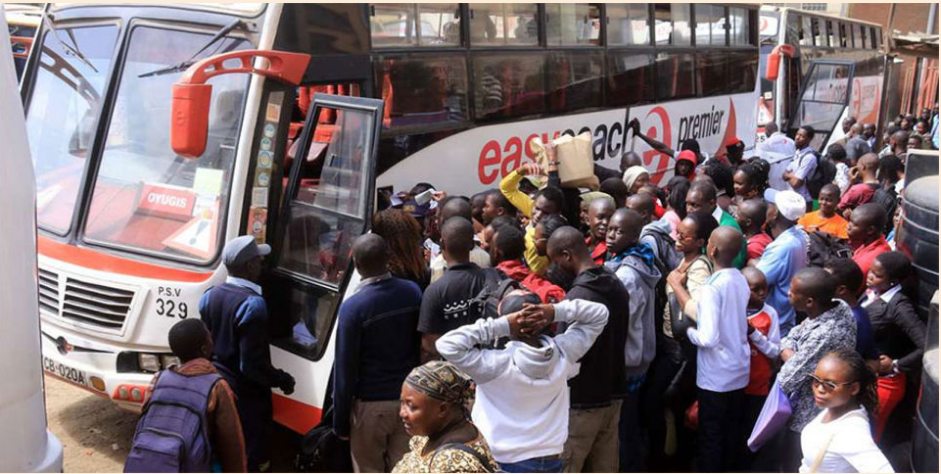
March 24, 2026| It is a scene familiar to every Kenyan traveler during the peak season: a bus bursting at the seams, passengers perched on staircases, and desperate travelers paying their way aboard by any means necessary.
For Samuel Chege Njogu, a bus inspector with prestigious transport company Easy Coach, that all-too-common scenario cost him his job—until the courts stepped in.
The Court of Appeal has upheld a finding that Easy Coach unfairly dismissed Njogu after he was accused of allowing an extra passenger to board a Nairobi-bound bus from western and sit on the staircase during a busy travel period. However, the appellate court reduced his compensation from twelve months’ salary to three.
The Staircase Incident
On the night of March 11, 2013, Njogu was on duty aboard bus registration KBS 956T traveling from Homabay to Nairobi. Somewhere along the route, an extra passenger boarded at Kisii. With the bus fully booked, the man found his place on the staircase—a familiar sight on Kenyan roads during peak travel seasons.
According to Easy Coach, the passenger paid Kshs. 800 to Njogu without receiving a ticket. A senior inspector later discovered the man at Narok, seated on the staircase. The company moved swiftly: Njogu was suspended, hauled before a disciplinary committee, and summarily dismissed for gross misconduct.
But Njogu told a different story. He denied ever receiving money from any passenger or allowing anyone to board without a ticket. His employment, which had begun in April 2011 with a monthly salary of Kshs. 14,071.53, was over.
The Case Unravels
When Njogu took his case to the Employment and Labour Relations Court, Lady Justice Wasilwa delivered a scathing verdict: Easy Coach had fired him based on hearsay.
The passenger who allegedly paid the bribe never testified. His written statement did not even name Njogu as the person who took his money. The company had built its case on sand.
“The appellant relied largely on hearsay evidence,” the trial court found, declaring the dismissal unfair and awarding Njogu over Kshs. 200,000 in compensation plus a Certificate of Service.
Appeal Fails, Compensation Trimmed
Easy Coach appealed to the Court of Appeal, arguing that the trial judge had applied the wrong standard of proof and disregarded evidence. But Justices Daniel Musinga, Joel Ngugi, and George Odunga were unimpressed.
“We fully associate ourselves with the learned judge’s finding that the absence of testimony from the passenger and the lack of clear identification of the respondent in the passenger’s statement significantly weakened the evidentiary basis of his dismissal,” the Court ruled on March 12.
The appellate judges emphasized that procedural fairness requires more than a rubber-stamp disciplinary hearing. An employee must be given access to evidence and a genuine opportunity to challenge accusers. Easy Coach had failed on both counts.
However, the Court found that the trial judge had erred by awarding the maximum twelve months’ salary without justification. Given Njogu had served only two years, the Court reduced compensation to three months—Kshs. 42,214.59.
The Verdict
The appeal succeeded only to the extent of the reduced compensation. The finding of unfair dismissal stood. Each party was ordered to bear its own costs.
For Njogu, the judgment offered vindication. For Easy Coach, it served as a reminder that even in the fast-paced world of long-distance travel, cutting corners on fairness carries a price.
And for the countless Kenyans who have ever squeezed onto a staircase seat during the Christmas or school openning rush, the case struck a familiar chord—a reminder that what is common practice on the road may not stand up in a court of law.