

By BOB AMALEMBA
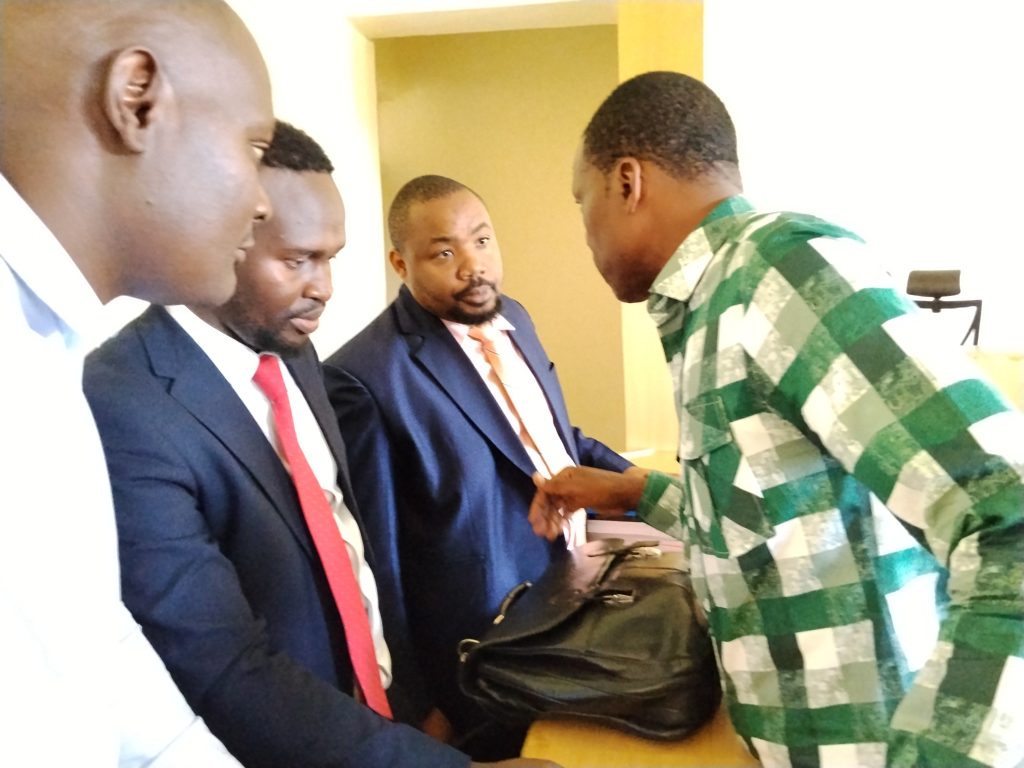
April 14, 2026| A dramatic courtroom session marked the opening of a petition challenging the Malava Constituency by-election, as lawyers tabled explosive claims of illegality, violence, and voter bribery—before proceedings were briefly disrupted by a sudden power blackout at a critical moment.
Two Malava residents, John Karakacha Opiyo and Nancy Wanakacha, are contesting the outcome of the November 27, 2025 by-election, in which UDA candidate David Ndakwa was declared winner after garnering 21,564 votes, defeating DAP-K’s Seth Panyako, who polled 20,210 votes—a narrow margin of 1,354 votes.
The case is being heard at the High Court in Kakamega before Justice Stephen Mbugi.
From the outset, the petitioners’ lead counsel, Nelson Havi, set a combative tone, insisting that key evidence be presented in full view of the court—including ballot materials currently in judicial custody.
“The ballots are before this court,” Havi said, underscoring that the integrity of the election itself was now under scrutiny.
Karakacha, the first petitioner to testify, opened with a constitutional challenge, arguing that Ndakwa was ineligible to contest the seat while still serving as Member of County Assembly (MCA) for West Kabras.
To support his claim, he produced a chain of correspondence. In a letter dated August 14, 2025, Ndakwa had sought guidance from the Independent Electoral and Boundaries Commission (IEBC) on whether he needed to resign before vying.
The response, dated August 19 and signed by IEBC CEO Marjan Hussein Marjan, advised that resignation was not necessary.
But Karakacha pointed to a later letter dated November 28—after the election—where Ndakwa wrote to the Speaker of the Kakamega County Assembly seeking to resign.
“By then, he held both offices,” Karakacha told the court.
He argued that this dual status rendered Ndakwa’s election unlawful.
The petitioner went further, alleging state interference in the campaigns.
“Public officers campaigned for Ndakwa,” he said.
At that point, Havi sought to play a video clip as evidence—one he described as central to the case.
The footage showed Principal Secretary Belio Kipsang Inyangala distributing relief food in Bukhakunga, West Kabras, on October 1, 2025. In the video, she is heard urging residents to accept the food and support Ndakwa.
“Take this… and vote,” she says, while invoking his name.
But just as the clip began playing on the courtroom’s main screen, the power suddenly went out.
The large display went dark, forcing a pause in proceedings.
After a brief delay, the court resorted to a laptop backup to continue viewing the footage. Notably, power was restored immediately after the clip finished playing on the smaller screen.
It remained unclear whether the outage was accidental. However, Havi insisted that the video be replayed on the main screen, emphasizing its importance.
“This is critical evidence,” he said.
Beyond the bribery claims, Karakacha painted a picture of an election marred by violence.
He told the court that several individuals were injured at the Panyako tallying centre, naming Down Hills Springs, Jamal Sakwa, and Cyrus Angatia among those affected.
“They were badly injured,” he said.
He also alleged that property was destroyed, including a vehicle belonging to DAP-K party leader Eugene Wamalwa, which he said was set ablaze in Manyonje on election day.
To reinforce his claims, Karakacha cited a report by the Kenya National Commission on Human Rights (KNCHR), which documented attacks on a hotel linked to a candidate on November 26, leaving at least ten people hospitalized.
“Violence hit even civilians,” he said.
He further questioned the credibility of the ballot, noting that a candidate, Edgar Busienga, remained on the ballot despite allegedly withdrawing from the race.
On the strength of these claims, Karakacha urged the court to nullify the election.
However, lawyers representing the IEBC and Ndakwa pushed back strongly.
Lead counsel Arnold Magina challenged Karakacha to produce proof that Busienga had formally withdrawn.
“There is no such letter,” Magina argued.
Karakacha conceded that the document had not been included in his affidavits.
The defence also dismissed claims of state bias, arguing that recent legal changes no longer barred public officers from political participation.
On the issue of violence, they questioned whether any suspects had been charged.
“Show even one prosecution,” Magina pressed.
Karakacha could not.
Another defence lawyer, Hezron Abok, turned to technicalities, questioning the validity of Karakacha’s affidavits—including whether they had been properly signed.
“Green pen or black?” he posed, drawing murmurs in court.
In re-examination, Havi steered the focus back to violence, introducing additional video footage from Manyonje showing a vehicle engulfed in flames.
Karakacha linked the incident to broader intimidation efforts.
“It scared voters,” he said, alleging that a senior political figure coordinated the violence.
As the hearing adjourned, it was clear the case would test not only the credibility of the Malava by-election—but also the conduct of public officials and the resilience of electoral safeguards.
For now, the ballots remain under lock and key—at the centre of a dispute that is only just beginning to unfold.
