
By SHABAN MAKOKHA
May 13, 2026| A wave of concern is sweeping through the Church in Kakamega, where a senior Catholic bishop has warned that Kenya’s education and health sectors are sliding into a deep crisis—leaving millions of citizens confused, underserved, and increasingly hopeless.
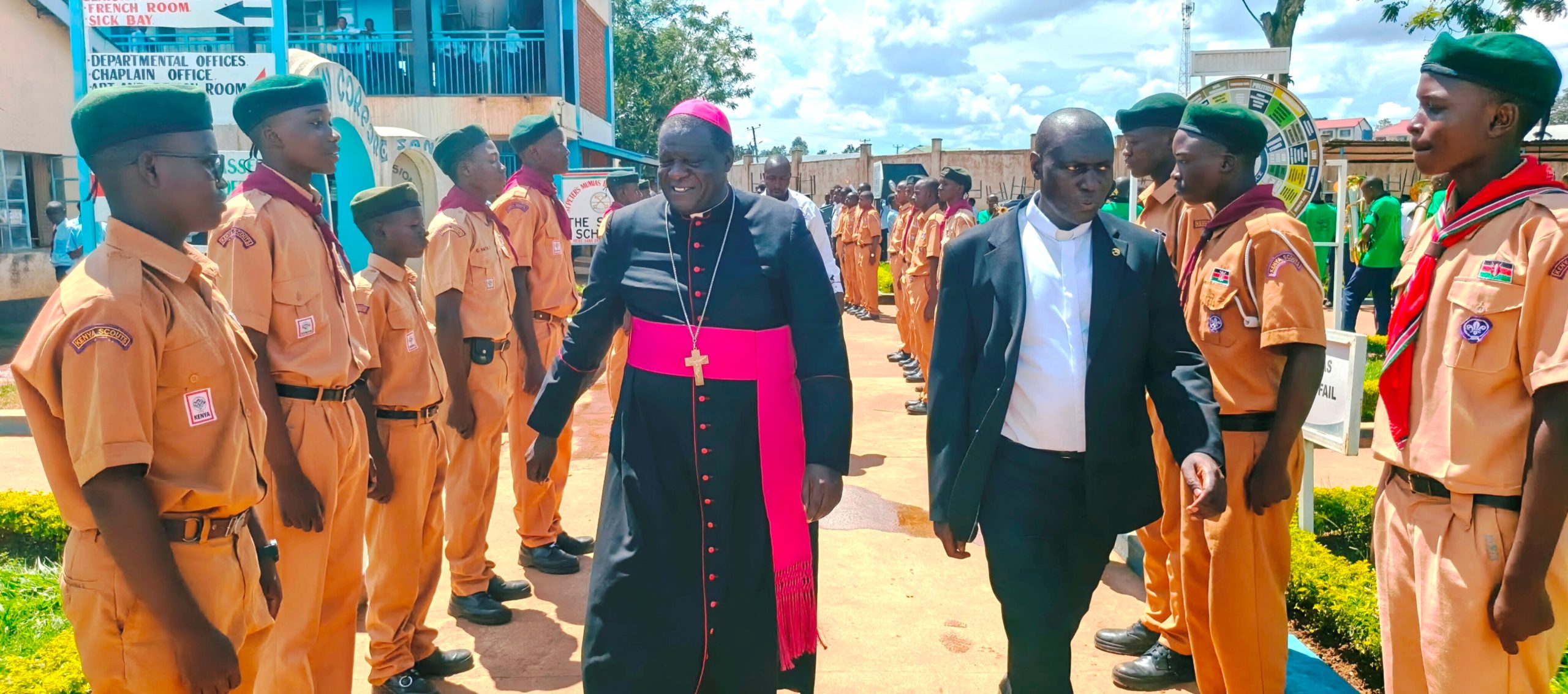
Speaking during a pastoral session at St Peter’s Boys High School in Mumias, Catholic Bishop Joseph Obanyi (pictured) delivered a strongly worded statement urging the national government to urgently stabilize key public service systems before the situation deteriorates further.
Bishop Obanyi accused the government of implementing curriculum reforms without adequate preparation, training, or supporting resources—a move he described as “experimenting with the future of the country.”
He said the rollout of the Social Health Insurance Fund (SHIF) has sown confusion in the health sector, plunging it into uncertainty and making it difficult for Kenyans to access quality healthcare.
“Currently, Kenyans are not able to access quality healthcare following the confusion caused by SHIF,” he lamented, noting that patients are being turned away or forced to pay out-of-pocket because facilities are unsure how to process claims.
Healthcare workers across Kenya have raised concerns over delayed reimbursements and a lack of clarity on service packages, leaving vulnerable households exposed during medical emergencies.
The bishop observed that policy transitions have not been communicated clearly, leaving both patients and providers in limbo. Many hospitals, he added, are struggling to align services with the new framework, while ordinary citizens remain unsure of their entitlements, benefits, and costs.
The clergy also criticized the state of the education sector, arguing that teachers have been left to navigate the system without proper tools, adequate training, or consistent government direction. He warned that unclarified curriculum changes have overwhelmed teachers, parents, and learners alike.
“The government must ensure that capitation money is sent to schools on time,” Bishop Obanyi emphasized. “Schools cannot run on promises; teachers cannot teach without materials; and children cannot learn in an environment of constant financial strain.”
He added: “Equally, the education system is in a state of confusion because the curriculum is not completely explained. Teachers have to work miraculously to deliver.”
According to the bishop, the government must reevaluate its approach to introducing major policies in sectors that directly determine the nation’s welfare and stability. He said Kenya is drifting into confusion due to unclear reforms, delayed funding, and a lack of proper communication to citizens who rely on these essential services daily.
“The government must reach a point and stop experimenting on crucial policies,” he warned, emphasizing that Kenyans deserve clarity, predictability, and systems that work.
The bishop also expressed concern over delayed capitation funds, warning that late disbursements are deepening school struggles. Many headteachers in Kakamega and other counties have repeatedly sounded alarm bells, saying they are running institutions with empty accounts while suppliers remain unpaid.
He noted that many schools are operating on empty budgets while teachers continue to shoulder the burden of sustaining learning environments. He appealed to the government to release capitation on time so that schools can operate effectively and children can learn without disruption.
This comes amid growing public outcry over low funding after the Ministry of Education allocated Sh95.25 per primary school learner for Term Two, earmarked for teaching and learning materials including textbooks and stationery, and a further Sh93.08 for school operations covering transport, electricity, water, conservancy, administration, activity fees, maintenance, and examinations.
Teachers, Bishop Obanyi noted, have become the default managers of financial crises within schools, often forced to improvise or use personal resources to keep classrooms functional.
The clergy reminded the government that nations rise or fall based on how they support education, health, and agriculture—pillars he described as the backbone of sustainable development.
“A nation that means well for its citizens puts enough resources into education, agriculture, and health sectors. This is the only way to keep this country firm,” Bishop Obanyi said.
He urged the state to prioritize funding, policy clarity, and accountability, noting that the wellbeing of families, children, and the economy depends on well-managed and well-resourced public systems.
The bishop’s sentiments echo frustrations voiced by parents, teachers, healthcare workers, and ordinary citizens across the country. Confusion around SHIF registration, unclear healthcare charges, curriculum inconsistencies, and operational challenges in schools have sparked rising anxiety among Kenyans navigating daily life.
Local observers say the Church’s position could amplify pressure on policymakers, given its influence in education, community development, and advocacy for social justice. Across the country, confusion and fear are growing as families navigate shifting policies. Parents complain that CBC materials are expensive and unclear, while health workers lament that SHIF is yet to prove functional on the ground. Citizens say essential services appear trapped between political decisions and real-life implementation challenges.
As the country navigates reform transitions, the Church in Kakamega is pushing for sober leadership rooted in consultation, evidence, and respect for citizens’ welfare. Bishop Obanyi emphasized the need for a united approach to restoring confidence in public services.
“The government must listen,” he said. “The people are confused, the systems are shaken, and clarity must urgently be restored.”
The statement adds to a growing chorus demanding transparency and stability in Kenya’s health, agriculture, and education sectors—critical pillars on which the nation’s future depends.
Bishop Obanyi emphasized that while reforms are necessary, they must be grounded in research, tested structures, and public participation—rather than trial-and-error approaches that cause suffering. He urged leaders to remember that policies are not theoretical documents but systems that determine the wellbeing of millions.