
By SHABAN MAKOKHA
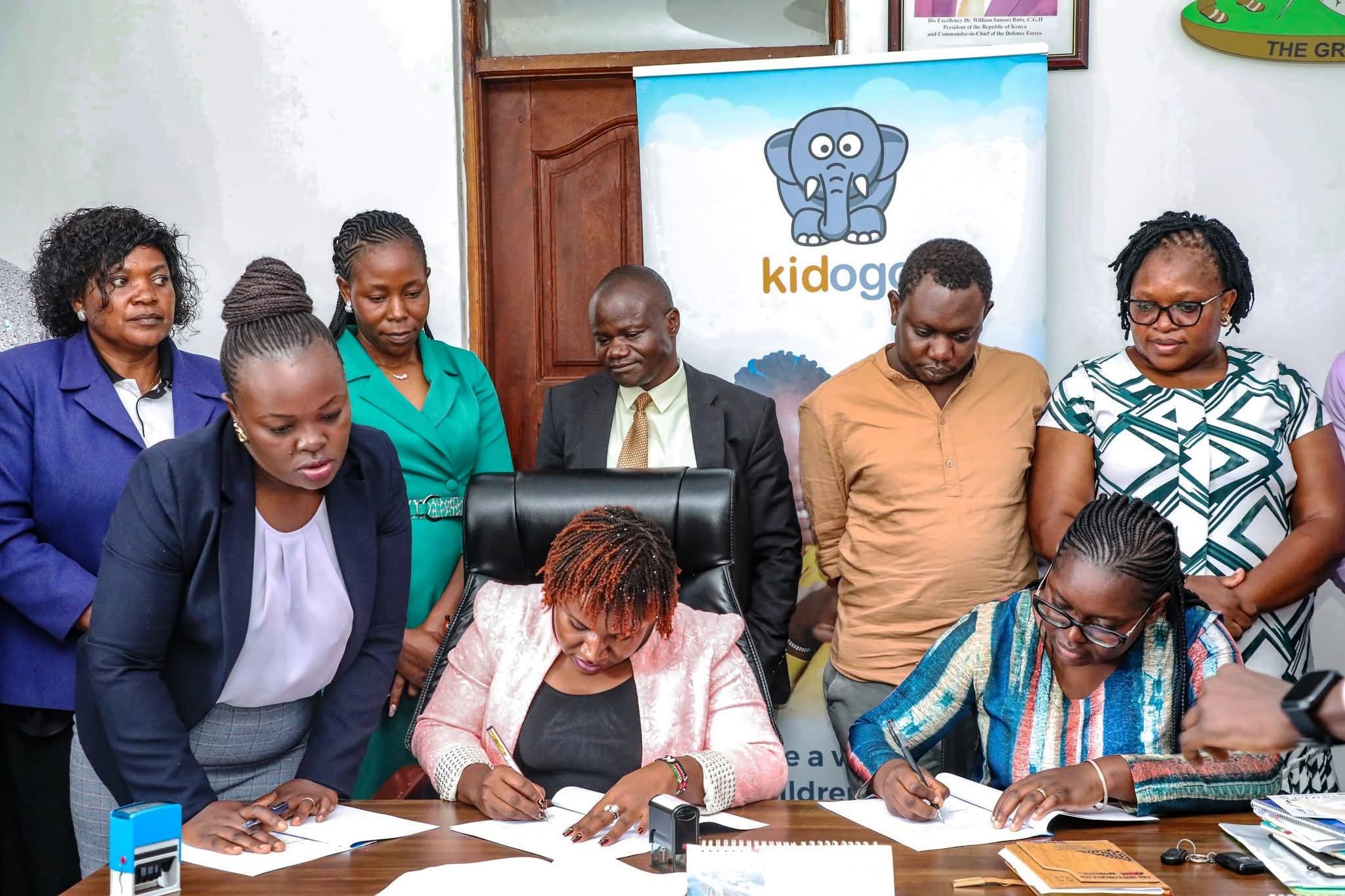
May 17, 2026| In a significant step toward nurturing Kenya’s next generation, Kidogo Early Years has partnered with the Kakamega County Government in a transformative initiative aimed at redefining childcare as a pillar of community development, economic empowerment, and human dignity.
For countless families—especially mothers striving to balance work and caregiving—this partnership represents hope, relief, and the promise of a better tomorrow. For children across the county, it signals the dawn of a future where every child, regardless of background, has the chance to thrive in a safe, nurturing environment.
For a mother leaving home at dawn to work in the market; for a father hustling to put food on the table; for a caregiver who has long wanted proper training but lacked the means; for a child longing for a safe space to learn and grow—this partnership is a turning point. It promises peace of mind for parents, professional development for caregivers, economic empowerment for families, safe and stimulating environments for children, and a stronger, more prosperous Kakamega for all.
Kidogo Early Years is a social enterprise dedicated to delivering quality, affordable childcare and transforming early childhood care into a driver of socio-economic opportunity. Childcare in Kenya has long been undervalued, despite its powerful role in shaping lifelong outcomes. Many children spend their earliest years—the most critical period for brain development—in unsafe or unstructured environments, while parents juggle the heavy demands of work and survival.
The Memorandum of Understanding (MOU) between the two entities establishes a framework for collaboration to expand access to safe, affordable, and quality childcare services across Kakamega County. Through the new partnership, Kidogo Early Years will train caregivers in professional, evidence-based techniques; upgrade community childcare centres to meet WHO Nurturing Care Framework standards; and equip childcare providers with business management and entrepreneurship skills.
The organisation further intends to support centre owners in running safe, sustainable, child-friendly facilities, and to engage parents and communities in understanding the importance of early childhood development. These interventions are not merely technical—they are transformative. They touch the heart of family life and address a reality lived daily by thousands: the struggle to find safe, reliable childcare that allows parents—especially women—to participate in the workforce and pursue economic opportunities.
Behind every statistic lies a child—curious, vulnerable, and full of potential. Experts estimate that 90% of brain development happens before the age of five, shaping a child’s ability to learn, relate, and succeed later in life. Yet in many communities, children spend these formative years without structured stimulation or protection.
Kidogo’s model—rooted in global best practices—ensures that children receive warm, responsive caregiving; play-based early learning; proper nutrition; safety and emotional support; and opportunities to socialise and explore. This partnership ensures that childcare providers in Kakamega will be equipped not just to watch children, but to nurture them, protect them, and prepare them for life.
In addition, the collaboration seeks to advance community engagement and awareness by sensitising parents, caregivers, and community members on the critical importance of early childhood development, quality childcare, and child protection.
The timing of this partnership could not be more aligned with Kenya’s long-term development goals. It reinforces Vision 2030 by investing in human capital; the Bottom-Up Economic Transformation Agenda by enabling parents—particularly women—to work and uplift their households; and the Sustainable Development Goals (SDGs), especially SDG 4.2 on early childhood development and SDG 5 on gender equality.
Early childhood care is not charity—it is strategy. When parents, especially mothers, access reliable childcare, they are freed to work, start businesses, or pursue education. Families grow stronger, communities become more resilient, and the economy expands.
As the ink dried on this historic agreement, the County Executive Committee Member (CECM) for Social Services, CPA Jackline Masicha, reaffirmed the county’s unwavering commitment to the well-being of children and families. She said the county will provide policy guidance, technical oversight, and coordination support to ensure the partnership is implemented in a manner that is responsive to local needs, aligned with county development priorities, and compliant with national standards.
She added that the Department of Social Services, Sports, Youth, Gender and Culture will serve as the lead coordinating entity, working closely with other relevant county departments to mainstream childcare into county planning, budgeting, and service delivery frameworks.
“By strengthening childcare in Kakamega, we are strengthening the very foundation of our society,” she said. “Every child deserves safety, nurturing, and the opportunity to realise their God-given potential. This partnership is our gift to the children of today and the leaders of tomorrow.”
Ms Masicha emphasised that the Department of Social Services, Sports, Youth, Gender and Culture will lead coordination and, working closely with other county departments, will ensure the programme is responsive to local needs and rooted in community realities. She noted that the county will provide policy guidance, technical oversight, and institutional support, ensuring the partnership is not a temporary intervention but a long-term investment in future generations.
“This partnership is anchored in the Fourth Schedule of the Constitution of Kenya 2010, which devolves early childhood development and child welfare to counties,” she noted. “It is a legal—and moral—responsibility that Kakamega County embraces fully. Through this MOU, the county signals its readiness to safeguard children’s rights, protect families, and foster sustainable development from the ground up.”
The signing ceremony brought together some of Kakamega’s top leadership, reflecting broad institutional support. Present were Deputy County Secretary, CPA Samson Otieno; County Attorney, Ms Vivian Mmbaka; Chief Officer for Gender and Culture, Ms Christine Oside; Director of Gender, Ms Joyce Wafukho; Director of Sports and Youth, Mr Anthony Simiyu; Kidogo Associate Director of Policy and Partnerships, Ms Susan Mtana; as well as representative community leaders and early years champions.
Kakamega County is investing not just in childcare, but in the future. Kidogo Early Years is partnering not just with a government, but with a community. Together, they are planting seeds of transformation that will bear fruit for decades to come.
These initiatives also aim to strengthen child protection mechanisms and shift public attitudes towards professional childcare as a critical driver of socio-economic progress.
Ms Mtana observed that Kakamega County is investing not just in childcare, but in the future, while Kidogo Early Years is partnering not just with a government, but with a community. “Together, we are planting seeds of transformation that will bear fruit for decades to come,” she said. “This agreement is not a side issue. It is a priority, a responsibility, and a cornerstone of the county’s social development agenda.”
A key component of the partnership is community engagement. Kidogo and the county government will roll out campaigns to sensitise parents, caregivers, and community members on the importance of early childhood development and the role of quality childcare in shaping children’s futures.