
By BOB AMALEMBA
May 23, 2026| The Nuclear Power and Energy Agency (NuPEA) has responded to fresh protests in Siaya County by promising intensified village-level consultations, insisting that no nuclear infrastructure will proceed without genuine local consent.
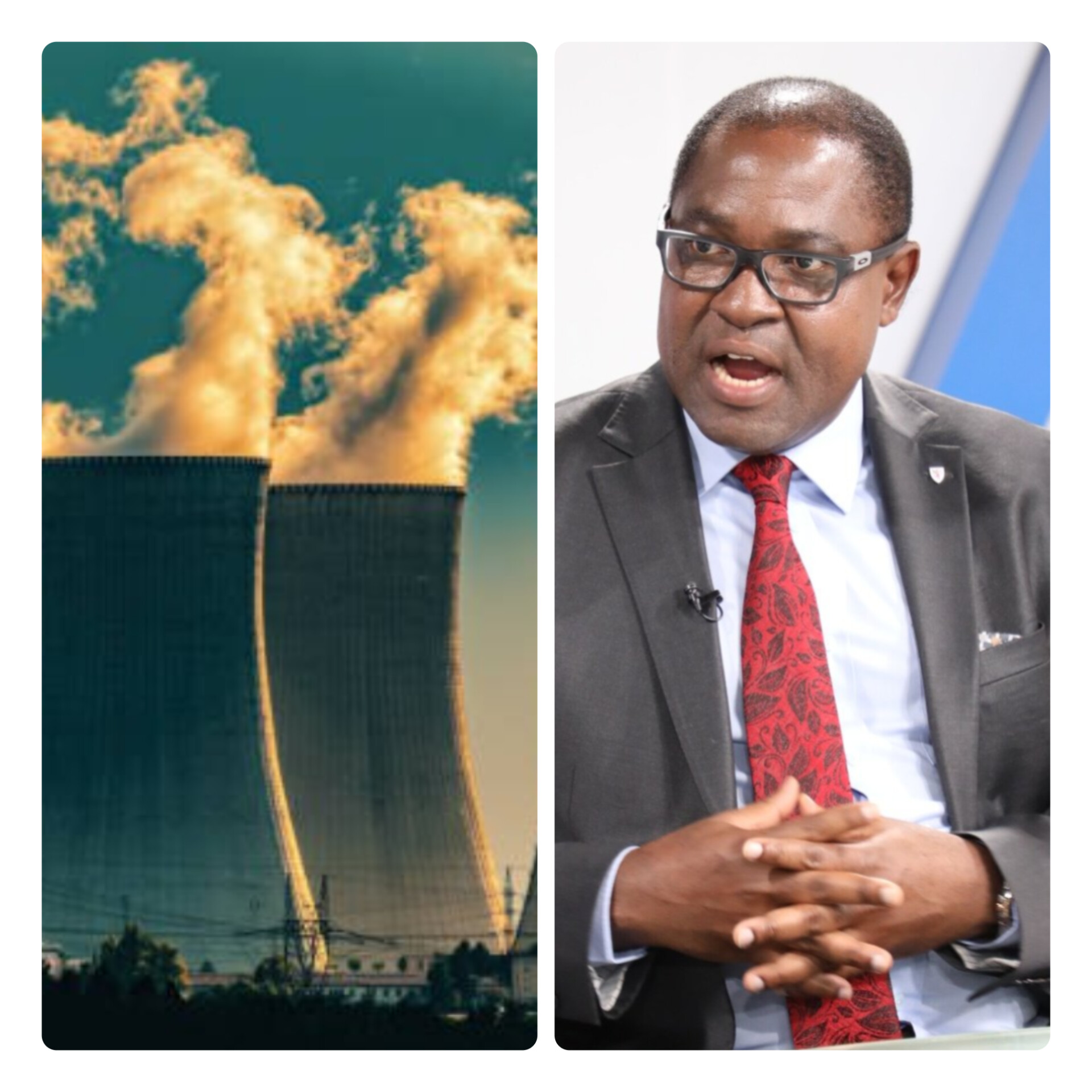
In an official statement issued to newsrooms after demonstrations on May 21 in Sakwa village, Bondo sub-county, NuPEA CEO Justus Wabuyabo (pictured) acknowledged residents’ concerns and framed public participation as both a constitutional requirement and a practical necessity. “We hear and respect the voices of the residents of Siaya,” the statement read. “No infrastructure will be built without the broad, informed consent of the community.”
The protests saw hundreds of residents disrupt a public forum, chanting rejection slogans and displaying banners reading “We Reject.” Many expressed fears over radiation leaks, nuclear waste disposal, displacement of farming and fishing communities, and potential contamination of Lake Victoria, Kenya’s vital freshwater resource. The pushback mirrors earlier opposition that forced the government to abandon plans for a coastal site in Kilifi County.
Shift to Grassroots Outreach
NuPEA says it is now transitioning from high-level planning to intensive, village-by-village sensitization drives aimed at addressing safety, livelihoods, and land issues directly. The agency has identified up to eight potential sites in Siaya, citing the county’s geological stability and ready access to cooling water from Lake Victoria.
This latest flare-up comes as Kenya accelerates its nuclear ambitions. The government targets groundbreaking in 2027 for an initial 1,000–2,000 MW plant, with full commissioning around 2034 and long-term ambitions reaching 20,000 MW by 2040. The project forms a central piece of efforts to expand national generation capacity well beyond the current 3,300 MW, supporting industrialization and reducing dependence on variable renewables and costly thermal power.
Local political leaders have shown varying degrees of support. Siaya Governor James Orengo and some national figures have highlighted potential economic benefits, including jobs and infrastructure. President William Ruto has invited Siaya residents to view the project as a partnership opportunity. However, ground-level sentiment remains mixed, with elders and residents voicing distrust rooted in past experiences with large projects and general anxiety about nuclear technology.
NuPEA’s Measured Approach
NuPEA’s response reflects a pragmatic recognition that social acceptance is critical. By committing to multi-layered educational campaigns rather than rushing ahead, the agency is attempting to build the social licence often missing in major energy developments. This includes detailed explanations of modern reactor safety features, waste management protocols, and benefit-sharing arrangements—areas where public scepticism runs high.
Kenya’s nuclear programme has followed International Atomic Energy Agency (IAEA) guidelines, completing pre-feasibility studies, site evaluations, and strategic environmental assessments. KenGen is lined up as the future operator, with international partnerships already in place. Proponents argue that nuclear power offers reliable baseload electricity essential for a country whose population and economy continue to grow rapidly.
Critics, however, point to legitimate risks: the need for robust independent regulation by the Kenya Nuclear Regulatory Authority, emergency preparedness in a densely populated area, and guarantees that local livelihoods will not suffer. Global history shows that trust is hard-won after accidents elsewhere, even if new designs incorporate passive safety systems.
In choosing to engage rather than confront protesters, NuPEA appears to be learning from the Kilifi experience. The coming months of direct community dialogues will test whether anxieties can be transformed into informed understanding. Success will depend on delivering transparent information, verifiable environmental safeguards, fair compensation, and tangible local benefits.