By SHABAN MAKOKHA
JUNE 17, 2026| The sun-scorched earth of Matawa village stretches endlessly as Beatrice Otuma hoists a 20-kilogram sack of dry maize onto her head—the weight of survival pressing down on her spine.
The mother of five has already conquered a day’s worth of battles: tilling stubborn soil, hauling water from the distant borehole, stirring steaming pots over a smoky fire, and soothing restless children. But as dusk paints the hills of Mumias West in shades of amber, her real fight is just beginning.
Tonight’s supper hinges on one unpredictable variable: will the diesel posho mill roar to life?
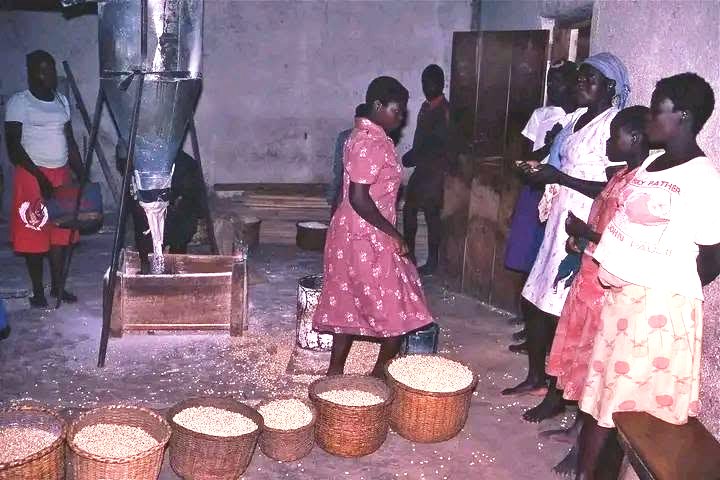
Three kilometres away, the guttural cough of a grinding machine echoes through the village like a wounded beast. If fortune smiles, the operator will have enough customers to justify firing up the fuel-guzzling engine. If not, Beatrice will embark on a desperate trek to the next village—her family’s hunger riding on her weary shoulders.
“My children cannot fathom a day without ugali,” she says, her voice carrying the weariness of a thousand such evenings. “But sometimes I wait for hours before that machine starts. Other times, I walk kilometres—my feet bleeding, my hope fading—searching for another mill that is breathing.”
The Hidden Cost of Kenya’s Beloved Dish
For millions of Kenyan families, ugali is more than sustenance—it is heritage, comfort, and the heartbeat of home. But behind every steaming, golden mound served at dinner lies a story rarely told: one of backbreaking labour, punishing journeys, and lungs slowly poisoned by diesel fumes.
Across rural Kenya, women bear the crushing weight of turning harvested maize into flour—a task that has evolved from the prehistoric grindstone to the diesel engine, but has never truly shed its burden.
Today, thousands of villages remain beyond the reach of reliable electricity, trapping families in a toxic dependency on diesel-powered posho mills. These machines have become the lifeline of rural food security—but that lifeline comes with a noose.
Women spend hours baking in crowded queues, their children coughing in clouds of maize dust and exhaust smoke. When global oil prices spike, milling charges soar overnight, forcing mothers to choose between grinding fees and school fees. Some barter their precious maize kernels for service. Others skip meals to afford the cost.
The Silent Epidemic: What Diesel Fumes Are Doing to Rural Families
At the village milling shed, the air is thick with more than grain dust.
“Diesel engines release a toxic cocktail of pollutants,” warns Dr Donald Musi of Yatta Clinics. “Microscopic soot particles that burrow deep into lungs and bloodstream. Gases that scorch airways and breed cancer-causing smog.”
The World Health Organisation and the International Agency for Research on Cancer have classified diesel exhaust as a Group One carcinogen—a substance with proven links to lung and bladder cancers.
Short-term exposure triggers coughing fits, burning eyes, and asthma attacks that leave children gasping. Long-term exposure? Chronic bronchitis, cardiovascular disease, and a slow poisoning of the very air families breathe while waiting for their daily bread.
Yet for millions, diesel mills remain the only option.
The Solar Revolution: Dawn of a Cleaner Grind
But on the horizon, a quiet revolution is flickering to life.
Across Kenya’s rural landscapes, a new generation of solar-powered micro-mills is emerging—silent, emission-free, and powered by the very sun that beats down on farmers’ backs.
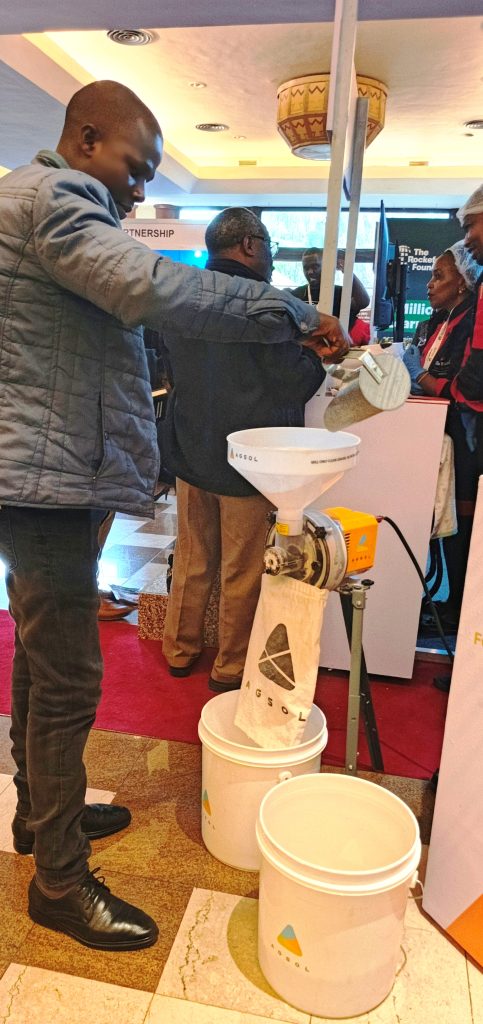
At the forefront stands Agsol Green Technology Solutions, whose portable solar milling engines are rewriting the rules of food processing.
“For too long, large diesel milling engines have subjected women to unnecessary suffering—denying them access to safe, clean flour,” says Binagwaho Gakunja, Agsol’s Grants and Impact Manager, speaking at the 2026 World Farmers Organisation Summit in Nairobi. “Many households simply cannot afford the costs—financial and physical—of diesel-powered milling.”
The innovation is deceptively simple: compact machines run entirely on Solar and Battery Energy Storage Systems, producing up to 50 kilograms of flour per hour with virtually no emissions, no noise, and no fuel costs.
Unlike diesel behemoths that require operators to gather crowds of customers before the engine can justify its roar, these solar siblings can be switched on instantly—right in a household’s backyard.
Users simply pour grain into the hopper, flick a switch, and watch golden flour cascade from the outlet chute. The system shuts down automatically when grain runs out—no wasted energy, no wasted time.
From Survival to Enterprise: Farmers Reclaim Their Power
For Langat Kiptoo of Nandi County, the solar mill is more than convenience—it’s economic liberation.
“This machine gives my family access to cleaner flour produced using renewable energy,” he says, pride evident in his voice. “But more than that, it’s an opportunity—I now earn income by offering milling services to neighbours and my wider community.”
What was once a daily burden has become a thriving micro-enterprise. Women who spent hours waiting at diesel mills now spend that time cultivating their farms, educating their children, or building businesses of their own.
A Future Without Toxic Grind
For generations, rural women have carried the invisible burden of feeding their families—walking impossible distances with crushing loads, waiting endlessly at deafening mills, and inhaling poison in pursuit of a simple meal.
But as solar-powered milling gains ground, the journey from farm to plate is finally becoming easier.
“Cleaner energy is not just transforming how grain is milled,” Gakunja reflects. “It is transforming lives.”
For Beatrice Otuma and millions of Kenyan mothers like her, that transformation cannot come soon enough. Less time chasing flour means more time for family, for farming, and for a future where the only thing rising is hope—not diesel fumes.