

By SHABAN MAKOKHA
July 1, 2026| As thousands of learners across Kenya streamed back to school after the midterm break—carrying books, uniforms and renewed hopes for the term ahead—a different message echoed from the pulpit of St. Peter’s Catholic Church in Mumias.
It was not about examinations, grades or careers.
It was about protecting dreams.
Standing before hundreds of worshippers, parents, teachers and leaders, Catholic Diocese of Kakamega Bishop Joseph Obanyi made a heartfelt plea to learners to reject violence and school unrest, warning that every classroom torched and every dormitory reduced to ashes represents a dream destroyed.
The bishop spoke with visible concern following a series of school unrest incidents witnessed across the country before the midterm break, where students set ablaze dormitories, classrooms and other facilities, causing destruction worth millions of shillings and disrupting learning in several institutions.
“By burning schools, learners are not punishing teachers or the government. They are burning the dreams of their own generation,” Bishop Obanyi said. “It is wrong for students to destroy facilities that have been built through huge financial sacrifices. Parents struggle every day to educate their children. Communities contribute their resources. Governments invest billions of shillings in schools. Destroying those facilities only destroys the future of the very learners they were built for.”
His words resonated deeply with the congregation gathered for the official opening and blessing of the new priests’ residence at St. Peter’s Catholic Church in Mumias.
For many parents in attendance, educating a child is a journey marked by sacrifice. Every exercise book bought, every uniform stitched and every school fee paid represents countless hours of hard work. Some wake up before dawn to till small farms. Others sell vegetables by the roadside, work as boda boda riders, labour on construction sites or survive on casual jobs just to raise school fees. To such parents, seeing a school engulfed in flames is not merely news on television. It is the collapse of years of sacrifice and hope.
Bishop Obanyi challenged learners to reflect on the unseen struggles behind every opportunity they receive.
“Education remains the greatest gift society can give a child. Do not destroy what others have sacrificed so much to build. Protect your schools because they are the foundation of your future.”
The bishop reminded students that discipline is not a punishment but a pathway to success. He urged learners returning to school to embrace dialogue whenever disagreements arise instead of resorting to violence, destruction and intimidation.
“Real strength is shown through discipline, respect and responsibility. A disciplined learner becomes a responsible citizen.”
The emotional appeal was echoed by Kakamega Governor Dr. Fernandes Barasa, who described education as the most powerful investment any society can make. He said schools should remain places where dreams are nurtured—not battlegrounds where anger and frustration consume years of investment.
“When a classroom burns, it is not only bricks and timber that are lost,” Governor Barasa said. “We lose valuable learning time. Parents are forced to dig deeper into already strained pockets. Teachers are demoralised, and learners themselves become the greatest victims.”
The governor urged students to appreciate the opportunities before them and remain focused on their education despite the challenges they may encounter. He reaffirmed the county government’s commitment to supporting education through improved infrastructure and creating a conducive environment where learners can thrive.
“Our responsibility as leaders is to provide better learning facilities. The responsibility of learners is to use those facilities wisely and pursue their dreams with determination.”
The two leaders also challenged parents, teachers, religious leaders and the wider community not to leave the task of shaping children’s character to schools alone. According to Bishop Obanyi, character formation begins at home and must continue in schools, churches and society.
“A nation cannot build its future on academic excellence alone. We must also raise children who are honest, responsible, compassionate and disciplined.”
Education experts have repeatedly warned that school unrest has long-term consequences that extend far beyond damaged buildings. Besides disrupting academic calendars, unrest leaves learners traumatised, widens inequalities as schools divert resources to reconstruction instead of learning, and places additional financial pressure on parents already struggling with the rising cost of education.
As schools reopen this week, many principals hope that classrooms will once again be filled with curiosity instead of fear, dialogue instead of destruction, and ambition instead of anger.
As schools reopen this week, many principals hope that classrooms will once again be filled with curiosity instead of fear, dialogue instead of destruction, and ambition instead of anger.
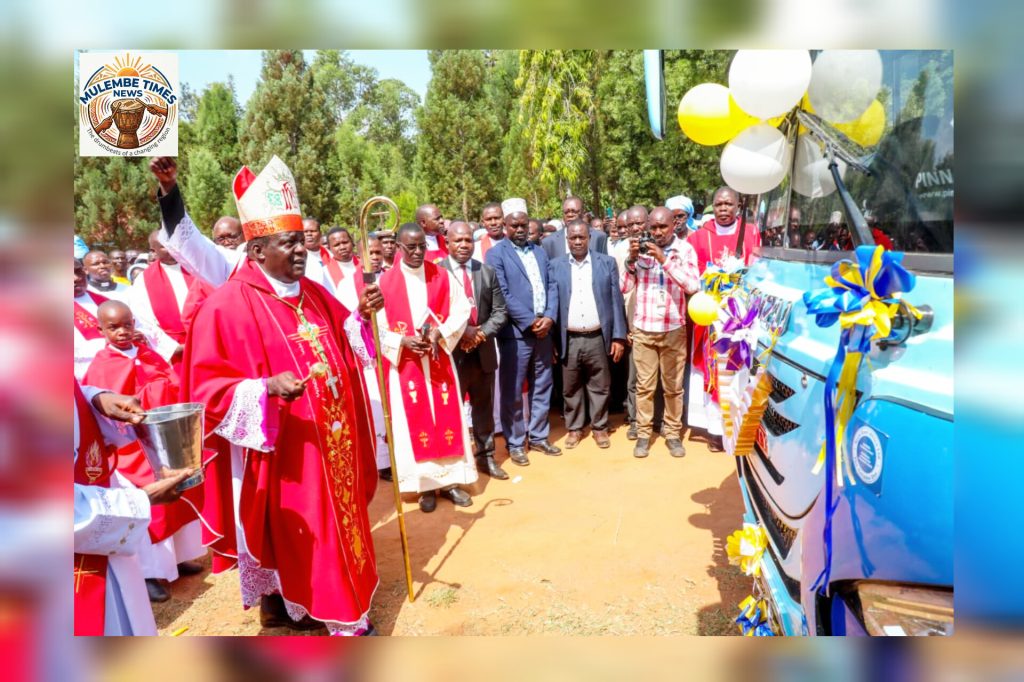
The leaders delivered their message during a colourful ceremony that celebrated hope rather than despair. Bishop Obanyi officially opened and blessed the newly completed parish priests’ residence, commissioned a parish bus donated by the Catholic Women Association (CWA), dedicated the parish grotto and blessed other completed development projects. The occasion drew hundreds of faithful, clergy, county leaders and residents, reflecting the Catholic Church’s enduring commitment to spiritual growth, education and community development.
Beyond the prayers, the ribbon-cutting and celebrations, one message stood out: Schools are more than buildings of stone and steel. They are places where futures are written, talents are discovered and generations are prepared for tomorrow.