
By SHABAN MAKOKHA
September 8, 2026|As the Teachers Service Commission (TSC) shortlists nominees for the 2026 Teachers’ Day Awards, educationists are calling for debate teachers to be recognised—arguing that these educators are quietly building Kenya’s thinkers, leaders and peacebuilders.
The Kenya National Amani Club is pushing for formal recognition of debate as a national co-curricular activity, and for teachers who dedicate themselves to debate, public speaking, critical thinking and peace-building to be included in national teacher recognition programmes.
“We are concerned that debate is not adequately recognised as a national co-curricular activity and is not clearly reflected in the national co-curricular calendar,” said Kennedy Kunani, National Chairman of the Kenya National Amani Club and a National Cohesion and Integration Advocate.
Kunani says this lack of institutional recognition has inevitably affected the visibility of teachers who train and mentor learners in debate.
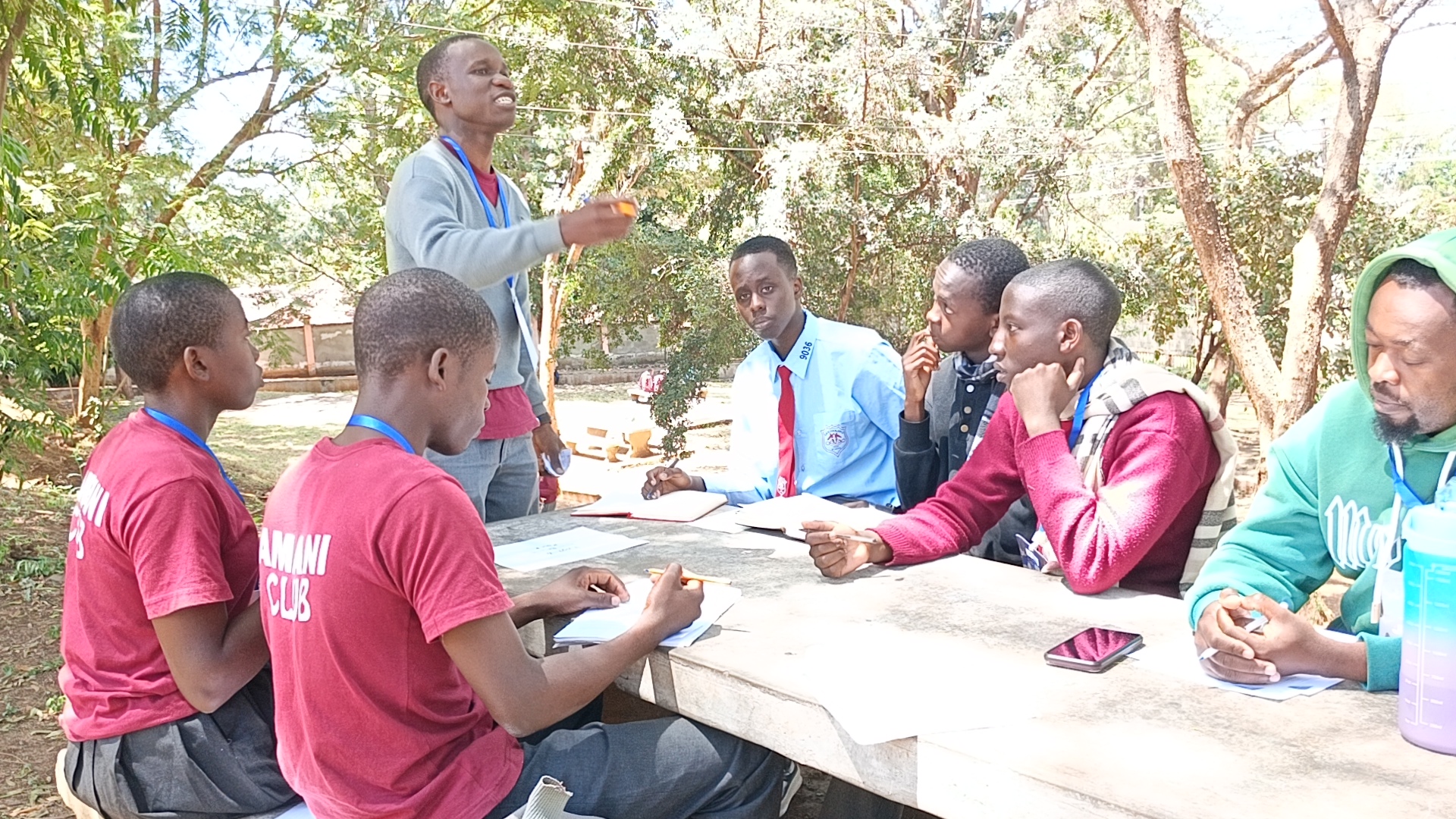
Every successful debate team has a story that begins long before competition day. While other classrooms fall silent and students stream home, one teacher stays behind after the final bell, gathers a small group of learners and begins another lesson. There are no ordinary notes on the blackboard. Instead, there is a motion, arguments, counterarguments, nervous students struggling to find the courage to speak—and a teacher patiently listening.
“Stand up. Speak. Defend your position. But respect the person who disagrees with you,” the teacher urges. Arguments are researched, evidence gathered, questions asked. Voices rise and fall. The teacher listens carefully, correcting an argument here, strengthening a point there, reminding young speakers of one vital principle.
From a peacebuilding perspective, debate is not merely a school activity—it is a rehearsal for democracy. In a country where political, ethnic, religious and social differences can sometimes become deeply personal, the ability to disagree without becoming enemies is more than a communication skill; it is a peace skill.
Yet the teachers who spend countless hours developing this skill in young people are rarely celebrated. They sacrifice weekends, coach teams after school, travel with students and research motions late into the night. They prepare learners for county, national and international competitions. They mentor shy students until they discover their voices. They teach young people how to listen, reason, question and respond. And then, when the trophies come, the teacher often fades into the background.
They search for materials, correct grammar and pronunciation, and help students understand both sides of an argument. This is the invisible work behind debate—and it is work that educationists say deserves recognition.
Now, as TSC undertakes the ongoing shortlisting for the 2026 Teachers’ Day Awards, the Kenya National Amani Club is asking the country to look again at these unsung educators. The organisation wants debate and debate teachers formally recognised within Kenya’s education system.
Mr Kunani says the current situation leaves an important group of educators outside the spotlight.
Debate is often reduced to trophies—Who won? Which school emerged best? Who was the best speaker? But those who understand its deeper value know the real prize is what happens to the learner long after the competition ends. The teacher ensures that a shy teenager discovers confidence, a quiet student finds a voice, a young person who once accepted everything without questioning learns to ask: Why? Another learns that there can be two sides to an argument. One discovers that losing does not mean humiliation; another learns that disagreement does not have to destroy friendship.
That is the transformative power of debate. The trophy eventually gathers dust. The lesson remains.
“Debate is much more than a competition,” Kunani argues. “It develops critical thinking and research skills, builds communication, creates confidence, nurtures leadership, teaches tolerance and prepares young people for responsible citizenship. But perhaps its most important contribution is something that cannot be easily measured in examination results: it teaches young people how to live with difference.”
Imagine a generation of young people who can passionately disagree about politics without insulting one another. Imagine citizens who can challenge an idea without attacking the person behind it. Imagine leaders who can lose an argument without turning opponents into enemies—that is the kind of society debate can help build.
From a peacebuilding perspective, debate is a training ground for dialogue. A student stands before an audience and presents an argument. Someone disagrees; the student listens and responds. The argument continues. Nobody throws a stone. Nobody shouts down an opponent. Nobody resorts to violence. Words become weapons, and reason becomes the shield.

For Kunani, this makes debate particularly important in developing responsible young citizens.
Kenya has witnessed the painful consequences of intolerance—political disagreements that have sometimes fractured communities, online debates that frequently descend into abuse, public discourse that quickly turns from disagreement into personal attacks, and young people exposed to messages that encourage division rather than dialogue.
Against this background, educationists believe schools have an enormous responsibility: to teach children to disagree early—before disagreement becomes hatred. To teach them that another person can hold a different opinion and still deserve respect. To teach them that changing one’s mind is not weakness. That listening is not surrender. That winning an argument is not worth destroying a relationship. And that sometimes compromise is more powerful than victory. These are the lessons debate teachers quietly deliver every day.
But there is an uncomfortable irony: a student may become nationally recognised because of debate; a school may proudly display a trophy; parents may celebrate when their child returns home with an award. But what about the teacher who spent weeks preparing that student? Who recognises the teacher who gave up Saturday afternoons to coach the team, researched motions at night, travelled with learners?
That is the question now before TSC and the Ministry of Education.
For debate teachers, recognition would mean much more than receiving an award. It would tell thousands of teachers across Kenya that their work matters. It would signal to schools that debate deserves investment. It would tell learners that critical thinking and dialogue are valuable. And it would send a message to the country that education is not merely about passing examinations—it is also about creating citizens capable of living peacefully with people who think differently.
Kunani wants this recognition to begin at the institutional level.
“We therefore call upon the Ministry of Education and the Teachers Service Commission to formally recognise debate as a national co-curricular activity and include it in the national co-curricular calendar,” he said.
He also wants teacher recognition systems to reflect the contribution of debate coaches and mentors.
“We further urge TSC and Teachers’ Day Award panels to consider the significant contribution of debate teachers when assessing outstanding teachers. And that may be the greatest reward of all,” he added.
The Kenya National Amani Club says the country should rethink what it means to celebrate an outstanding teacher—one who develops young people who can communicate, think critically, embrace diversity and resolve differences peacefully.
The organisation’s appeal comes at a significant moment as preparations for the 2026 Teachers’ Day Awards continue.
Kunani puts the argument in its simplest form: “A teacher who develops a debater is developing more than a competitor; they are developing a thinker, a leader and a peacebuilder.”
That is perhaps the strongest case for recognising debate teachers.
The Kenya National Amani Club’s message is clear: Recognise debate. Recognise debate teachers. Recognise dialogue as a tool for peace. Because Kenya does not simply need young people who can speak—it needs young people who can listen, who can win arguments, who can understand those with whom they disagree, and who can disagree without dividing the country.
If Kenya celebrates academic excellence, sporting excellence and other forms of student achievement, it should also celebrate the teachers who help young people develop the ability to reason, articulate ideas and engage others respectfully.
“That is why the recognition of debate must go hand in hand with the recognition of the teachers who make it possible,” he concluded.
The debate teacher may not always stand on the podium. They may not receive the loudest applause or be celebrated when the cameras arrive. But every time a young Kenyan chooses dialogue over hostility, reason over anger, and understanding over intolerance—the quiet work of that teacher lives on.