
By REUBEN OLITA
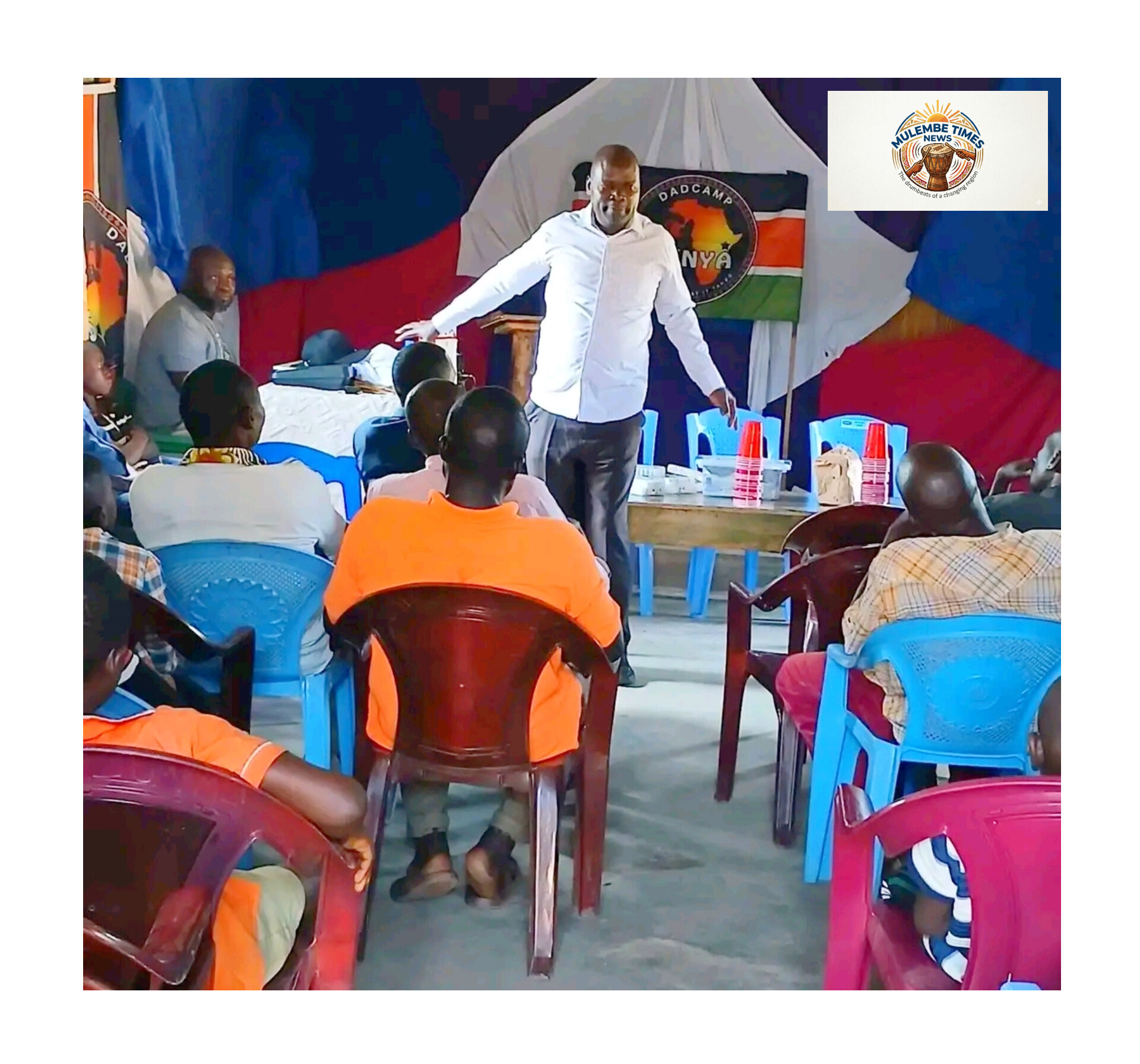
September 9, 2026| In the hot, dusty halls of Deliverance Church Amairo, a quiet revolution began this week—not with fanfare, but with the weight of a generation on its shoulders. The Nairobi-based DADCAMP Non-Profit organisation launched a four-day training programme for fathers in Busia County, tackling a crisis that has long been whispered in the shadows of Kenyan homes: the slow disappearance of the father’s voice.
The numbers paint a stark picture. Nationally, the proportion of births to single mothers rose to 14.7 per cent in 2025, up from 13.4 per cent the previous year . By 2022, a third of Kenyan households were headed by women—a figure that jumps to 36 per cent in rural areas . In some counties, the trend is even more pronounced: by 2022, nearly 45 per cent of never-married women in Central Kenya had given birth, while Nairobi saw that figure nearly double from 22.5 per cent in 2008 to 43.1 per cent . The 2019 census showed families headed by a single parent had climbed to 38.2 per cent, up from 25.1 per cent a decade earlier . Behind each percentage is a child navigating life without a father’s steady hand.
DADCAMP director Samuel Sijenyi did not mince words. He described a cascade of consequences—drug abuse, teenage pregnancies, domestic violence, crime, and school dropouts—all feeding off the same root cause: the absence of a strong, responsible father. “In the home where the father is not the spiritual leader,” he warned, “more than 80 per cent of children will abandon their faith as adults.”
The “Father Factor,” as Sijenyi calls it, is built on four pillars: Live Pure, Speak Truth, Right Wrong, and Follow the King, Jesus. It is a message that resonates far beyond Busia’s borders. Across Kenya, single mothers carry the double burden of breadwinner and caregiver, often earning less than Ksh 300 a day . Children in fatherless homes are more likely to experience low self-esteem, with one study showing adolescents without fathers had a higher likelihood of emotional distress . In prisons, the statistics are even more damning: 46 per cent of inmates, 60 per cent of juvenile offenders, and 90 per cent of convicted rapists reportedly come from fatherless homes .
Hillary Peter Mainga, a Busia senatorial aspirant, helped bring the programme to the county after encountering DADCAMP in Nairobi. He pledged uniforms for participating children—a small but symbolic act—while Bishop Bernard Ijaa Odalinga urged the organisation to train local facilitators to sustain the effort beyond a single visit.
The programme will move through Teso North, Butula, and Matayos, with a second phase planned for October. But the real work, organisers say, lies in the daily, unglamorous task of showing up—for prayers, for guidance, for the quiet conversations that shape a child’s future.
As Sijenyi put it: “Don’t be tired of telling them. Pray for your children. Create awareness as a father.” In a country where the family structure is bending under immense pressure, that message may be the most urgent one of all.