
By SHABAN MAKOKHA
September 24, 2026| There was a time when the changing seasons could be read from the family cooking pot.
The first rains announced the arrival of termites. Mushrooms appeared around old anthills. Rivers yielded catfish. Women sorted groundnuts and sesame before pounding them into rich pastes to accompany traditional vegetables. Millet and sorghum were ground into porridge, filling homes with the smell of a breakfast that had sustained generations.
Food was not simply food. It was medicine, culture, memory and a way of life.
But across Matungu and much of Western Kenya, that relationship is changing. As traditional vegetables, millet, sorghum, mushrooms, termites and other indigenous foods disappear from family tables, communities are turning to governments, schools and village markets to rescue a food heritage threatened by shifting diets, climate pressures and rising lifestyle diseases.
Some of the foods that once defined rural diets are vanishing from farms, markets and, increasingly, from the memories of young people. And as the traditional plate shrinks, another is expanding — one filled with sugary drinks, refined flour products, fried snacks, salty packaged foods and other ultra-processed items readily available at roadside kiosks and busy trading centres.
The battle for the traditional plate is therefore becoming more than a question of culture. It is increasingly a question of health, food security and the future of a generation.
A Call for County Investment
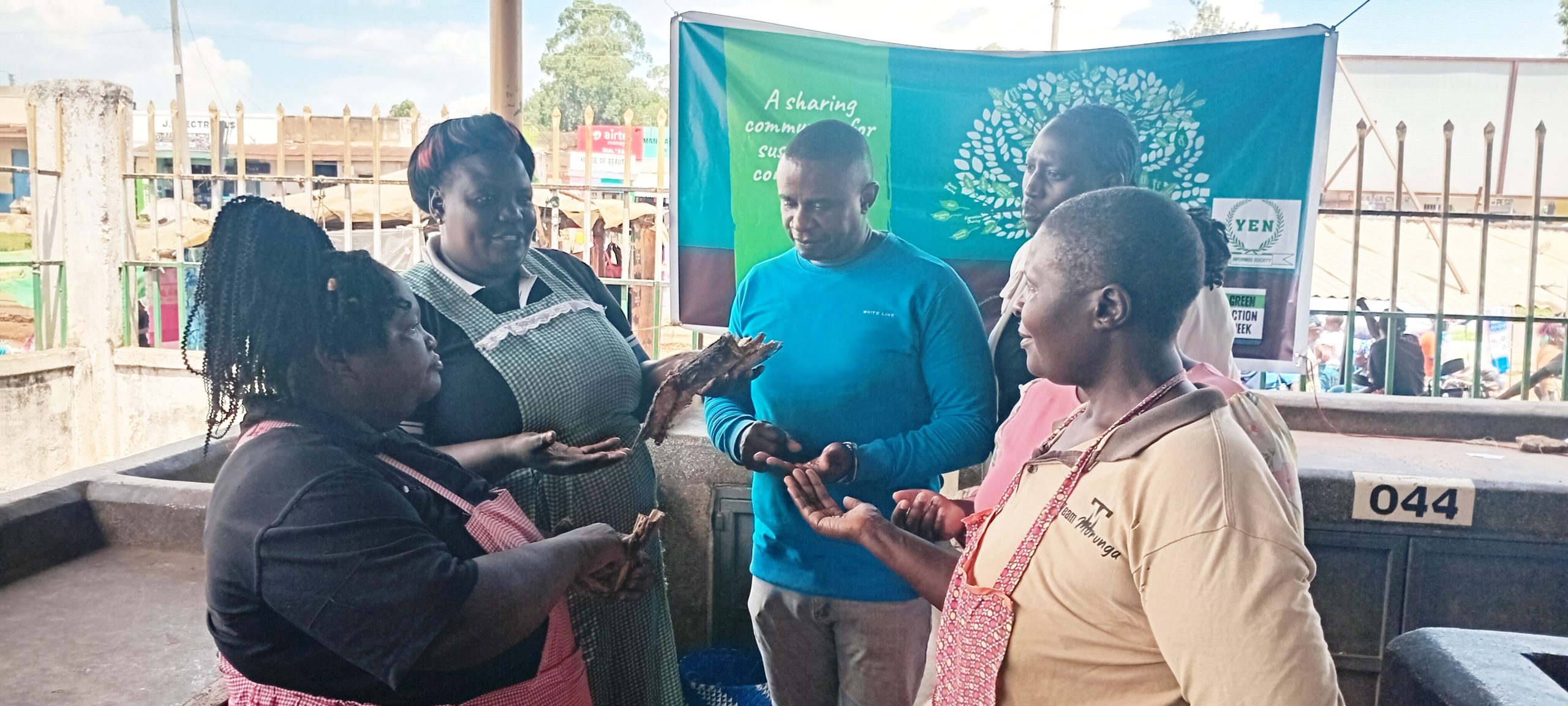
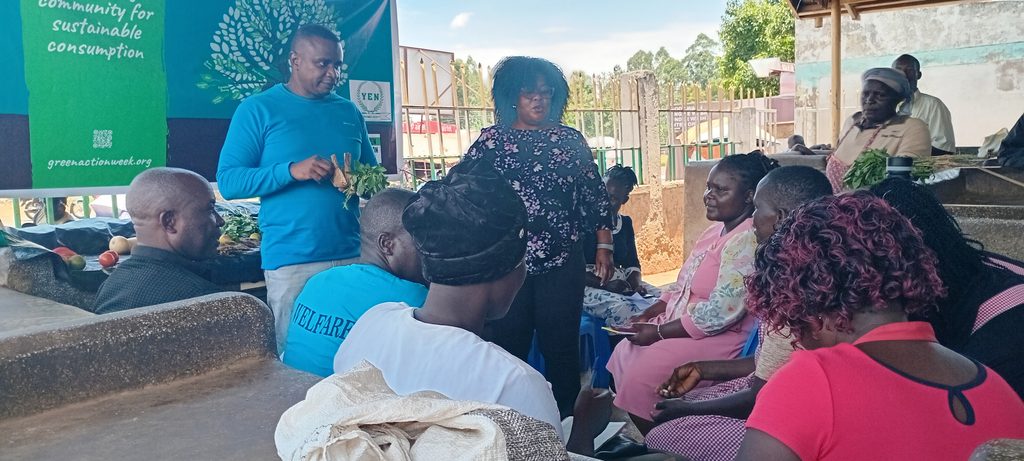
During a sensitisation session for traders in Matungu, Youth Education Network director Michael Mung’oma challenged county governments to invest deliberately in the preservation and promotion of indigenous foods.
He said county departments — particularly those responsible for culture, agriculture and health — should work together to ensure that young people understand the value of foods that were once central to local diets. He linked changing diets to the growing burden of lifestyle-related diseases, arguing that increased consumption of oily and highly processed foods was contributing to the problem.
His message comes as Green Action Week 2026, themed “Sharing Community for Food Sovereignty,” seeks to rebuild interest in indigenous foods through storytelling, seed sharing and village market campaigns.
The campaign is built around a simple but powerful idea: communities cannot protect what they no longer remember.
A Food System in Transition
In Matungu, where more than 150,000 people live and where busy roads connect communities to neighbouring towns, the transformation of the food system is visible. Traditional crops that once occupied household gardens are increasingly competing with commercial food systems.
Climate change is altering growing seasons. Environmental degradation is reducing the natural habitats where wild foods are found. Urbanisation is changing lifestyles, while commercial foods have become increasingly accessible.
At the same time, knowledge is disappearing. An elderly woman may know which wild mushrooms are safe to eat and which should never be touched. An old farmer may know when to plant a particular indigenous grain, how to preserve its seeds and how to store the harvest for the dry months. A fisherman may know where the river used to yield catfish.
But what happens when that knowledge is not passed to the next generation? It disappears with the people who carried it.
That is the gap the Green Action Week campaign hopes to close.
Village market forums are bringing elders, traders and consumers together to discuss indigenous foods. Women-led storytelling circles are creating spaces for those who have traditionally preserved food knowledge. Schools are also being drawn into the conversation so that children can learn directly from community members who understand how local foods were grown, harvested, prepared and preserved.
“We ask the county governments through the Ministry of Culture to promote sensitisation about indigenous foods in schools. Children should grow up understanding the benefits of these foods,” said Mung’oma.
The Health Cost of a Vanishing Plate
Behind the cultural loss lies a growing public-health concern.
When traditional foods disappear, something else inevitably fills the space — a replacement that is cheap and heavily marketed. A packet of crisps can be easier to find than traditional vegetables. A sugary drink may be more readily available to a school-going child than millet porridge. Fried snacks can become a cheaper and quicker option than a meal prepared from locally grown foods.
The result is a profound shift in what children grow up considering normal food.
Health experts in Kenya and elsewhere have warned of the growing burden of non-communicable diseases, including obesity, type 2 diabetes and hypertension. These illnesses are no longer associated only with older or wealthier populations. Younger people and rural communities are also increasingly exposed to risk factors linked to diets high in sugar, salt, refined carbohydrates and unhealthy fats — and low in fibre and dietary diversity.
That makes the indigenous-food campaign more than an exercise in nostalgia. It is about changing what is available, affordable and desirable.
For many young consumers, the problem is not simply that they have made poor food choices. Their choices are shaped by what is sold around them, what their families can afford, what is advertised and what is considered fashionable.
Rediscovering a Diverse Diet
Matungu and other parts of Western Kenya already possess many of the building blocks of a diverse diet. Millet and sorghum provide a whole-grain alternative. Groundnuts and sesame offer plant-based sources of protein and other nutrients. Traditional vegetables can provide important micronutrients, while fish offers protein and other nutrients. Mushrooms and other wild foods can contribute to dietary diversity when safely harvested and prepared.
Termites, long valued in some local communities, are another example of food knowledge passed from one generation to another.
All of these foods are medicinal in nature. A diverse diet built around locally available foods can form part of a broader approach to healthier eating.
The challenge is convincing a generation that indigenous food is not a symbol of poverty. For years, some traditional foods have been dismissed as food for the poor, old-fashioned meals or relics of a bygone era. That perception is now becoming one of the biggest obstacles to their revival.
The campaign seeks to change the narrative — to show that indigenous food can be nutritious and culturally significant, that it can reduce dependence on external food systems, and that many of these crops are well adapted to local climatic conditions and need to be rediscovered.
A Shared Responsibility
But communities cannot carry the responsibility alone. County governments have a central role to play.
Mung’oma’s call for budgetary support raises a fundamental question: if indigenous foods are important for culture, nutrition, biodiversity and local livelihoods, how much public money is being invested to protect them?
County food and nutrition programmes could deliberately incorporate indigenous crops and traditional foods. Agricultural extension officers could provide farmers with information on indigenous varieties, seed preservation and climate-resilient production. Research institutions could document traditional crops and food preparation methods before knowledge disappears. Schools could incorporate indigenous foods into learning and, where feasible, into school feeding programmes.
Such measures would do more than put traditional foods back on children’s plates. They could create demand for farmers and encourage communities to continue growing crops that might otherwise disappear.
The Seed at the Heart of the Debate
At the heart of the food debate is something even smaller than a plate — the seed.
Traditional seed varieties carry genetic diversity developed and protected by farming communities over generations. But when farmers stop planting particular varieties, those seeds can disappear. Community seed banks and responsible seed-sharing initiatives could therefore become important tools for preserving local food systems.
There is also a broader policy debate around Kenya’s seed laws and the rights of farmers to exchange and preserve traditional varieties. Whatever the policy direction, the objective is clear: indigenous food cannot survive if the seeds required to produce it disappear. Protecting biodiversity means protecting the ability to grow diverse food.
Knowledge Held in Memory
For generations, elders have been repositories of knowledge about food — when to plant, when to harvest, what to preserve, what to avoid and how to prepare it.
That knowledge rarely exists in textbooks. It lives in memory, and memory can disappear. The campaign’s effort to connect schools with elders therefore carries an importance beyond food. A child learning how to identify a traditional vegetable is also learning a piece of history. A student hearing an elder explain how seeds were preserved is learning about resilience. A young person listening to a grandmother describe how traditional foods were prepared is inheriting a cultural story.
Confronting the Food Environment
Food policy must also confront the environment in which young people make decisions. Healthier food choices are difficult to sustain when unhealthy products dominate the spaces around schools, markets and transport centres.
Measures such as clearer food labelling, healthier standards around schools, responsible marketing to children and fiscal measures targeting products associated with unhealthy diets are part of a wider policy conversation. But such measures will have limited impact if healthy alternatives remain inaccessible. That is why agriculture, health, culture and education must stop working in isolation.
The revival of indigenous foods must also protect the ecosystems that produce them. Rivers, wetlands, forests, farms and open spaces support food systems in ways that are often overlooked. If rivers become polluted, fish disappear. If natural habitats are destroyed, wild foods disappear. If land is degraded, farmers struggle to produce crops.
For Matungu, reclaiming the plate is therefore about more than bringing back an old menu. It is about reclaiming knowledge, seeds, culture and local food systems — and perhaps, most importantly, giving the next generation a healthier relationship with the food that surrounds them.