
By REUBEN OLITA
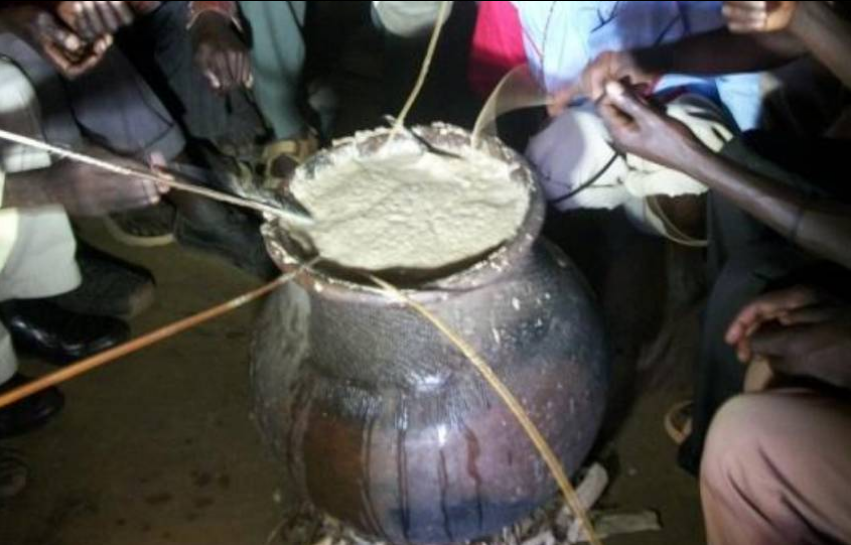
April 21, 2026| For generations, busaa has been more than just a drink in Western Kenya. It’s the lubricant of marriage negotiations, the witness to dispute resolutions, and the quiet engine of thousands of rural households.
Now, residents, traders, and cultural defenders are demanding the law finally catch up to tradition.
In a formal petition delivered to the Busia County Assembly, stakeholders are pushing for the outright legalisation, regulation, and protection of busaa brewing—arguing that the popular millet and maize-based brew is both a cultural backbone and an economic lifeline that has been unfairly criminalised for too long.
“We Are Losing Our Brew – and Our Money – to Uganda”
Veteran journalist Kennedy Epalat, who presented the petition to Senior Sergeant-at-Arms Oroni Patrick, didn’t mince words. He told MCAs to act swiftly, pointing to an ironic reality just across the border.
“Many Kenyans are crossing into Uganda to drink busaa because there it is legal and sold under regulated hours,” Epalat said. “We are exporting our own culture—and our own revenue.”
He proposed a similar framework for Busia: controlled hours, licensed sellers, and an end to the cat-and-mouse game that currently defines the trade.
The Petition: From Criminalisation to Recognition
The document paints a vivid picture of busaa’s role in society—present at births, weddings, funerals, and community healing ceremonies. But despite its cultural weight, the sector operates in a legal grey zone, leaving mostly women and youth brewers vulnerable to harassment, exploitation, and unsafe practices.
“Despite its importance, busaa brewing remains poorly regulated and often criminalised, exposing brewers to harassment, exploitation, and unsafe practices,” the petition reads.
It takes aim at legal gaps: while the Alcoholic Drinks Control Act 2010 exists, it largely ignores traditional brews. The older Busaa Act of 1997 is now a relic, overtaken by broader—and ill-fitting—alcohol laws.
Citing Article 11 of Kenya’s Constitution (cultural heritage) and devolved functions under the Fourth Schedule, petitioners argue that county governments have both the power and duty to regulate traditional brews responsibly.

What Busia Residents Want
The petition isn’t a call to let anything go. It’s a blueprint for order. Key demands include:
- A county law recognising busaa as a legitimate economic activity
- A simple, affordable licensing system (not the current maze of bribes and raids)
- Clear hygiene and safety standards to stop the use of harmful additives
- Designated consumption zones to separate drinking from domestic spaces
- Training programs for brewers to improve quality and safety
- Protection from harassment for licensed brewers
- Fair taxation to fill county coffers
- Promotion of busaa as a cultural tourism product
What Happens Next?
If the Busia County Assembly adopts the petition, the region could become a test case for Kenya: a place where traditional brews are neither banned nor ignored, but legally recognised, safely produced, and fairly taxed.
Observers say formalising the sector could slash public health risks, create jobs, and turn a hidden economy into a transparent source of county revenue.
For now, all eyes are on the MCAs. If Busia raises a legal glass to busaa, other counties may soon follow—proving that some traditions, when properly regulated, are worth more than a raid. They’re worth an industry.