
Duncan Waswa
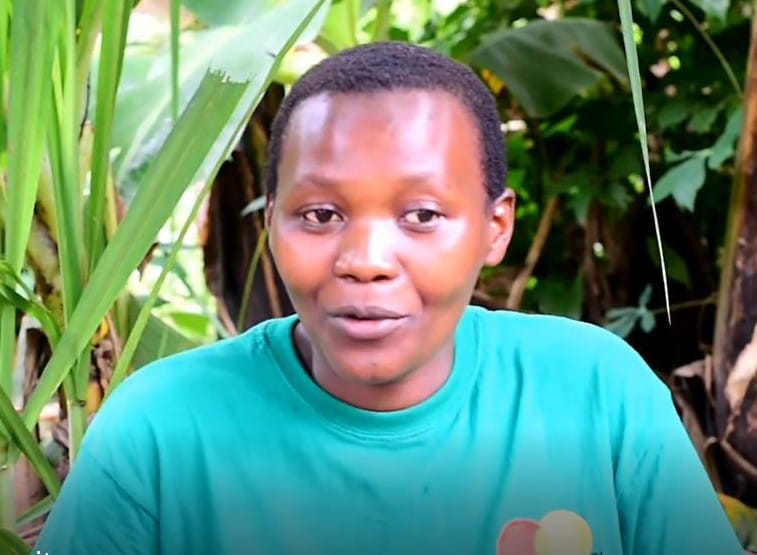
April 2, 2026| Youth unemployment remains one of the most pressing challenges of our time. Many young people leave school armed with academic qualifications but lacking the practical skills employers demand. However, Technical and Vocational Education and Training (TVET) institutions are steadily changing that narrative—by equipping young people with hands-on skills to create their own opportunities. This is one such story of resilience, transformation, and hope. This is the story of Diana Atieno.
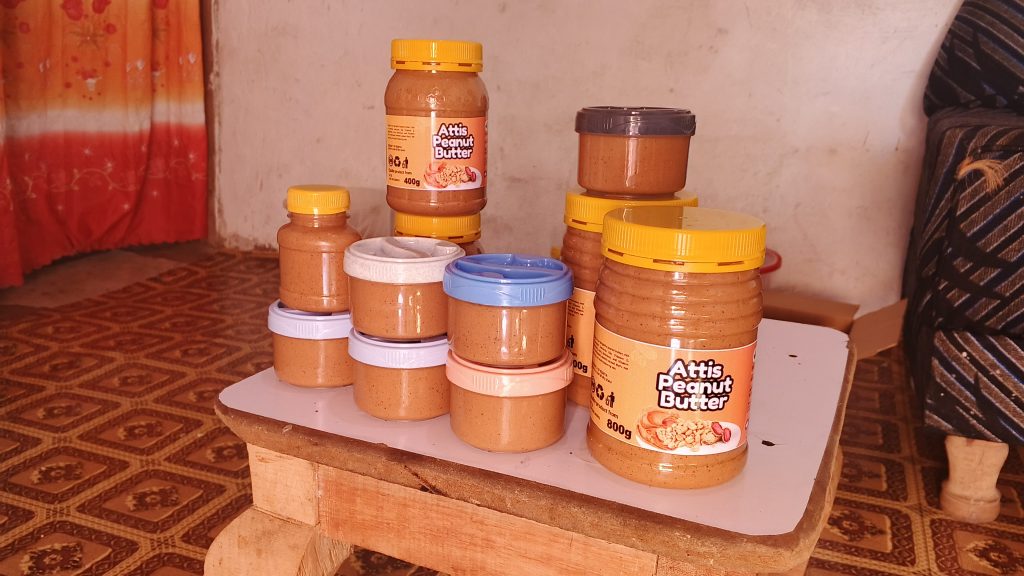
At just 27 years old, Diana runs a steadily growing groundnut value addition business, producing items such as peanut butter. What began as a small idea has now become a reliable source of income, earning her three times more profit every month. But behind this success lies a journey marked by hardship and sheer determination.
Diana recalls a moment that nearly ended her dreams. Her house was broken into, and her first machine—the backbone of her business—was stolen. The loss not only deprived her of equipment but also set her back significantly.
“As a young woman, security has been a major challenge,” she explains. “It took time to recover, but I refused to give up.”
Determined to rebuild, Diana joined the Resilient Agriculture that Works for Young People (RAY) project in 2025, implemented by Practical Action in partnership with the Mastercard Foundation. Through the program, she received training in entrepreneurship, financial management, and digital marketing—skills that reshaped both her business and her mindset.
Today, Diana uses a locally fabricated “juakali” machine to continue production. However, she aspires to acquire a modern machine that would significantly boost her output and efficiency. The main obstacle remains the high cost, which is beyond her current financial reach.
Despite these challenges, her business has become a source of opportunity for others in her community.
Faith Awour, one of the young women benefiting from the enterprise, says the opportunity has changed her life. “Before this, I had no income. Now I can support my family through the work I do here,” she shares.
Isaac Simiyu, another beneficiary, echoes similar sentiments. “This has given me a chance to learn and earn at the same time. I now have hope for my future,” he says.
Through Diana’s business, young people are gaining employment, and local groundnut farmers are accessing a reliable market for their produce. This demonstrates how practical TVET skills can build entire value chains that benefit entire communities.
According to Boniventure Biko from Practical Action, the impact is evident. “We have seen significant transformation among young people who have received training. Many are now starting and growing their own businesses,” he notes.
However, he emphasizes the need for greater government support—particularly in investing in agriculture and creating policies that foster an enabling environment for youth entrepreneurship.
Beyond access to capital and equipment, Diana also highlights the high cost of product certification from the Kenya Bureau of Standards (KEBS) as a major barrier for young entrepreneurs. She believes that reducing these costs would allow more young people to formalize and scale their businesses.
Diana’s story is not unique. It reflects the untapped potential of countless young people who, when equipped with the right skills and support, can transform not only their own lives but also their communities.
TVET institutions have proven that education does not have to be purely theoretical—it can be a direct pathway to economic empowerment. However, for this transformation to reach more young people, collective action is needed. Increased investment in skills training, access to affordable financing, and youth-friendly policies will be critical in unlocking opportunities.
Because in the end, young people do not need sympathy. They need opportunity.