
By SHABAN MAKOKHA
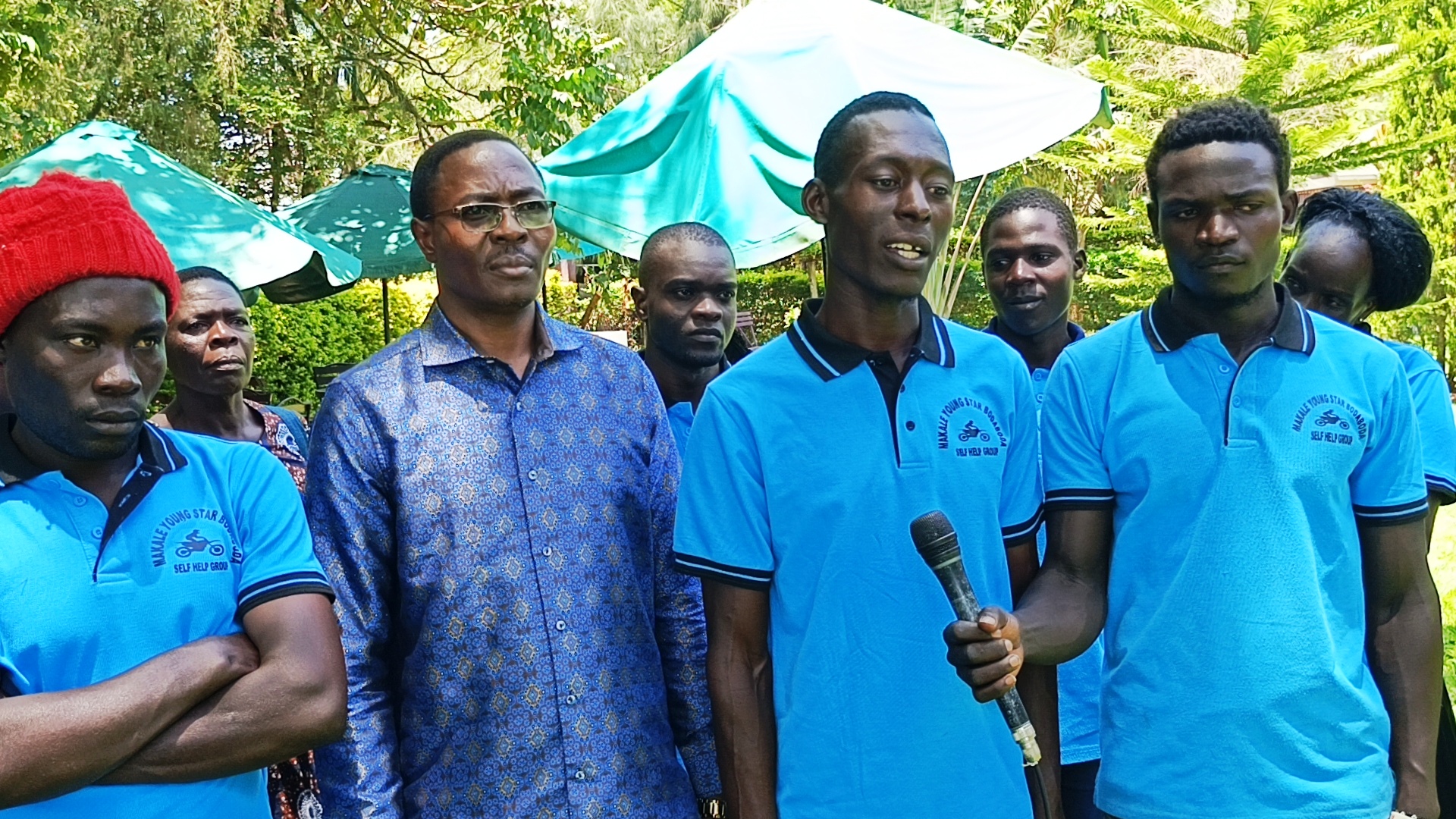
April 15, 2026| In a country where election cycles have too often been stained by tension, chaos, and bloodshed, a group of young boda boda riders is carving out a different path—one defined not by violence but by peace, civic duty, and quiet hope. From dusty village paths to bustling market centres, the Makale Youngsters Boda Boda Association has emerged as an unlikely yet powerful voice in the growing national call for non-violence ahead of the 2027 General Election, mobilizing youth and fellow riders to reject political manipulation and embrace peaceful participation in the democratic process.
At a time when political temperatures across the country are beginning to rise, the group is injecting a message that is both urgent and transformative: violence has no place in democracy. At the heart of their campaign is a simple but powerful plea—say no to election violence. Comprising energetic young riders drawn from across the Makale area in Mayoni Ward, Matungu sub-county, Kakamega, the association has transformed its daily transport network into a platform for civic education. Armed not with political slogans but with messages of unity, tolerance, and personal responsibility, they are reaching hundreds of youths—many of whom have historically been targeted by politicians for exploitation during election periods.
Through informal forums, roadside engagements, and peer-to-peer outreach, the riders are encouraging young people to rise above divisive politics and instead become agents of peace. “We are the ones who suffer most when violence breaks out,” said the group’s chairperson, Fredrick Okumu. “Our businesses collapse, our lives are put at risk, and communities are torn apart. This time, we are saying no to election violence.”
For years, boda boda riders have found themselves caught in the crossfire of election-related unrest—sometimes as victims, other times as tools in the hands of political actors deployed to ferry goons, spread fear, or intimidate and disrupt opponents’ campaigns. The Makale Youngsters are determined to rewrite that narrative. Rather than being instruments of chaos, they are positioning themselves as guardians of peace. Their campaign emphasizes personal responsibility, urging riders to refuse any involvement in political violence. “We are urging our fellow riders not to look at the Sh200 given by politicians but to focus on the bigger picture of peaceful co-existence,” Okumu added. “The person you are sent to harm today may be the one who saves you after elections.”
Juma Ramadhan, another rider, said the engines that have long symbolized nothing more than the daily hustle will now carry a far more powerful message—peace. “We are mobilising other youth and fellow riders in an ambitious campaign to reject election violence and embrace civic responsibility,” Ramadhan said. “Leadership should not come at the cost of bloodshed. We are telling politicians clearly—do not use us to fight your battles. Sell your agenda peacefully or step aside.” He added, “We realised that every election cycle, it is the youth who are exploited, injured, or even killed. This time, we are choosing a different path. We are choosing peace.”
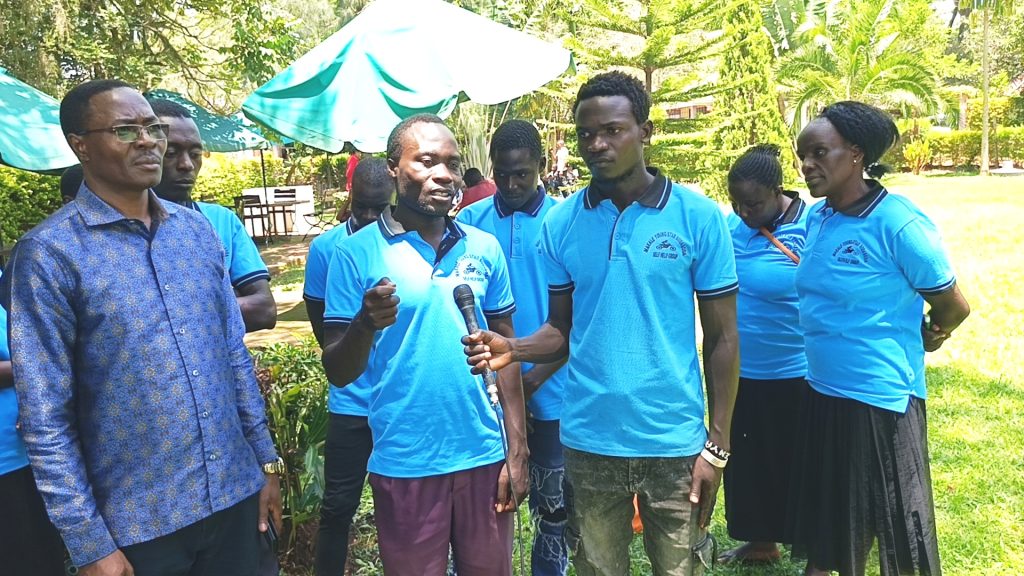
Ramadhan explained that they have turned their transport network into a moving platform for civic education, where every trip becomes an opportunity to engage and every stop a chance to influence. From market women to students, from casual labourers to fellow riders, the message is spreading rapidly: register as a voter, participate responsibly, and reject incitement. Their approach is simple but effective—peer-to-peer engagement rooted in lived experience.
This comes even as the Alternate Director to the Cabinet Secretary at the National Treasury and Economic Planning, Mark Ngecho, issued a strong call for youth to register as voters in large numbers. Ngecho encouraged young people to take up their civic duty, urging them to shift the narrative from violence to participation. “Real power lies not in chaos but in the ballot. Those who are of age should register in the ongoing voter registration exercise by the Independent Electoral and Boundaries Commission,” he said. “But most importantly, come out on voting day and cast your vote.” He also challenged political aspirants in Matungu and other parts of the country to tone down their rhetoric, reject violence, and campaign with integrity. “Elections are not won through intimidation. They are won through votes,” he said.
The call comes amid growing concern over youth apathy, which has often left a significant portion of the population disengaged from the electoral process despite being the majority. Lilian Atieno, a rider, registered her clarion call: “If we want change, we must show up and vote—not fight.” Atieno condemned the culture of incitement, where politicians allegedly arm and fund groups of youths to unleash chaos on opponents, arguing that such practices not only endanger lives but also erode the very foundation of democracy. The Makale Youngsters further called on authorities to take decisive action against any form of electoral violence, stressing that accountability must be enforced to deter offenders.
Beyond the immediate goal of peaceful elections, the movement is also about reclaiming the dignity and agency of young people. Their campaign is not just about saying no to violence—it is about saying yes to responsible citizenship, unity, and long-term community stability. Analysts say such locally driven efforts could play a critical role in preventing violence, particularly in areas historically prone to political unrest.
Amani Clubs national chairman Kennedy Kunani said that by placing the responsibility for peace in the hands of the very demographic often blamed for instability, the Makale Youngsters Boda Boda Association is flipping the script and offering a powerful lesson. “Boda boda riders who weave through the daily bustle have shown a clear indicator that this time, the youth are not just along for the ride. They are steering the nation toward peace. We therefore call upon other boda boda riders and the general young generation to embrace peace,” Kunani said. With months to go before voter registration drives intensify and political campaigns hit full swing, Kunani encouraged boda boda riders across the country to expand peace calls, collaborate with other youth groups, and deepen their advocacy.