
By SHABAN MAKOKHA
June 25, 2026|Silence engulfed the church hall. Hundreds of university-bound young people sat motionless, staring in disbelief as two men stood before them—not as celebrities, not as politicians, but as living testimonies of impossible journeys.
One had wandered Nairobi’s streets barefoot, hungry and abandoned, searching for a mother he could not find. The other had spent more than two decades in complete darkness, convinced he would never see his own family’s faces.
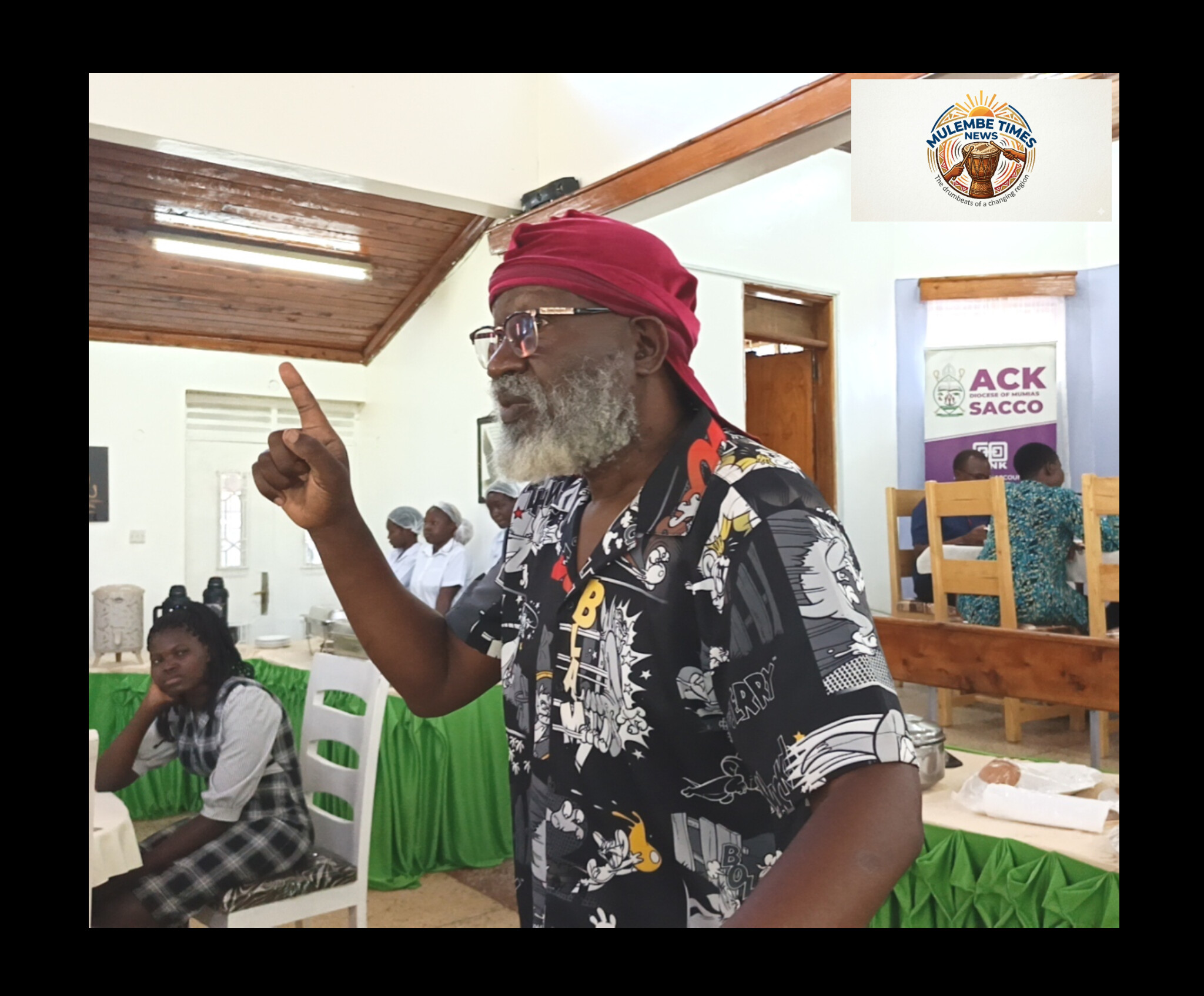
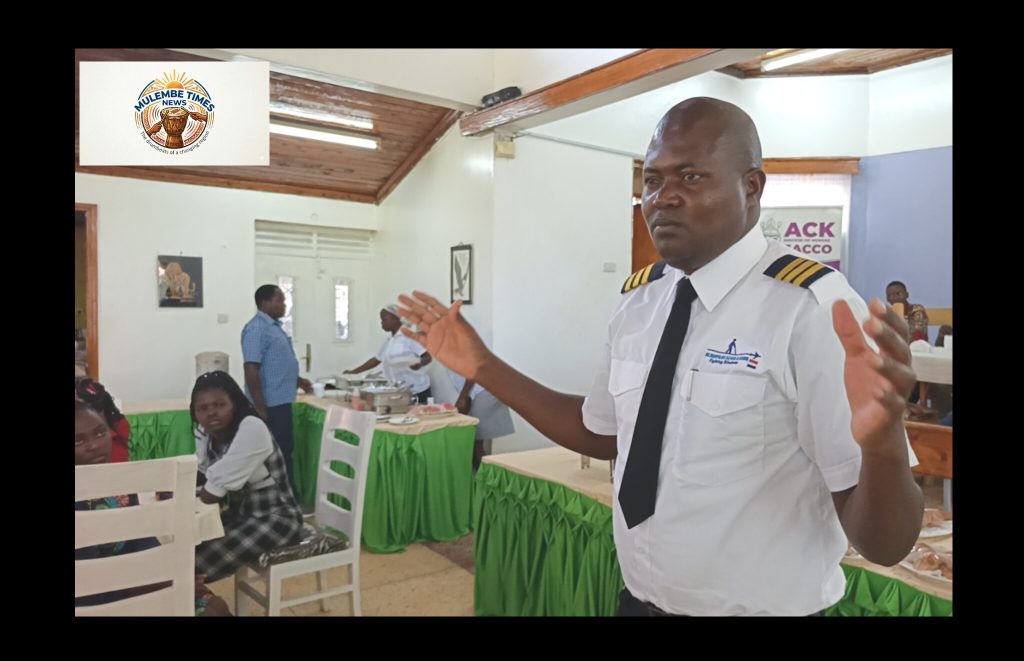
Yet on this day, Prof. George Wajackoyah—the former presidential candidate—and Captain Daniel Odongo—Kenya’s renowned pilot who once lived blind—delivered one unified message: Never allow your circumstances to write the final chapter of your life.
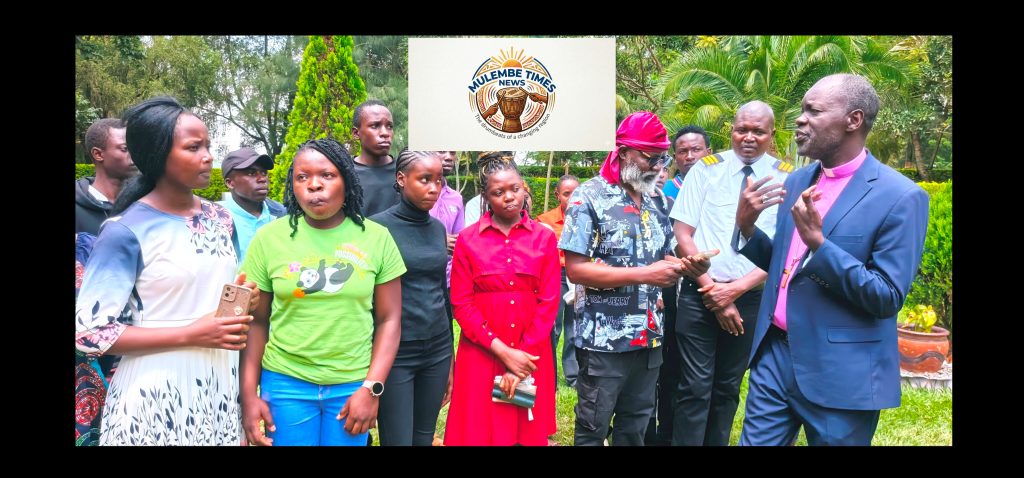
Hosted by ACK Diocese Bishop Joseph Wandera during a mentorship programme for students joining universities, the two men peeled back layers of their remarkable lives, exposing painful memories they rarely share publicly. By the end, the congregation had laughed, cried and applauded in equal measure.
Wajackoyah: ‘I Searched for God on an Empty Stomach’
When Prof. Wajackoyah rose to speak, there were no political slogans. No campaign promises. Only painful honesty.
“I was born ugly. I searched for God on an empty stomach,” he began. “I was ugly in appearance, ugly in terms of company and ugly in terms of resources. Nobody held my hand to lead me to God. I searched for God on an empty stomach.”
His words pierced the room.
“Today,” he continued, “my stomach is full because God became everything. He held my hand, lifted me up and showed me the light.”
His childhood, he said, was defined not by toys or family warmth, but by abandonment. His parents separated while he was still young, forcing him into a lonely struggle for survival.
“My father and mother separated, and I had to find life on my own,” Wajackoyah narrated.
What followed sounded less like a biography and more like a miracle. He survived a lightning strike. A python wrapped itself around his body, squeezing the breath out of him before mysteriously releasing him. He escaped sexual abuse. He endured hunger so severe that each sunrise became another battle for survival.
“Hardship made me who I am,” he confessed.
Growing up in Indangalasia village before moving through Buhuyi to Busia in search of his mother, destiny eventually pushed him to Nairobi. But instead of finding family, he found the unforgiving streets.
“I became a chokora. Every day was a desperate search—for food, for my mother, and for God.”
From Street Child to International Lawyer
Life on Nairobi’s streets robbed him of his childhood. Then, just when hope appeared gone, strangers changed everything. Members of the Hare Krishna movement rescued him, clothed him, fed him and enrolled him in school.
He later joined St Peter’s Mumias, believing education would finally change his fortunes. Instead, disappointment greeted him again—he failed his Form Six examinations, scoring “one principal and three subsidiaries.”
Many would have accepted defeat. He refused. Instead, he joined the Kenya Police.
But another nightmare awaited. While investigating the murder of a Cabinet Minister, he discovered information powerful people in the government did not want exposed.
“Out of the six officers investigating the case, five were killed,” he explained. “They jailed me because my findings were not what they expected.”
He paused before adding softly: “It is only by the grace of God that I am alive today.”
Freedom did not come easily. After his release from prison, foreign diplomats secretly organised his escape. He was smuggled out of Kenya aboard a German cargo aircraft.
“It was not a passenger plane,” he recalled. “It carried goods, dead bodies and everything considered rubbish.”
That journey saved his life. But exile came with fresh suffering. In Britain he survived another assassination attempt. “I was shot,” said Prof Wajackoyah. “Even today, a bullet still remains lodged in my body.”
Yet amid all the pain, he refused to surrender. He worked tirelessly, paid his own tuition fees and studied law in Britain. One qualification became several. One degree became another. Eventually, the former street child became an internationally recognised lawyer, professor and legal scholar.
Today, Wajackoyah practises law in the United Kingdom, Washington DC, California and Kenya, lectures in universities, has earned two PhDs and heads a law firm employing fourteen lawyers.
Still, he says, some Kenyans cannot believe his transformation: “They kept asking, ‘How can a chokora become a lawyer?'”
Behind the ‘Bhang Heee… Bhang Haaa…’ Slogan
Addressing one of the most misunderstood moments of his presidential campaign, Wajackoyah insisted his cannabis agenda had never been about encouraging drug abuse.
“I don’t drink alcohol. I don’t smoke,” he said. The slogan that made him famous was deliberately provocative. “I wanted people to think I was mad, just as they thought Socrates was mad because he spoke uncomfortable truths.”
His aim, he explained, was to start a national conversation about cannabis as a medicinal and industrial crop rather than as an illicit drug.
Looking back at the 2022 presidential election, he said many Kenyans rejected ideas before understanding them. “I wanted people to listen. But my own people rejected me.”
Nevertheless, he declared he will contest the presidency again in 2027. “I have not given up on this country.”
Captain Odongo: ‘I Was Born Blind’
If Wajackoyah’s journey reflected survival, Captain Daniel Odongo’s story reflected hope against impossible odds.
“I was born blind.” Those four words immediately transformed the atmosphere.
His blindness became a source of shame within the community. Some blamed witchcraft. Others accused his parents. His mother suffered rejection because neighbours believed she had given birth to a cursed child.
To save the marriage, Daniel was sent away to live with his grandmother, Sarah Nyangweso. Every Sunday she held his tiny hand and led him to church. The journey was agonising. “I would hit stones. My toes would bleed. Sometimes I lost my toenails,” he recalled. Still, she never stopped.
School became another painful battle. Unable to read what teachers wrote on the blackboard, he struggled at St Peters Boys primary school and Ebubaka until Bishop Sulumeti intervened and secured him admission to Kibos School for the Blind. There he learned Braille. There he discovered his intelligence—and hope.
In KCPE he scored 351 marks, astonishing everyone. “My mother wondered how a blind child had outperformed his brothers who could see,” he remembers.
He later joined Thika School for the Blind before qualifying for Kenyatta University. But poverty almost crushed the dream. To raise tuition fees, Daniel repaired torn shoes. “I became a cobbler. Every shilling mattered,” he narrated. He eventually raised enough to pay part of his fees and accommodation.
The Day Darkness Disappeared
During his second year at university, cerebral malaria nearly claimed his life. On his way after treatment, a friend persuaded him to undergo eye surgery. They argued for several minutes before he reluctantly agreed.
On September 9, 2013, after more than twenty years of total blindness, surgery was conducted. When the bandages were removed, for the first time in his life—he saw. Light. Faces. Colours. The world.
“It was the first time I could see.” The congregation erupted into applause.
Several surgeries followed before his eyesight fully stabilised.
Just as life seemed perfect, another devastating blow arrived. In 2017, when he expected to graduate, Kenyatta University removed his name from the graduation list. Officials allegedly argued that a blind student could never have passed Mathematics.
Everything he had fought for appeared lost. “I thought about committing suicide.”
Instead of giving up, he boarded a Jambojet flight to Mombasa—flying inside an aircraft for the first time in his life. Curiosity pushed him to ask the cabin crew one unusual question: “Can I meet the pilot?”
When the pilot agreed, Odongo asked him a life-changing question: “How can I become like you?”
The pilot explained the path, but one obstacle remained—school fees. A well-wisher connected him to Mama Ngina Kenyatta, who agreed to sponsor his aviation training. “She changed my life.”
Today Odongo has trained in Kenya, South Africa, the Netherlands and Italy. His extraordinary journey even led him to meet Pope Francis, who wanted to witness for himself the remarkable story of a man who had conquered blindness to fly aircraft.
A Call to Serve
“I owe my people,” Captain Odongo said. “I was helped. Now I must help.”
He said every act of kindness he received placed a responsibility upon him to serve others. His dream is to seek elective office so he can transform lives rather than merely distribute small handouts. He criticised leaders who focus on flashy projects while ignoring the real needs of learners.
“What good is buying a school bus if students have no science laboratory?”
He urged parents to become actively involved in their children’s education instead of leaving everything to schools.
The Final Lesson
Closing the mentorship forum, Bishop Joseph Wandera reminded the students that the greatest obstacle to success is often not poverty, disability or rejection—but giving up. The stories they had heard, he said, proved that God can rewrite even the darkest chapters of a person’s life.
The greatest lesson needed no writing. One man had searched the streets for food, his mother and God before becoming a presidential candidate and internationally respected lawyer. Another had spent more than twenty years in total darkness before rising into the skies as a pilot.
Both had stood before them as living proof that the human spirit, anchored in faith, courage and perseverance, can rise from the deepest valleys to the highest summits.