
By Duncan Waswa
In the quiet fields of Namubila village, Sirisia Constituency in Bungoma County, a quiet revolution is underway—not led by politicians or machines, but by the calloused hands and determined spirit of a 27-year-old single mother, Peninah Malaba.
Once weighed down by frustration and economic uncertainty, Peninah is now at the center of a transformation—her own and that of her community. Her journey from survival to success in agribusiness is a powerful reminder of what’s possible when rural youth, especially women, are given access to training, resources, and mentorship.
Before 2022, farming for Peninah was a gamble with little payoff. Like many young women in rural Kenya, she had inherited a small parcel of land—but lacked access to market information, modern farming techniques, or financial tools.
“I used to plant without knowing what the market needed. I’d harvest, but I couldn’t sell. It was frustrating,” she recalls.

As a single mother of two, the pressure to provide was constant. Farming had seemed like her only path out of poverty, but without skills or support, it became a cycle of disappointment.
That changed when she joined the Resilient Agriculture that Works for the Young People (RAY) program—an initiative by Practical Action in partnership with the Mastercard Foundation. The program equips rural youth with regenerative agriculture skills, business training, and financial literacy through Youth Savings and Loan Associations (YSLAs).
“I had never attended any formal training in agriculture. RAY introduced me to climate-smart farming and agribusiness skills. That’s when everything changed,” she says.
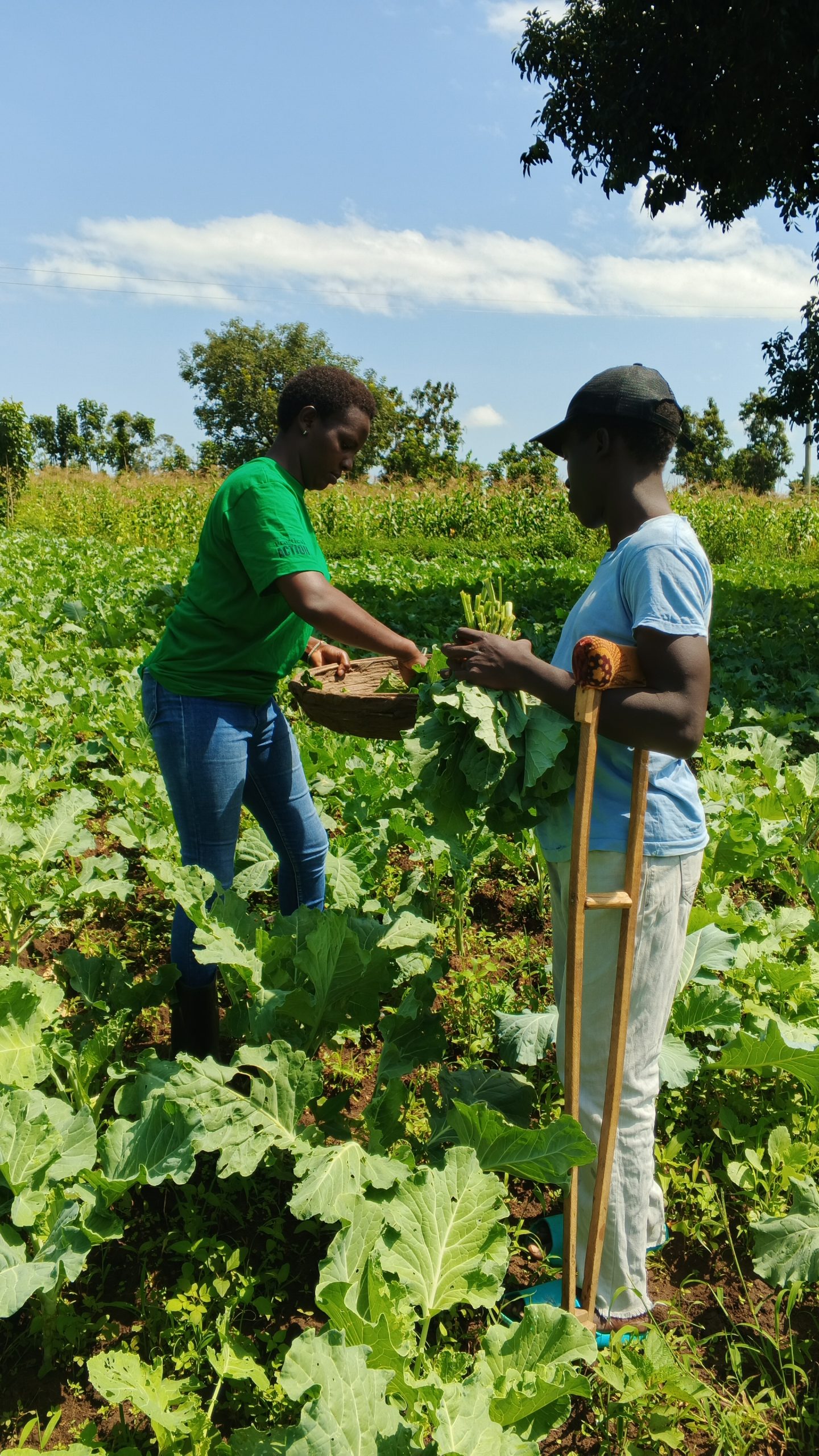
Through RAY, Peninah received hands-on mentorship and joined a savings group. She began treating her small farm like a business. Today, she grows African leafy vegetables (ALVs) and soya, and runs a thriving poultry venture with over 200 chickens.
But the impact goes far beyond profit.
Peninah is now a mentor to 12 other youth in her area—including a young person living with a disability who buys vegetables from her farm to resell. She teaches them regenerative agriculture, group savings, and how to plan agribusinesses with sustainability in mind.
“It makes me proud to see others grow because of something I started. It’s no longer just about me,” she says.
Boniface Biko, a project officer with Practical Action, says Peninah’s journey embodies the spirit of the RAY initiative.
“Our approach isn’t about handouts,” he explains. “It’s about building networks and capacity so youth like Peninah can lead. They teach others, form groups, save together, and create value chains that uplift entire communities.”
In Sirisia, the ripple effects are visible. The youth group Peninah co-founded is pooling resources to invest in collective ventures, including farming inputs and shared tools—creating opportunities that were once out of reach.
What stands out most about Peninah’s story isn’t just her produce or poultry—it’s her confidence and newfound voice.
“Before, I never imagined speaking in front of people. Now I lead meetings, train others, and even help set vegetable prices in the market,” she says.
Her dream? To expand her farm into a learning center where more young people can train in modern, climate-smart agriculture.
“There are so many idle youths in the village. I want them to know you don’t need a job in Nairobi to succeed. You can start right here, on the land.”
Peninah’s success has shifted local attitudes too. Elders who once doubted her now bring visitors to see her farm.
“People used to ask, ‘How can a young woman run a poultry business?’ Now they’re the ones showing it off,” she says with a smile.
In her small corner of western Kenya, Peninah Malaba is proving that agriculture isn’t a fallback plan—it’s a platform for leadership, financial independence, and community transformation.