
By SHABAN MAKOKHA
November 2, 2026| The race to retain Kakamega Governor Fernandes Barasa’s seat in 2027 is gathering momentum, with Dr David Alila stepping up grassroots mobilisation efforts to rally various groups behind the Governor’s re-election bid.
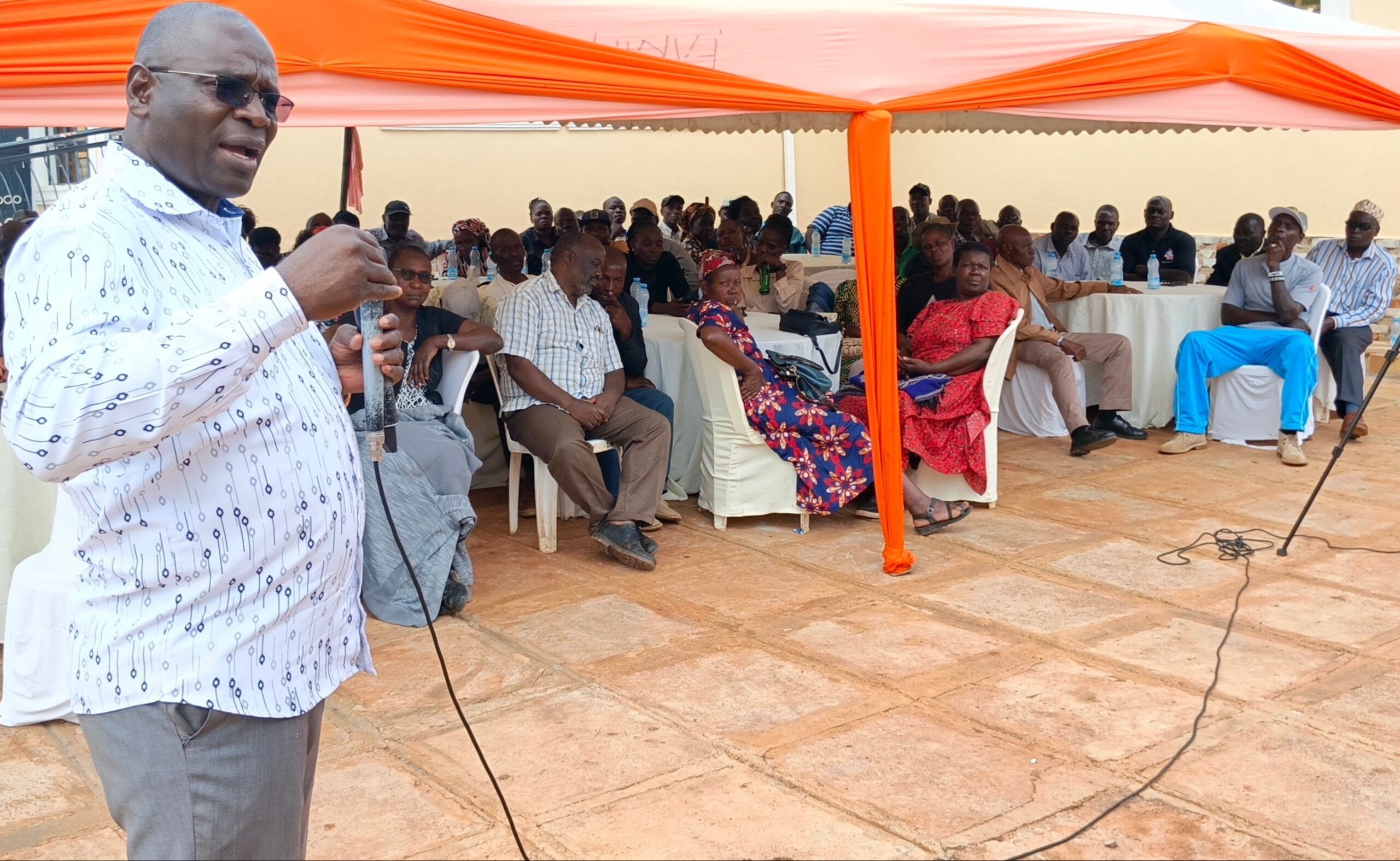
On Sunday, Dr Alila convened members of the Abatere community at his residence for a consultative meeting aimed at consolidating political support for Barasa and strengthening the community’s voice in the county’s political landscape.
The meeting, attended by community representatives from Namamali, Emukhuwa, Shiongo, Emasaba and Isongo, focused on unity, political solidarity and the need for coordinated grassroots mobilisation ahead of the 2027 General Election.
Addressing the gathering, Dr Alila urged the community to close ranks and support Barasa, presenting the governor’s leadership as an opportunity for residents to strengthen their political influence and secure a place in the county’s decision-making structures.
His message was direct: the Abatere community must speak with one voice, remain united and mobilise support for the governor rather than allow political divisions to weaken its bargaining power.
The engagement also offered Dr Alila an opportunity to explain his political journey, recounting how Barasa’s intervention had helped him regain political relevance after years of feeling sidelined.
“I was sidelined for 10 years until Barasa noticed my worth. Today, I can hold meetings because Barasa empowered me,” Dr Alila told the gathering.
His remarks underscored the personal political relationship he shares with the governor and the role he hopes to play in mobilising support for Barasa as the contest for the county’s top seat approaches.
For Alila, the meeting was not merely about declarations of loyalty but also about building an organised grassroots movement capable of translating political conversations into electoral support.
He called on community members to defend the governor’s record, speak positively about his leadership and resist what he described as the temptation to be drawn into political mudslinging.
“Politics is full of mudslinging,” he cautioned, urging residents to avoid manipulative political narratives and maintain peace despite the increasingly competitive political environment.
He warned that divisive politics could undermine community cohesion, insisting that the Abatere must remain focused on its collective interests rather than be distracted by political hostility.
Dr Alila also expressed his ambition to build a strong and organised Abatere movement that would give the community a more prominent voice in Kakamega County politics.
“I want to make a very strong movement of Abatere until our voice is heard,” he said.
The remarks struck at the heart of the meeting’s central concern: how to transform the community’s numerical strength into meaningful political influence.
One of the meeting’s key talking points was the community’s claimed electoral strength.
Participants cited an estimated 60,000 votes associated with the Abatere community, a figure that could make the group an important constituency in the county’s electoral calculations.
Aggrey Maina, one of the elders, said he had sought assurance about the community’s commitment to supporting Barasa.
His remarks reflected the importance of building confidence among local leaders and ensuring that political pledges made during consultative meetings are followed by sustained engagement at the grassroots.
“Let us extend our mobilisation beyond the immediate gathering by persuading neighbours and other community members to support Governor Barasa,” he said.
For Dr Alila and his allies, the challenge will be to move beyond expressions of support and establish a structured mobilisation network that can reach households, neighbourhoods and local opinion leaders.
Aggrey Ongaya Anekeya called for a coordinated voting strategy, urging community members to support candidates across the political spectrum who align with their political objectives.
He advocated for a six-piece voting arrangement, popularly understood in Kenyan politics as voting for candidates from the same political camp across the six elective positions, from the presidency to the Member of County Assembly.
The proposal was intended to encourage political consistency and strengthen the community’s bargaining position at different levels of government.
“We are behind you and the Governor. Let’s convince our neighbours to support Barasa,” he added.
His remarks captured the strategy emerging from the meeting: building support through personal networks, community conversations and a common political message.
Mr Anekeya reinforced the call for solidarity, using the expression “Eshienyu ne shienyu” to emphasise the need for the community to stand together behind Barasa.
His message reflected the meeting’s recurring theme that unity would be essential if the Abatere hoped to strengthen its standing in county politics.
The gathering sought to establish a common platform through which members could coordinate their political activities and articulate their expectations ahead of the 2027 elections.
Beyond the immediate objective of consolidating support for Barasa, Dr Alila used the meeting to caution against political manipulation and divisive rhetoric.
He urged community members to maintain peace, avoid inflammatory exchanges and resist attempts to turn political competition into hostility among neighbours.
Dr Alila’s message was that the Abatere should pursue its political interests without compromising peaceful coexistence.
He added: “I challenge the Abatere members to focus on constructive engagement and to communicate their political preferences without resorting to personal attacks or hostility towards those holding different opinions.”
The emphasis on peace also served as a call for community members to remain disciplined as political mobilisation gains momentum.
For residents who share neighbourhoods, families and social institutions, political divisions can have consequences that extend beyond election day. Maintaining cohesion, therefore, remains an important consideration even as political alliances take shape.
The consultative meeting positions Dr Alila as one of the local figures seeking to organise support for Barasa in Mumias West and the surrounding areas.
The Abatere consultative meeting came on the heels of a mega rally of bodaboda riders who pledged to support Governor Barasa’s re-election.
By convening community representatives and urging them to mobilise their networks, Alila is seeking to build a grassroots platform that can contribute to the governor’s re-election campaign.
That personal narrative could become part of his mobilisation message as he engages more residents in the coming months.
For Barasa, the mobilisation effort offers an opportunity to strengthen relationships with grassroots political networks as he prepares to seek another term in office.