

By SHABAN MAKOKHA
April 24, 2026| Kakamega Sports Club, a historic institution established in 1931, is on the verge of significant transformation following renewed commitments from the Kakamega County Government to modernise the facility and strengthen its role as a regional sporting and social hub.
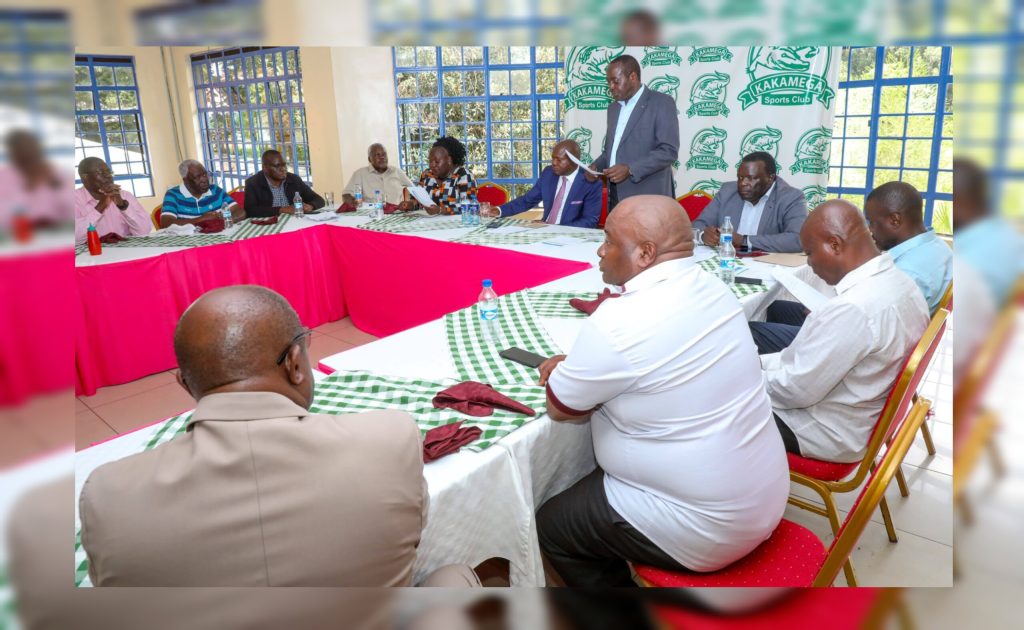
Governor Fernandes Barasa recently held discussions with the club’s management committee, led by Chairman Andrew Maleche, focusing on improving operational efficiency, upgrading ageing infrastructure, and exploring public-private partnerships. Insiders described the meeting as strategic and progressive.
The governor stated that the county government recognises the club’s potential and is committed to elevating it to modern standards capable of hosting regional events.
“Kakamega Sports Club carries a rich history and a critical role in talent development. With targeted investment, we can transform it into a premier venue that attracts local and regional sporting activities while empowering our youth,” Barasa said.
According to the governor, priority areas for partnership include complete fencing of the facility to enhance security and protect assets, construction of a modern tennis court to expand sporting disciplines, upgrading existing amenities to meet contemporary standards, and strengthening management systems to improve efficiency and sustainability.
The county government views these investments as part of a broader agenda to position sports as a driver of youth empowerment, social cohesion, and economic growth.
Kakamega Sports Club is a private members-only institution located near the Golf Hotel. It features a nine-hole golf course, tennis courts, and a clubhouse, serving as a primary recreational centre for approximately 1,000 members. Originally established as a recreational facility for settlers in the Kakamega region, the club has operated for over nine decades.
Over the years, the club has hosted golf, tennis, snooker, and various community events, becoming a vital part of the county’s social fabric. However, sections of its infrastructure have lagged behind modern standards, limiting its ability to compete with emerging facilities across the country.
“The facility holds immense potential—not just as a sports centre, but as a hub for talent development, investment, and community engagement,” Barasa said during the meeting. “Our focus is to modernise it in a way that reflects the ambitions of Kakamega County and creates opportunities for our youth.”
The proposed fencing of the entire facility is expected to enhance security, safeguard investments, and create a more controlled sporting environment. The planned tennis court aims to diversify the club’s sporting portfolio and could enable the hosting of regional tournaments and training programmes.
Beyond physical infrastructure, the discussions addressed operational efficiency and governance, with emphasis on strengthening management systems to ensure long-term sustainability. The county is seeking partnerships that would bring both capital and technical expertise to the club’s operations.
Chief Officer for Trade Faith Gitira attended the meeting, highlighting the economic dimension of the project and its links to trade, investment, and enterprise growth.
Chairman Andrew Maleche and the club’s trustees welcomed the county government’s engagement, describing it as timely and necessary.
While timelines and budgetary details have not been publicly disclosed, the discussions suggested a collaborative implementation model involving the county government, private sector players, and the club’s leadership.
If fully implemented, the plan could position Kakamega Sports Club as a competitive regional facility capable of hosting high-level tournaments while remaining accessible to the local community. The county aims to create youth employment opportunities, attract regional sporting events, boost local businesses, enhance sports tourism, and promote social cohesion through inclusive recreational spaces.