
By REUBEN OLITA
November 20, 2026| A social impact organisation, Kosi Africa, has launched an initiative that promotes environmental conservation while helping vulnerable children stay in school through proceeds from tree seedlings.
The organisation’s Edugreen programme integrates environmental conservation, education and youth empowerment by establishing indigenous tree and fruit nurseries in schools. Proceeds from the sale of seedlings are channelled towards paying school fees for needy learners.
Kosi Africa co-founder Wycliffe Barasa said the initiative was inspired by the growing number of school dropouts and the destruction of indigenous trees, particularly medicinal species.
Speaking during the FKFK Youth Convention at a church in Lukolis, Teso South Sub-County, on Thursday, Barasa said the idea was inspired by his late grandmother, a herbalist who had expressed concern over the disappearance of medicinal trees before her death at 106.
“We have a lot of youth dropping out of school, and at the same time we are losing our indigenous trees. This was inspired by my late grandmother, who was a herbalist. One day she told me we are losing a lot of medicinal trees. People are cutting them without knowing, and at the same time farmers are losing the fertility of their land,” he said.
Barasa said research conducted by the organisation revealed that indigenous species, including acacia and mvule, had been increasingly depleted, threatening traditional medicine and environmental sustainability.
He said Edugreen was established to address education, environmental conservation and youth empowerment through school-based tree nurseries.
“Here we do indigenous nurseries where we grow fruit and indigenous tree seedlings with the essence of repopulating schools to give our youth a future while at the same time replanting our indigenous trees,” he said.
Barasa said the organisation had begun generating revenue from the sale of seedlings, which is being used to sponsor vulnerable students.
He cited Fr Okodoi Secondary School, where about 100 students are benefiting from the initiative, adding that the organisation had started paying school fees by cheque.
Currently, five schools have established seedling nurseries, with plans to expand the programme to 10 additional schools and raise 1.5 million seedlings. The schools include St Joseph’s Kocholia, Odioi, Kakapel Special School, St Monica Chakol, Mundika High School, Mundika Special School, Busiada Girls, Nambale Boys and St Cecilia Namenya Girls in Budalang’i.
Barasa said Edugreen would plant 3,000 seedlings on Saturday, with 1,200 indigenous trees donated by the organisation earmarked for planting along rivers to restore degraded ecosystems.
He projected that the programme would support more than 200 learners in primary and secondary schools by next year.
“I want to leave the world a better place, both environmentally and educationally,” he said.
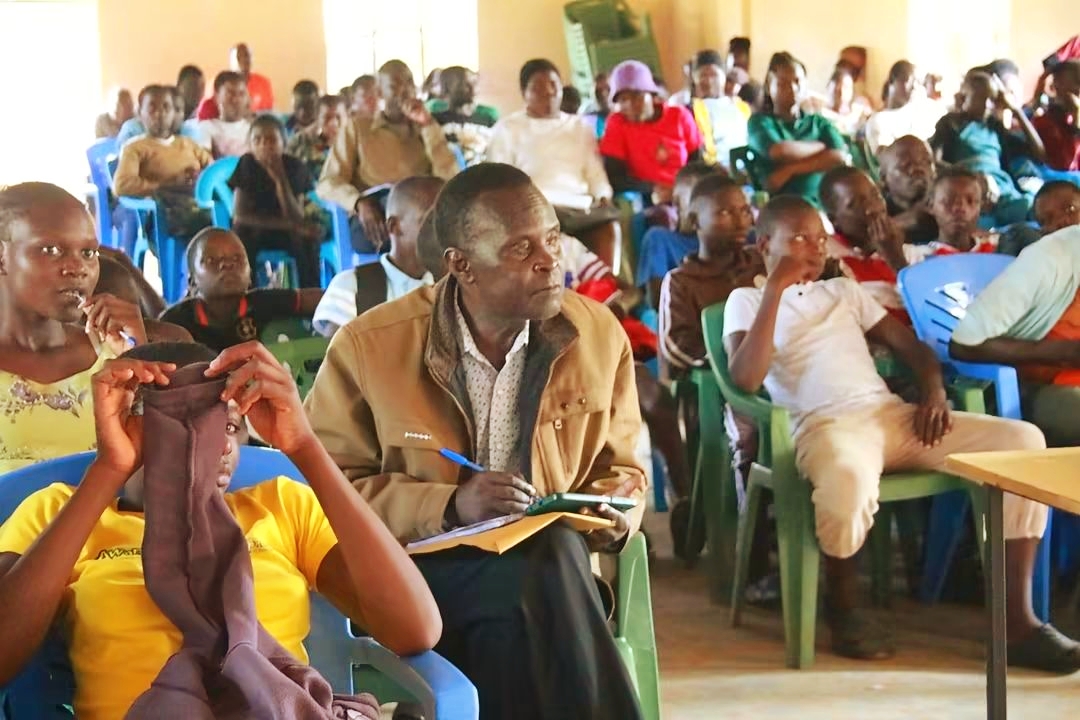
The convention, organised by Child Development Centre (CDC) Lukolis, attracted more than 200 youths aged between six and 21 and brought together several partners, including Linda Mazingira Initiative Kenya, Nairobi-based Youth for Christ, NACADA, the Busia County Department of Health and the Kenya Red Cross.
Linda Mazingira Initiative coordinator Patrick Ikwara said the organisation focuses on tree planting, climate change advocacy, youth climate leadership, solid waste management and protecting fragile ecosystems, including hilltops, wetlands, riverbanks and water catchment areas.
Shandy Chepkemoi of Kenya Youth for Christ said the organisation seeks to equip young people with a strong biblical foundation and Christian character to help them become responsible members of society.
NACADA Busia County Director Andrew Wachira announced that the Authority would conduct a national survey in the first week of December to establish the prevalence of alcohol, drug and tobacco use in the country, five years after the previous survey.
“We would want to establish whether the statistics have dropped or increased, together with the inherent reasons, so that we can come up with elaborate mechanisms,” Wachira said.
He said the previous survey indicated that Western Kenya led in alcohol consumption, Nairobi in cannabis use, Eastern in khat consumption and Central in tobacco use.
Wachira expressed concern that many young people lacked knowledge of indigenous trees, including their names in local languages, underscoring the need to strengthen environmental education and cultural awareness.
Rose Emong’ro of Lukolis Model Health, who is in charge of HIV Testing and Counselling (HTS), said they were providing free medical check-ups.
CDC Director Evans Karani said the convention was organised to expose young people to entrepreneurship, practical livelihood skills, financial literacy and available economic opportunities that can help them become productive, responsible and self-reliant members of society.
During the convention, youths proposed solutions to challenges affecting their communities, including early pregnancies, school dropout, early marriages, poverty, soil erosion, animal attacks, poor waste management and deforestation.
They proposed awareness campaigns involving local leaders and churches to address early pregnancies, abstinence to curb early marriages, tree planting to combat deforestation, proper waste disposal education and improved leadership to tackle poverty.
The youths also identified the Edugreen tree-planting model as a practical intervention for addressing school dropout by helping vulnerable learners meet their education costs.