
By THE MULEMBE TEAM
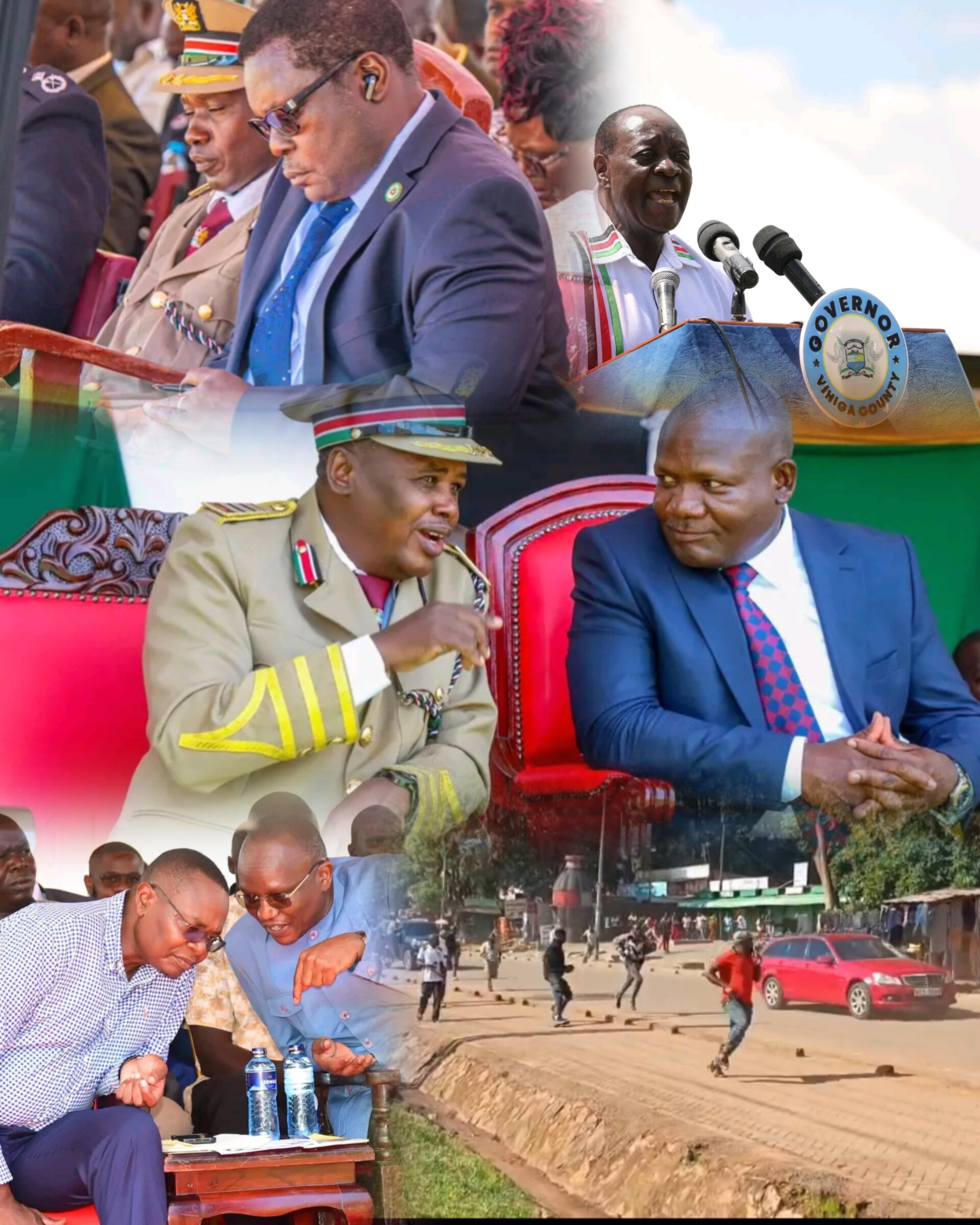
June 2, 2026| As thousands of residents across Western Kenya gathered to celebrate the 63rd Madaraka Day, governors used the national holiday to showcase development achievements, defend their records and quietly position themselves ahead of the 2027 political contest.
From Vihiga to Busia, Bungoma to Kakamega, leaders largely steered clear of direct political attacks, choosing instead to focus on roads, hospitals, water projects and economic empowerment.
Yet in Kakamega, where Governor Fernandes Barasa appeared to take a swipe at Nairobi Senator Edwin Sifuna’s presidential ambitions, the celebrations ended in dramatic fashion as protests erupted moments after the official event, plunging Mumias town into chaos.
The contrast could not have been sharper.
In Vihiga, Governor Wilber Ottichilo adopted a statesmanlike tone, urging residents to reflect on the sacrifices that secured Kenya’s self-rule while highlighting progress in healthcare, water access, education, infrastructure and youth empowerment.
“Our journey continues with a strong commitment to devolution, accountability and inclusive economic growth,” Ottichilo said, calling for unity and shared purpose.
His Bungoma counterpart Ken Lusaka delivered a similarly measured address at Chebukaka Boys Primary School, where he urged residents to embrace patriotism, peace and hard work.
Lusaka used the occasion to reaffirm his administration’s investments in healthcare, agriculture, infrastructure, education and youth programmes while avoiding the increasingly heated national political debate surrounding possible presidential contenders.
In Busia, Governor Paul Otuoma focused on defending his development record and explaining why cooperation with the national government had become central to his administration.
Without mentioning opponents by name, Otuoma pushed back against critics who have claimed that projects visible across Busia belong to the national government rather than the county administration.
The governor argued that attracting investments, roads, markets and other public projects requires deliberate lobbying and engagement.
“Leadership is not only about constructing projects directly from county resources; it is also about attracting opportunities, investments and partnerships that improve the lives of our people,” he said.
Otuoma further defended his decision to work closely with President William Ruto’s administration despite political differences, saying development should take precedence over partisan battles.
The celebrations in Busia also came against the backdrop of heightened health surveillance following fears of a possible Ebola outbreak in neighbouring Uganda. Kenyan and Ugandan officials used the occasion to reassure residents that contingency plans, surveillance systems and cross-border cooperation had been activated to prevent the deadly disease from spreading into Kenya.
Meanwhile, Trans Nzoia Governor George Natembeya generated attention for an entirely different reason.
The governor revived his long-running rivalry with Lusaka, dismissing claims that the Bungoma governor played a role in his rise through the provincial administration ranks.
“When Lusaka was DC in Murang’a North, I was serving at Harambee House. How could he promote me?” Natembeya posed, insisting that promotions came through other channels and not through his former colleague.
Never one to shy away from controversy, Natembeya also took fresh shots at President Ruto, saying the Head of State should at least tour Trans Nzoia so that residents could also “milk” handouts from him. Repeating his oft-stated “one-term” mantra against the President, the outspoken governor argued that his attendance at presidential functions should not be mandatory. Natembeya has previously maintained that the Kenya Kwanza administration has not delivered meaningful development projects to the county a reason the president avoids visiting.
But it was in Kakamega where Madaraka Day produced the biggest political drama.
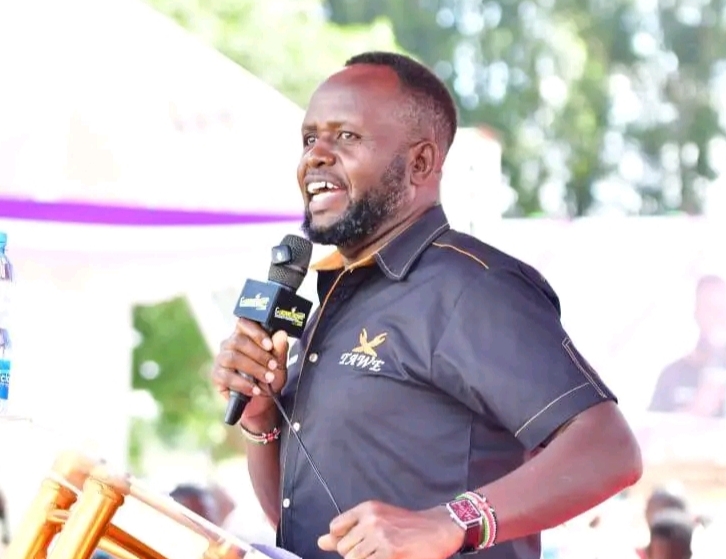
Speaking at Bomani Grounds in Mumias, Governor Barasa outlined achievements under his administration, including water projects, health facilities, roads and the ongoing construction of the Kakamega County Teaching and Referral Hospital and Bukhungu Stadium.
However, the celebrations were overshadowed by political undercurrents involving Nairobi Senator Edwin Sifuna, whose national profile and perceived presidential ambitions continue to attract attention beyond Nairobi.
While governors across the region largely avoided direct criticism of the youthful senator, Barasa was among the few leaders who appeared willing to confront the emerging political narrative.
Ironically, shortly after the celebrations ended, crowds of youths chanting “One Term” slogans directed at both President Ruto and Barasa poured into Mumias town.
The demonstrations quickly escalated into running battles with police, leaving vehicles damaged, businesses shuttered and several people injured.
Roads were blocked, bonfires lit and transport along sections of the Kakamega-Musanda highway disrupted for hours.
Religious leaders later condemned the violence, while police moved in to restore order.
As calm returned, the events left political observers with plenty to ponder.
While most governors used Madaraka Day to project stability, development and unity, the unrest in Mumias served as a reminder that beneath the official speeches, frustrations among sections of the youth remain a potent political force.
For many residents across Western Kenya, Madaraka Day 2026 was not merely a celebration of self-rule. It was also an early glimpse into the political battles, alliances and ambitions that are already beginning to shape the road to 2027.
Report by: Reuben Olita, Shaban Makokha and Bob Waswani
It was all a tactful celebration.
The Mumias incident depicted the feelings of the people called wananchi and the youths.
In Transzoia the case was a political stand.
In the Busia case, the truth of the matter was not expressed as those present were interested in knowing what the Government position was like in the issues of Ebola and the Changara-Malakisi divisions boundaries.
But all in all the Utumishi school 🏫 incident left many people wondering why the happening and what NEXT in terms of our boarding schools tragedies.