
By SHABAN MAKOKHA
July 21, 2026|In Kenya’s political culture, development has often been accompanied by spectacle.Long before the first brick is laid, conversations begin about who will preside over the launch. Roads are cleared.
Thousands of supporters gather under the scorching sun. Helicopters descend onto football fields, sending clouds of dust into the air as residents crane their necks for a glimpse of the country’s most powerful leaders.Cabinet Secretaries, Governors, Members of Parliament and local politicians scramble for a place beside the President, each hoping to be associated with a project that promises to change lives.
The commissioning ceremony frequently becomes a bigger story than the project itself.For decades, many Kenyans have grown accustomed to believing that a school, a hospital, a market or a technical college is not truly complete until a ribbon has been cut by the Head of State or another senior government official.
Yet in Mumias East Constituency, another narrative is quietly taking shape.Without waiting for a presidential convoy to snake through the constituency, without postponing projects until a national dignitary is available, and without turning development into political theatre, Mumias East MP Peter Salasya has steadily rolled out projects that are reshaping the constituency.
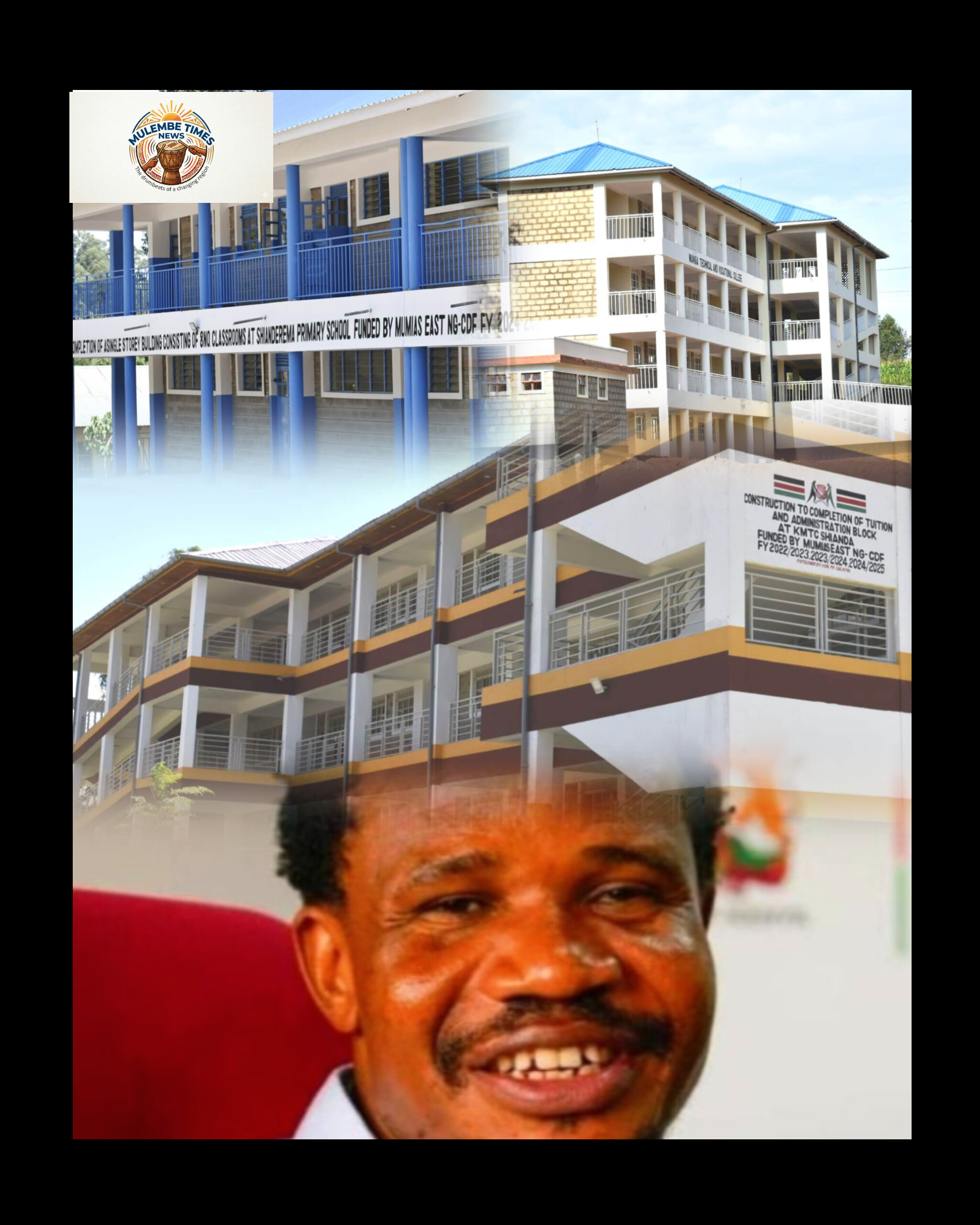
Among the most notable is the construction of the Wanga Technical and Vocational College — a long-awaited institution expected to provide practical skills to hundreds of young people who previously had to travel far from home in search of technical education.
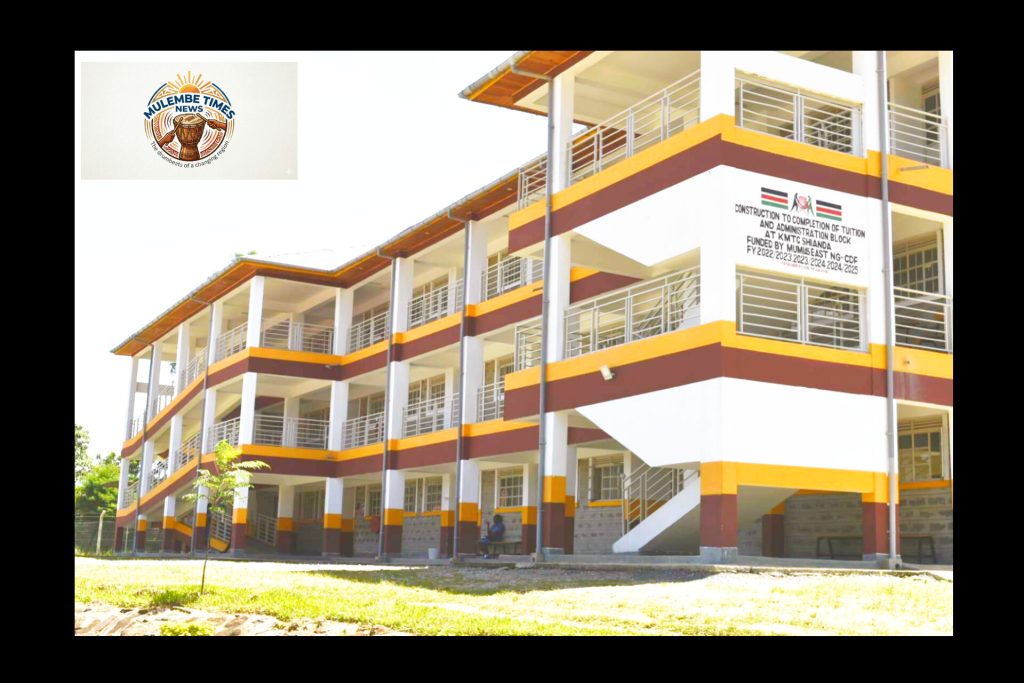
The constituency has also witnessed the construction of a modern multi-storey classroom block at Shanderema Secondary School and another impressive facility at Shianda KMTC, investments aimed at expanding learning space and improving the quality of education.
Beyond these flagship projects, several classrooms across schools have been renovated, breathing new life into institutions that had struggled with ageing infrastructure for years.Bridges that once existed only in political promises now connect villages, making it easier for children to reach school, farmers to transport produce to markets and families to access healthcare facilities during the rainy season.
For many residents, these projects are more than concrete, steel and mortar. They are symbols of possibility.They represent a philosophy of leadership that places completion above ceremony, service above publicity and impact above protocol.
The Wanga Technical and Vocational College, in particular, carries the hopes of an entire generation.For years, many students who completed secondary school found themselves trapped between dreams and reality.
University education remained beyond the financial reach of many families, while technical training institutions were located far away, forcing young people either to relocate or abandon their ambitions altogether.
Too many bright minds stayed home, watching opportunities pass them by. Some settled for casual jobs, others migrated to towns in search of uncertain livelihoods, while many simply waited, hoping that one day an opportunity would come closer.Today, that opportunity stands within their own constituency.
The Wanga Technical and Vocational College is equipping young men and women with marketable skills in engineering, ICT, construction, hospitality, agriculture and other technical disciplines that can create employment, encourage entrepreneurship and stimulate local economic growth.
Equally significant are the new storey buildings at Shanderema Secondary School and Shianda KMTC.These structures tell stories that statistics alone cannot capture: learners who no longer have to crowd into overstretched classrooms, teachers who can finally conduct lessons in an environment that inspires learning rather than frustration, and parents who continue making sacrifices despite the rising cost of education because they still believe education remains the surest ladder out of poverty.
Each classroom carries with it the silent dreams of children who believe tomorrow can be better than today.Perhaps what makes these projects stand out most is not merely their physical presence but the message they communicate.
Development does not have to wait for protocol.A classroom does not become more functional because a ribbon was cut by the President.
A technical college does not produce better graduates because a Cabinet Secretary unveiled its plaque.A bridge does not become stronger because speeches were delivered at its opening.
Residents say this approach has gradually shifted conversations across Mumias East.Mr Salasya said residents have turned from asking which dignitary will attend the next launch, to asking which project will be completed next.
“Instead of celebrating speeches, they celebrate finished work,” he said. “Instead of counting political rallies, they count classrooms, bridges and institutions.”For many young people, Salasya’s style of leadership has become symbolic of a generation that increasingly demands results over rhetoric, performance over publicity and substance over symbolism.
Supporters argue that, regardless of political affiliation, the projects challenge a long-standing culture in which development is too often treated as a political event rather than a constitutional responsibility owed to citizens.
Gabriel Wesa noted that in a country where abandoned projects frequently stand as monuments to broken promises, completed classrooms, functioning bridges and new learning institutions in Mumias East are sending a different message.
“They are inspiring confidence. Confidence that campaign promises can translate into visible change,” said Mr Wesa. “Confidence that leadership can ultimately be measured not by the size of the convoy accompanying a project launch, but by the number of lives transformed after the crowds have dispersed.”
As students settle into their new classrooms, as lecturers welcome future trainees to Wanga Technical and Vocational College, and as communities continue using the newly constructed bridges, the true commissioning of these projects may never be marked by a ribbon-cutting ceremony.
It will be marked by the graduate who secures meaningful employment, the first young entrepreneur who starts a successful business after acquiring technical skills, parents who no longer worry about sending a child far from home to access vocational training, farmers who safely cross a bridge to deliver produce to market, and families whose futures change because education was brought closer to home.
Those are moments no helicopter can manufacture. They require no presidential convoy or political fanfare.Only leadership that understands that the most meaningful ribbon-cutting ceremony is not the one witnessed by dignitaries, but the one written quietly into the transformed lives of ordinary people.