
By BOB AMALEMBA
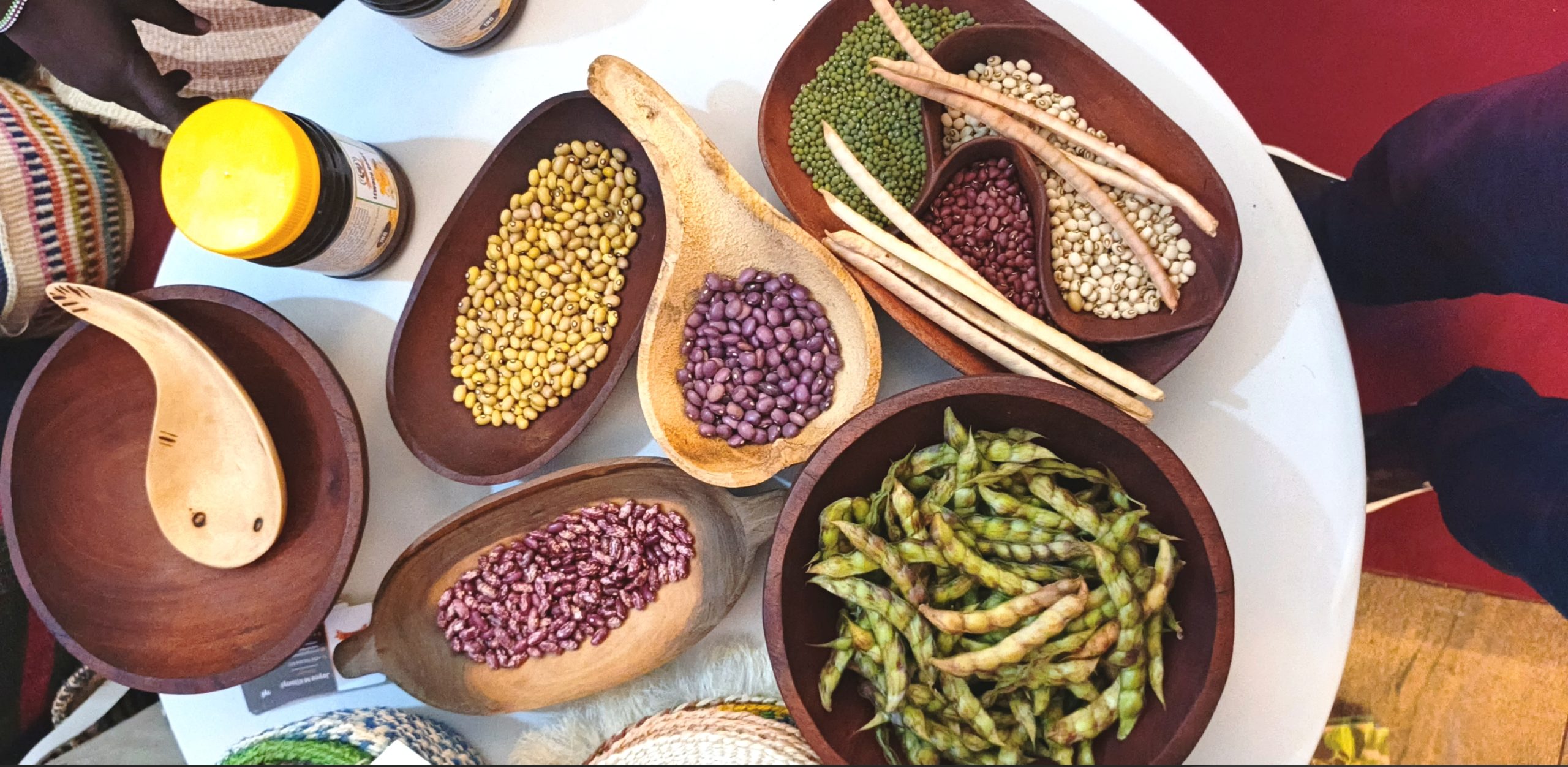
October 9, 2026| On a Friday morning in western Kenya, the air in Navakholo Constituency carried the mingled scent of soil and grain. Inside the Munduma Community Seed Bank, women sat surrounded by rows of glass bottles, calabashes, and clay pots—each vessel carefully filled with beans, maize, and vegetable seeds. The containers lined the shelves like a library of living things, the harvest of years spent guarding their heritage. Petronila Imbiakha Oloo stood at the centre, holding a handful of deep purple maize kernels, one of the indigenous varieties they had preserved.
A Big Mission on Small Farms
Kenya’s agricultural landscape is built on smallholder farmers. They make up about 98% of landholders, yet the average farm size is only around 1.2 hectares. In western Kenya, that figure drops to roughly 0.87 hectares. It is on these tiny plots that the nation’s food security rests—smallholders produce approximately 75% to 80% of Kenya’s food.
Poverty, however, is never far away. About 40% of Kenyans live below the national poverty line, and more than 16 million people cannot afford basic meals. For the 48 members of Munduma—most of them women—buying commercial seeds and fertiliser is a burden too heavy to carry.
Petronila knows this firsthand. “I come from a poor background,” she says. “I could not afford to buy commercial seeds, let alone pesticides and fertiliser.”
From Despair to Seed Sovereignty
The turning point came in 2020, when Petronila met Mercy Ambani, a program officer with the Seed Savers Network Western. The Seed Savers Network is an organisation that trains communities across Kenya in seed saving—for seed sovereignty and food security.
After visiting the network’s headquarters in Gilgil in 2020, Petronila realised the benefits of keeping seeds rather than always buying commercial varieties that cannot be replanted season after season. She returned to Munduma, gathered her neighbours, and founded a community seed bank.
The group of 48 people—largely women—began exchanging seeds at planting time. They also make their own organic manure, reducing reliance on external inputs. “We harvest as much as those who use commercial seeds,” Petronila says. “We are also happy and sure of our health in food. Our products are safer from chemical spraying than commercial varieties.”
The Vessels of Preservation
The seed bank’s most striking feature is its storage. The seeds are not kept in sacks or plastic bags, but in glass bottles, calabashes, and clay pots—containers that have served African communities for generations.
Each vessel has a purpose. Glass bottles, tightly sealed, protect seeds from moisture and insects, allowing farmers to monitor them easily through the transparent walls. Calabashes—hollowed-out gourds—provide breathable storage that keeps seeds dry while allowing air circulation. Clay pots, often lined with ash or dried leaves, regulate temperature and humidity, creating conditions that can keep seeds viable for years.
This is not mere tradition for tradition’s sake. These containers are practical technologies refined over centuries. Unlike modern storage methods that depend on chemicals or electricity, these vessels rely on locally available materials and indigenous knowledge—knowledge that had been sidelined by colonial and post-colonial agricultural policies favouring commercial seeds.
Challenges and Trust
At first, convincing the community to use indigenous seeds was not easy—especially the men. Many were sceptical. Petronila and her colleagues arranged for them to visit Gilgil, where they saw the benefits for themselves. After that, many bought into the idea of bulk storage of indigenous seeds, leading to the community bank.
Storage was another challenge. “Many did not understand how to dry and store seeds for future use,” Petronila recalls. The seed bank provided training on proper drying, handling, and storage—including how to prepare the glass bottles, calabashes, and clay pots so that seeds would remain viable until the next planting season.
The biggest obstacle was trust. People feared that if they brought seeds to the bank, they would not get them back at planting time. Over time, as the first members successfully retrieved their seeds and harvested good crops, trust grew.
Today, the Munduma seed bank serves Emulakha, Shanzamukoye, Eshirango, and Munduma areas in Navakholo Constituency. They also have a demonstration plot to showcase their work, where even non-members can buy multiplied seeds—though at higher prices than members pay.
From Seed to Plate
Francin Mayabi is one of the seed bank members. For three years, she has grown soya, groundnuts, Mbande beans, common beans, and maize—both yellow and purple varieties.
She has learned value addition. “With soya, I make soya milk,” she says. “I sell a cup of about 100ml at Ksh25.” She acquired the skill after attending training from another self-help group.
Betty Amoiya, a community health worker in Navakholo, explains the nutrition logic: “Nutrition is the bedrock of a healthy community. We realised that nutrients are hidden in indigenous plants and at a fraction of the price of mainstream products like milk. Soya milk offers plant proteins.”
Winds of Legal Change
Just ten kilometres away, at another seed fare in Musumba, Ingotse Matiha Ward, another seed bank was showcasing its work. Their team lead, Odda Ochomo, called on the government not to be seen fighting indigenous seed keepers. “It should act like India, which jealously protects her people,” she said.
Why are community seed affairs dominated by women? “Because women find satisfaction in feeding their families,” Ochomo says. “We love farming, especially on the small patches of land we are left with after a bloom in population. But we have a number of men too.”
This seed bank largely keeps indigenous vegetable seeds for home use and commercial purposes. They are linked to markets by the seed bank runners in Gilgil.
To grow the seed bank, they take a gorogoro—a 2kg tin—of maize from the bank for planting, and after harvest they are supposed to bring back two. The same applies to beans and other seeds.
In ten years, they want to be free from laws that restrain the exchange of seeds, and to achieve food security from the grassroots.
Philis Manda, ward administrator for Ingotse/Matiha, offered government support: “Farming and agriculture is the backbone of our rural economy. The county government will help you keep the seeds so that you attain food security.”
A Practice Once Criminalised
Manda’s promise would have been almost unthinkable just a few years ago. Kenya’s Seed and Plant Varieties Act once criminalised the sale, exchange, and sharing of uncertified seeds, with penalties of up to two years in prison or a fine of Ksh1 million. The age-old practice of farmers exchanging seeds—a tradition spanning centuries—had suddenly become illegal.
On 27 November 2024, Kenya’s High Court delivered a landmark ruling, declaring several provisions of the Act unconstitutional. The court found that these provisions violated farmers’ rights to life, livelihood, and food, stressing that “seed sharing is not a crime, but a fundamental element of farmers’ identity, resilience, and contribution to the country’s food system.”
UN experts welcomed the decision, calling it “a clear signal to the world that human rights obligations cannot be overridden by commercial seed monopolies.”
But the victory is not final. The Kenya Plant Health Inspectorate Service has filed an appeal, and legal uncertainty still hangs over these community seed banks. For now, farmers can still exchange seeds freely—but a Court of Appeal ruling could change that at any moment.
Seeds Are Sovereignty
Inside the Munduma seed bank, Petronila Oloo looks at the rows of glass bottles, calabashes, and clay pots. Forty-eight people, mostly women, on less than two hectares of land, are doing something far greater than farming.
They are preserving more than seeds. They are preserving a possibility: an agricultural system that does not depend on expensive inputs, a food culture that brings nutrition back to the table, and a social structure where women find dignity and strength in the land and in their communities.
“We are happy, and we are sure of our health in food,” Petronila says. Behind that simple statement stand thousands of farmers like her across western Kenya—guarding seeds in the cracks of the law, and guarding a more autonomous, more resilient future.