
By REUBEN OLITA
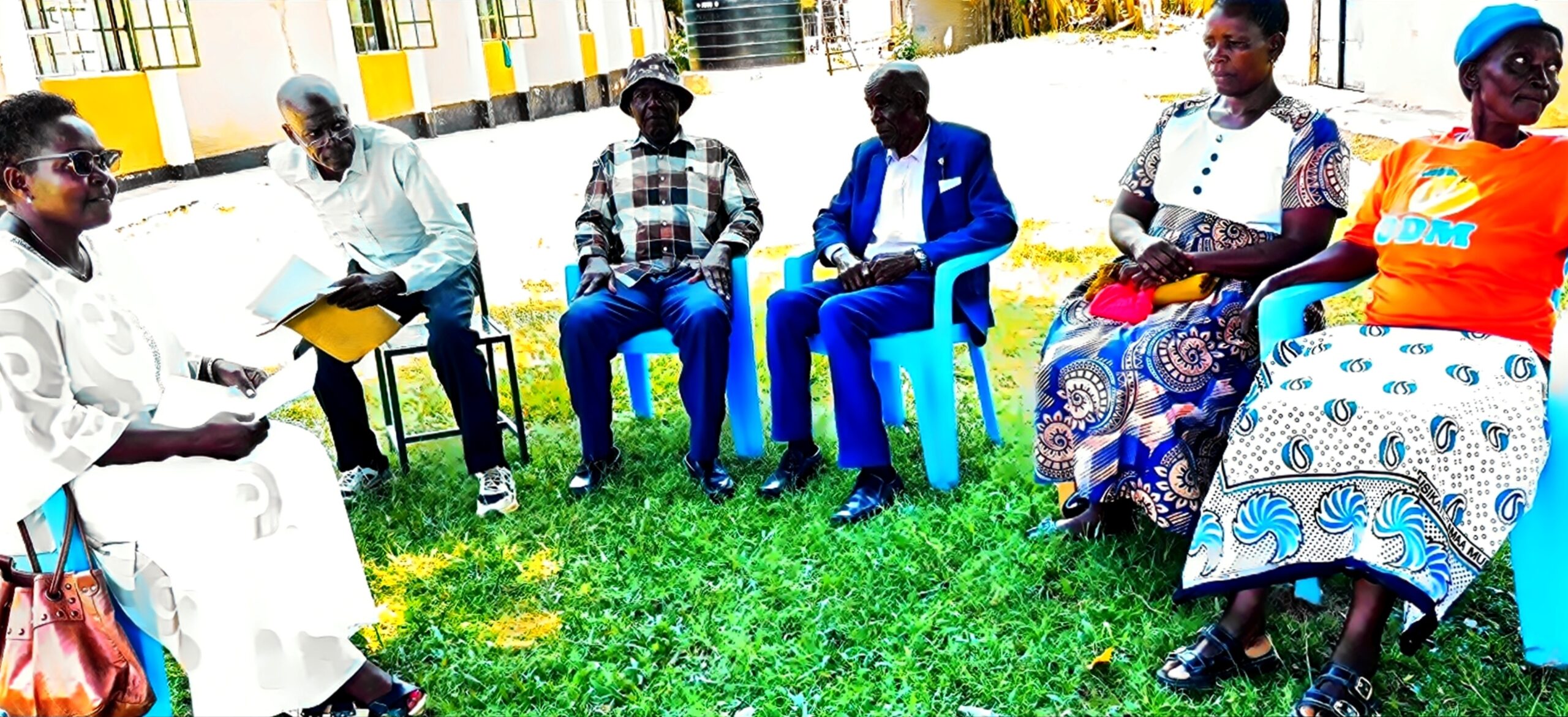
October 24, 2026| When Margaret Muhoma, popularly known as Nyakano, welcomed her grandson into her home in Emukhuwa village, Mumias West, Kakamega County, she could not have imagined that caring for him would become one of the defining responsibilities of her later years.
Her daughter had left behind a baby boy and disappeared. Faced with a vulnerable child who needed food, shelter and love, Nyakano chose to raise him rather than turn him away.
She has cared for him since infancy. Today, he is in Grade One, growing up under the watch of a grandmother who has become his primary caregiver.
For years, the family knew little about the mother’s whereabouts. She later resurfaced, explaining that she had gone in search of employment.
“I have been taking care of my grandson since his early days until now when he is in Grade One, with little knowledge of where his mother is. She resurfaced later to tell me that she went to look for a job,” Nyakano says.
Her story is one of love and sacrifice, but it also exposes a difficult reality facing thousands of Kenyan grandparents: just when they expect to slow down after raising their own children, they find themselves starting parenthood all over again.
Old age is supposed to offer a measure of rest after decades of work, sacrifice and raising children. For many grandparents, however, it brings another round of school fees, household expenses, sleepless nights and parental responsibilities.
For Nyakano, it means ensuring her grandson is fed, clothed, protected and ready for school, even as she navigates the demands of her own advancing years.
She cannot determine the circumstances that brought the boy into her care. But she can give him a home, a sense of belonging and the opportunity to build a future.
Across Kenya, grandparents like Nyakano are quietly holding families together, often at considerable personal cost.
Questions are relentless: Where will the money for food come from? How will school requirements be met? What happens when a child falls sick?
For elderly caregivers living on small pensions, subsistence farming, casual labour or irregular financial assistance from their adult children, these are not hypothetical concerns. They are daily calculations.
The cost of raising a child extends beyond food and clothing to school fees, books, transport, healthcare and the time required to supervise homework, attend school meetings and provide emotional support.
Some grandparents cultivate small plots of land, engage in petty trade or take occasional jobs to make ends meet. Others borrow money or stretch meagre household budgets, often putting their grandchildren’s needs before their own.
At the dinner table, a grandparent may surrender the biggest portion of food to a grandchild, pretending not to be hungry. A school requirement may mean postponing a personal need. A child’s illness may plunge an already strained household into uncertainty.
These sacrifices rarely attract attention. Yet they are central to the survival and stability of many families.
The reasons why grandparents assume full-time care vary. Some raise babies born to daughters who are still in school. Others take responsibility when parents migrate to towns and cities in search of work, marriages collapse or parents die, become seriously ill or cannot provide consistent care.
In some households, the transition happens gradually. In others, it comes overnight.
Grandparents who once welcomed children during school holidays suddenly become responsible for every meal, every school day and every difficult decision.
For Peris Nganyi Godia, full-time grandparenting began when her daughter gave birth while still in school. As the young mother returned to class to continue her education, Godia assumed responsibility for raising the baby.
“I started taking care of my granddaughter from the day she was born to date. Her mother returned to school and I assumed full responsibility of raising the girl,” she says.
Her day begins at 5am, with breakfast, school uniform and a packed lunch to prepare before walking her granddaughter to school.
“I wake up at 5am to prepare breakfast, uniform and packed lunch,” Godia says. “Then I walk her to school. After school, I embark on homework that includes fetching firewood, water and other chores before I think of supper.”
Her routine captures the demands of raising a child while managing the ordinary work of a household. School may occupy the child for part of the day, but the grandmother’s responsibilities continue long after the school bell rings.
Godia is not simply providing food and shelter. She is helping shape her granddaughter’s future while her daughter works towards completing her education.
Her sacrifice therefore extends across two generations: supporting a child’s development while creating space for her mother to pursue opportunities that could improve their circumstances.
But such arrangements also raise a difficult question: who supports the elderly caregivers whose time, money and energy make these opportunities possible?
For John Njangu, another grandfather in the village, caregiving became a greater responsibility after his daughter’s marriage failed. She returned to her parents’ home with her children before later leaving for urban areas in search of employment. The children remained in their grandparents’ care.
Although their mother sometimes sends money, the support is not consistent enough to cover all their needs.
“Sometimes, she sends home money for the upkeep of the children. But in most cases, I have to work my ways out to ensure they eat, clothe and are comfortable in school,” Njangu says.
For grandparents in similar circumstances, the uncertainty can be as difficult as the financial pressure. They must provide for children today while wondering how long they will remain physically able to do so.
Many hesitate to voice their struggles for fear of appearing unwilling to help their own families. Yet grandparents need care, too. They need healthcare, financial security, rest and reassurance that the responsibility of raising another generation does not rest entirely on their shoulders.
Their willingness to step in should not make their needs invisible.
Despite the hardships, grandparents contribute something that money alone cannot provide: continuity, belonging and a connection to family history.
A grandmother teaching a child to prepare a traditional meal, or a grandfather explaining the importance of honesty on the walk to school, may be passing on lessons that endure long after childhood.
Grandparents are also helping children navigate peer pressure, relationships, digital lifestyles and the emotional challenges of growing up in a rapidly changing society. They must balance discipline with understanding, preserve family values while adapting to changing realities, and offer guidance even when the world their grandchildren inhabit differs sharply from the one they knew.
These responsibilities require more than goodwill. They call for support, guidance and stronger communication between generations.
It is this need that informs the Grand Connection programme, launched by Dr Beldina Kochwa Otieno, a peace, mediation and public policy professional with experience in education, youth development, county administration and policy.
The initiative, linked to the community peacebuilding work of Wezesha Tulinde Amani Community Based Organisation, seeks to strengthen relationships among grandparents, parents, young people and grandchildren.
“The central message of Grand Connection is contained in a community peacebuilding organisation, Wezesha Tulinde Amani Community Based Organisation, and is especially relevant in communities where grandparents have become indispensable to family survival,” Dr Kochwa says.
She explains that the programme brings families into conversations alongside counsellors, educators, religious leaders, health professionals and other community figures.
According to Dr Kochwa, urbanisation, migration, demanding work schedules, digital lifestyles and changing parenting approaches can widen gaps in values, discipline, identity and emotional support, weakening family connections and community cohesion. Grandparents, she argues, remain important sources of stability, mentorship and cultural continuity.
“For the older parents, raising a child requires more than meeting immediate needs,” she says. “It also means helping that child develop confidence, emotional resilience, discipline, sound values and the ability to make responsible decisions.”
The programme also seeks to create space for honest conversations about caregiving, mental wellbeing and ageing with dignity.
“We want to honestly discuss the difficulties older adults and their families face, from caregiving to mental wellness and ageing with dignity,” she says, highlighting the role of older caregivers in supporting education, encouraging open communication and helping children understand the consequences of their choices.
Dr Kochwa acknowledges that grandparents themselves need guidance and support to carry out these responsibilities effectively.
“We want to create a safe space where every person feels valued, heard and able to be vulnerable without fear of judgment,” she adds.
But celebrating grandparents’ sacrifices is not enough if families and communities fail to address the pressures that make those sacrifices necessary.
Nyakano’s grandson is now in school because she chose to stand by him. Godia’s granddaughter has a caregiver who allows her mother to continue her education. Njangu, meanwhile, continues to find ways to provide for children whose needs do not wait for financial circumstances to improve.
Their stories reveal the quiet strength of grandparents who step in when families face uncertainty.
The challenge is therefore not simply to praise grandparents for their resilience. It is to ensure that their devotion does not come at the expense of their health, dignity and security in old age.
They have raised one generation and, in many cases, are now raising another.