By SHABAN MAKOKHA
August 10, 2026|In a region where disputes have too often escalated into rage, wreckage, and grief, a new sound is rising from the debate halls of Arusha: not the crackle of flames, but the measured cadence of reason.
For five days, more than 500 students from across East Africa have transformed the lecture theatres of the Institute of Accountancy into a laboratory for peace. Here, they are testing ideas, unravelling assumptions, and learning a lesson more profound than any textbook can offer—that an opponent across the table need not become an enemy.
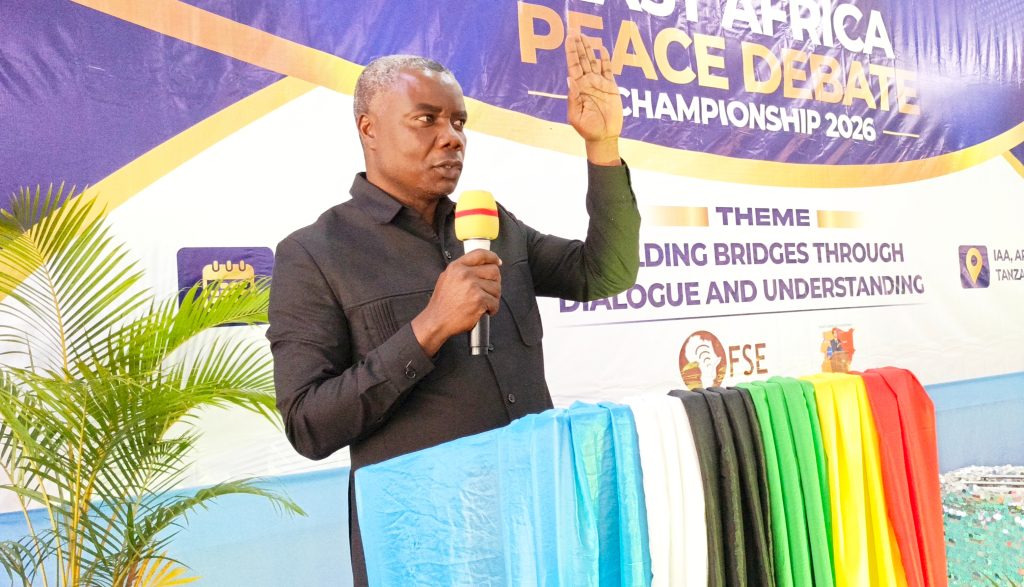
This is the 6th East Africa Peace Debate Championship, drawing young orators from Kenya, Tanzania, Rwanda, Uganda, Ethiopia, Sudan, South Sudan, and beyond, all united under the banner: “Building Bridges Through Dialogue.”
Yet this championship is far more than a hunt for trophies or certificates. For its architects, it is a deliberate investment in the region’s soul—a bid to raise a generation that can disagree without destroying, compete without contempt, and champion a cause without shedding a drop of blood.
As the students step to the microphone, their message rings unmistakably clear: peace is not an accident; it must be learned, practised, and fiercely defended.
‘Don’t Burn a Bus Over Sugar’
The warning came sharp and unflinching from Kennedy Kunani, chairman of Kenya’s National Amani Club and founder of the East African Schools Debate Council. He challenged the young audience to resist the seduction of petty destruction, bringing the championship’s grand purpose into sharp focus.
“Don’t burn a school bus because your tea did not have enough sugar,” he implored. “Don’t raze down a whole dormitory because you were denied a chance to watch the TV.”
His words laid bare a painful reality—how easily a spark of anger can consume buildings built at great cost, injure bodies, and sometimes extinguish lives. A student’s displeasure, a group’s frustration, a moment’s lost temper—and suddenly, a classroom or bus vanishes in smoke.
But Kunani wants these young minds to visualise a different ending: a conversation instead of a confrontation, a debate instead of a riot, a solution instead of scorched earth. He explained that Amani Clubs and these regional debates were deliberately fashioned to nurture generations that respect human life, value one another, and resolve problems without chaos.
For the organisers, the calculus is simple: teaching peace early is infinitely cheaper than repairing the wreckage of violence later.
The Battlefield of Ideas
At this championship, the battlefield is the podium. Students do not need fists to prove their strength; they need facts, confidence, logic, and the courage to listen. The beauty of debate lies in this very dynamic—the student standing opposite is not a foe to be crushed, but a fellow mind offering a different lens on the world.
Mr Martin Chamliho, Director of The Living Smile International in Tanzania, urged participants to embrace the moment fully. “Debate is not merely arguing to prove a point,” he said, “but exploring the truth from every angle, challenging assumptions, sharpening intellect, and building bridges of understanding.”
His message resonated beyond the competition. These students, he noted, were not just learning how to win arguments; they were learning how to live together. “We are here to learn and grow together as an East African Community. The bridges this region needs tomorrow can be built today through effective debate.”
Those bridges may not be made of steel or concrete. They are bridges of empathy—between communities, between countries, and perhaps most crucially, between people who deeply disagree.

A Movement Carried in Schoolbags
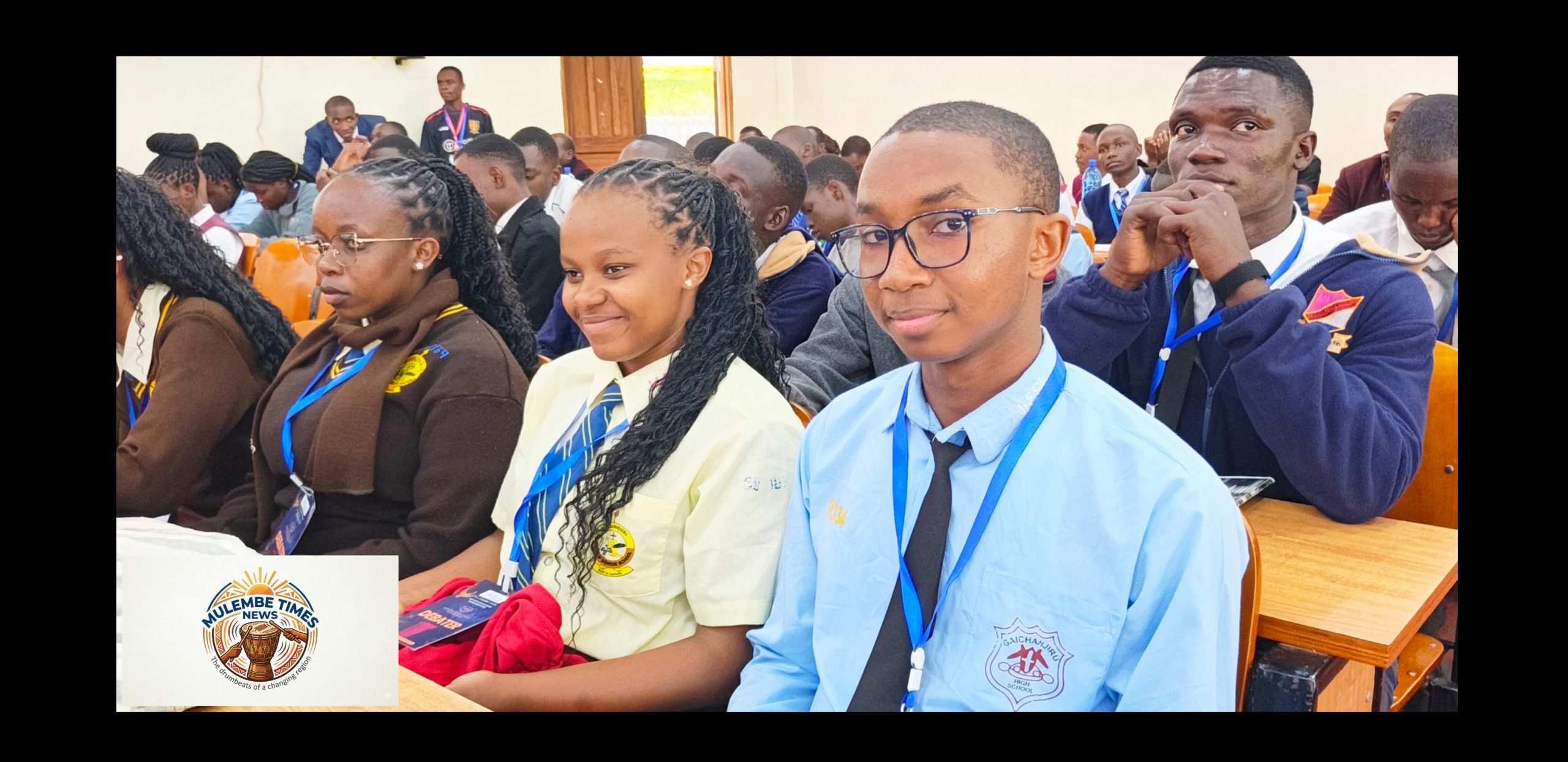
Kenya has arrived in force, with students drawn from Kilifi, Taita Taveta, Murang’a, Nairobi, Nyeri, Nakuru, Kiambu, Baringo, Kakamega, West Pokot, Busia, Kisumu, Vihiga, Migori, Kajiado, and Homa Bay. They have travelled hundreds of kilometres carrying more than notes and uniforms—they carry the hopes of their schools and counties.
For many, this is the ultimate test against the region’s finest speakers. But beyond medals, they are part of a larger movement placing youth at the heart of peace-building.
Monica Obonyo, Director of Education in the Directorate of field coordination and co-curricular activities, Ministry of Education, praised the initiative, noting how it is reshaping young minds. “Debates are cultivating respect in many of our learners,” she said. She observed that the skills acquired were teaching students that disagreements need not end in bloodshed, but in dialogue.
These transformations often happen quietly—a once-shouting student learns to listen, a dismissive mind learns to ask questions, a young debater discovers that winning can mean understanding, not just silencing.
The Real Prize
East Africa’s youth form a significant part of its population. Their choices will shape the region’s politics, economies, and communities. The organisers believe that if these young people are deliberately steeped in the values of peace, the future will be brighter.
“Amani Clubs are creating spaces where students can practise these values while they are still young,” said Kunani. “They are learning that freedom of expression comes with responsibility, that disagreement is not hatred, and that dialogue is not weakness. When your team is defeated, shake hands with the victor. This is what we call Peace.”
Arusha has long been a symbol of regional cooperation and the search for peaceful solutions. Now, a new generation is taking up that mantle—armed not with weapons, but with microphones, notebooks, and ideas.
They will compete fiercely. Some will win; others will lose. But if the organisers achieve their larger objective, every participant will leave Arusha with something more valuable than a trophy: a profound, lived understanding of peace.
Years from now, when these young debaters occupy classrooms, boardrooms, parliaments, and other positions of influence, the lessons from Arusha will echo. A teacher will remember that listening resolves conflict. A policymaker will recall the value of dialogue. A leader will choose negotiation over confrontation. And a young person faced with anger may remember Kunani’s warning: do not destroy what took millions to build simply because you are unhappy.
That is the real prize of the East Africa Peace Debate Championship. Not the trophy, nor the certificate—but the peace they carry home