
By BOB AMALEMBA
May 4, 2026| The Malava by-election petition closed on a tense note, with lawyers on both sides presenting sharply conflicting accounts of what transpired during the November 27, 2025 poll—setting the stage for a decisive ruling on May 15.
Before Stephen Mbugi at the High Court in Kakamega, the final submissions revisited explosive claims that have defined the case since it opened: voter bribery, orchestrated violence, and the role of public officials in the contest that saw UDA’s David Ndakwa declared winner.
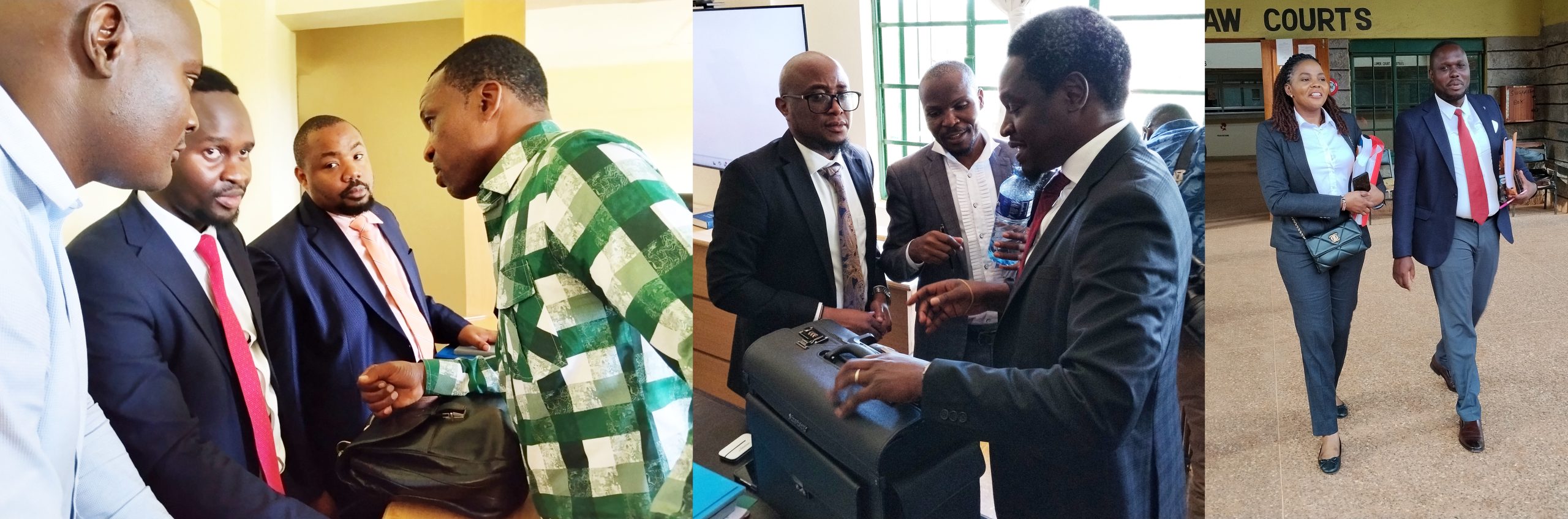
Counsel for the petitioners, led by Nelson Havi, argued that the integrity of the election was irreparably compromised. He told the court that even a single proven act of bribery is sufficient to nullify an election, insisting there was little doubt that foodstuffs were distributed to influence voters.
Havi revisited video evidence first introduced during the hearing—footage that allegedly showed a senior government official (Beatrice Inyangala, PS Higher Education) distributing relief food while invoking Ndakwa’s candidacy. He argued that such actions pointed to unlawful participation of state officers in the election, creating a conflict of interest.
But it was the scale of alleged violence that formed the backbone of the petitioner’s case.
The court heard that entire families were disenfranchised. The family of Paul Juma—his wife and two sons—testified that they stayed away from polling stations due to fear, with claims that at least ten families were similarly affected.
Another witness, Edith Echesa, told the court her home was attacked and that she was turned away by suspected goons. Havi also cited chaos at a hotel linked to DAP-K candidate Seth Panyako that was being used as a tallying centre, where equipment was destroyed and staff injured.
Among those mentioned were Jamal Sakwa, who sustained serious abdominal injuries, and Silus Angatia, who was stabbed. The petitioner further linked the violence to political actors, claiming it was coordinated to suppress voter turnout.
He also referenced the torching of a vehicle belonging to Eugene Wamalwa (Toyota Prado TX) in Manyonje, arguing that such incidents created a climate of fear that undermined a free contest.
Security agencies were not spared. Havi told the court that police failed to respond adequately to distress calls, alleging that officers in some instances advised complainants to flee rather than offering protection.
To reinforce the claims, the petitioners relied on findings by the Kenya National Commission on Human Rights, which documented multiple incidents of election-related violence. According to the report, more than ten victims were treated at Webuye Hospital following an attack at a hotel associated with one of the candidates.
The petitioner’s team argued that the cumulative effect of violence, intimidation, and alleged bribery rendered the election neither free nor fair, and faulted the Independent Electoral and Boundaries Commission for failing to prevent irregularities, including what they described as biased recruitment of polling staff.
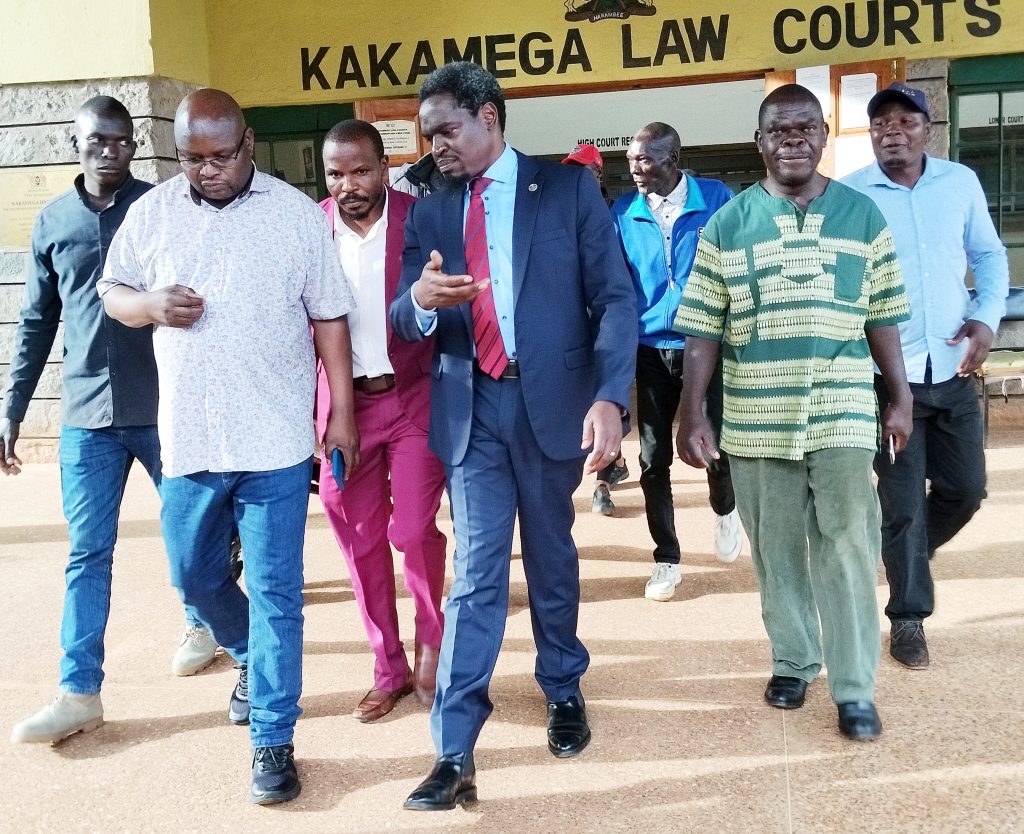
In response, the defence, led by Hezron Abok, dismissed the petition as legally defective and unsupported by credible evidence.
Abok argued that parts of the case relied on repealed laws and that key affidavits were improperly executed, including one allegedly signed by an advocate instead of the deponent. He maintained that no direct link had been established between Ndakwa and the alleged violence.
On the contested video evidence, the defence said its authenticity and context were unclear, noting that it did not specify where it was recorded or who captured it, and that Ndakwa was not present.
The defence further argued that participation in political activity is a constitutional right under Article 38, and that recent legal changes allow certain public officers to engage in campaigns. They also cited legal provisions to counter claims that Ndakwa unlawfully held dual office, stating that he resigned as Member of County Assembly on November 28, was gazetted on December 1, and sworn in as MP on December 5—ensuring no overlap.
Claims of widespread violence were also challenged, with the defence pointing to the absence of police records such as Occurrence Book entries to substantiate allegations of assault.
Abok further attacked the credibility of the petitioner’s witnesses, highlighting inconsistencies in their testimonies and arguing that the case had been brought “with unclean hands.”
The petition, filed by two Malava residents, John Karakacha and Nancy Wanakacha, seeks to overturn a closely fought election whose outcome was separated by just over 1,300 votes—raising the stakes of the court’s determination.
With submissions now closed, Justice Mbugi is set to deliver judgment on May 15, in a ruling that will either uphold Ndakwa’s victory or send Malava voters back to the ballot in one of the most closely watched electoral disputes in recent months.