
By SHABAN MAKOKHA
May 6, 2026| Deep in the hushed heartland of the Luhya community, a quiet, unspoken tradition breathes—one that has silently sculpted generations of young men. It is etched in no constitution, whispered in no classroom, and enforced by no chief. Yet it stands as one of the most sacred and unyielding of cultural duties: the digging of graves.
You simply grow up seeing it, absorbing it into your bones. And then, one day, when the moment arrives, you find yourself stepping into the circle of men who keep the ancient rhythm of communal life alive.
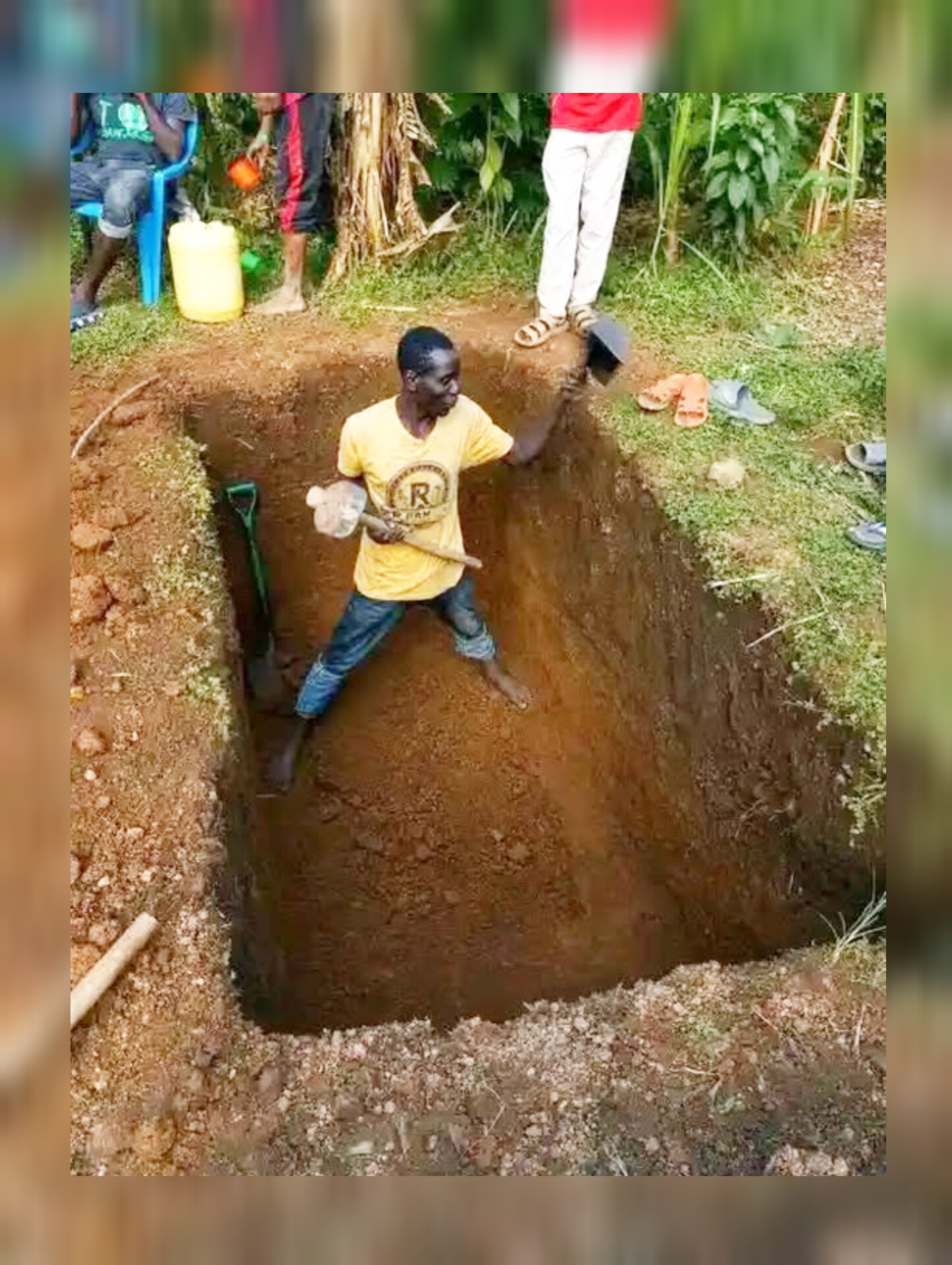
Here, when death visits a homestead, it is the young men who answer with their hoes. The burden does not fall to hired hands or casual labourers. It belongs to the sons of the soil, the brothers of the bereaved, who gather without being summoned, roll up their sleeves, and take turns breaking the earth. No one asks for payment. No one haggles. No committee is formed. It is simply what one does. Just duty. Honour. And the profound weight of belonging.
Before the first shovel bites the ground, a small, solemn ritual unfolds. The elders—custodians of clan memory, grey-haired and soft-voiced but firm in their steps—gather quietly at the homestead. They walk the compound slowly, murmuring in low tones, their eyes reading the land, searching for the exact place where the departed shall rest. It is a moment of reverence. A moment of finality. Only when they agree—after long, murmured consultations—do the young men step forward.
A long stick, measured to the height of the deceased, is laid out to mark the grave’s length. Every detail must honour the body. The elders know where the ancestors lie and where future generations will sleep. When they finally stop at a chosen spot, the verdict is announced in a voice soft as dusk: “Hapa ndipo akalale.” Here is where his soul shall rest. Only then does the digging begin.
The work is not paid in cash, but in tokens of gratitude—small gifts that carry the weight of unity and the warmth of culture. The grave is usually dug at night, sinking three to four feet deep. The finishing touches and final rituals are handled just hours before burial. And for their labour, the young men receive a chicken, maize flour, local brew, and cigarettes. But here lies the twist: the chicken is not cooked. It is handed over raw. It is the diggers’ task to slaughter, pluck, cut, season, and stew it themselves.
And this is where the digging transforms from duty into a gathering—a space for bonding, teasing, storytelling, and quiet reflection. As the grave deepens, smoke rises from a makeshift cooking spot nearby. There is always that one fellow who swears he knows the exact measure of salt. Another declares himself the “official taster.” A third has no visible role except standing by the simmering pot with suspicious dedication. One wanders off in search of firewood. Another pretends to be intensely busy while doing absolutely nothing.
By the time the grave is shaped, secured, with smooth walls and squared edges—just as the elders demand—the chicken is ready, bubbling in a rich, smoky stew, cooked with the kind of teamwork that only hardship can forge. And when the food is shared beneath the shade of a tree or beside the fresh mound of soil, it tastes different. It carries the weight of labour, the sting of smoke, the smell of sweat, and the lightness of laughter.
After eating, the tools lean against the wall. The men sit under a tree or around the fire, stretching their tired legs. Then someone—always in a casual, almost philosophical tone—asks a question that holds a lifetime: “Whose graves have you dug?” Silence falls. Faces appear in your memory like old photographs. You begin to count: relatives, neighbours, elders you admired, the woman who gave you mandazi, the uncle who told stories by the fireside. Naming them feels like turning the pages of a personal chronicle of your life in the village. In that moment, you realize that each grave is not just about death. It becomes a memory. It marks a season of your life. Each name is a chapter of growing up.
But time moves, and the roles shift. As years pile on—work, family, the pressures of adulthood—your place in the ritual begins to change. No one tells you to stop. Your back simply stops volunteering. Slowly, without ceremony or announcement, the shovel leaves your hands. You may contribute money now, or buy extra flour, or bring a second chicken to ease the burden. One day, you show up at a funeral, and the young men are already gathered, tools in hand, laughter in the air, ready for the work you once did. You try to help. But they no longer hand you the hoe. An elder or a young man will tap your shoulder and say, gently: “Wewe kaa tu hapo, mzee.” Just sit there, old man.
And you sit—not out of weakness, but out of honour. You realize you have graduated. You are no longer counted among the labourers. You are now a custodian of memory. This is how the community acknowledges a man who has done his part.
Anthropologists will tell you that African communities survive because informal systems like these provide what governments often cannot: solidarity, structure, dignity, and emotional support. Among the clans of the Luhya, grave digging is a way to honour the dead and support the living. It is a rite of passage for young men, a mentorship space where boys learn from older peers, a community insurance system where labour replaces money. It ensures that no family—no matter how destitute—is left alone in its darkest hour.
Mr. Samuel Waswa, 63, says he retired from active digging nearly two decades ago. “These days, I just bring maize flour and chicken. The real digging is left for the youth. This is how you know you are aging gracefully.” And 22-year-old Alvin Otiato, one of the active diggers, sees the role as both cultural and developmental: “We dig graves not because we want to be paid. It is simply because we don’t want neighbours to remain destitute at the time of grieving. This is where unity is exhibited.”
Some traditions fade with modernization. This one has not. Mr. Waswa says it is tied not to ceremony but to necessity—and to the deepest human need for support in moments of grief. And because every young man knows that one day, when his own time comes, others will do the same for him. The story of grave digging is the story of community, masculinity, identity, and continuity. It is where laughter meets sorrow, where youth meets responsibility, and where the living do their final duty for the dead. It is one of the last standing traditions that remind people that before money, before modernity, before individualism—there was us.
Grave digging is more than a task. It is a rite of passage that binds young men to their community, marks the stages of manhood, strengthens brotherhood, teaches duty and respect, and preserves culture without ceremony or scripts. Even as modern life reshapes many customs, this tradition remains resilient among the Luhya people—because here, a grave is not dug by strangers. It is dug by the hands of those who share blood, land, laughter, and history.
This is how a community remains whole: through sweat shared, through stories retold, through traditions honoured, and through generations bound by duty and belonging. And so, when the young men rise with their hoes, and the elders point to the ground, life completes another circle.