
By SHABAN MAKOKHA
September 28, 2026| For years, young Kenyans have found themselves at the centre of the country’s political battles—mobilised into rallies, drawn into confrontations and left to bear the consequences long after the politicians have moved on.
Now, with the 2027 General Election casting its shadow over the country, two young leaders from Western Kenya have launched a peace campaign aimed at stopping politicians from turning unemployed and frustrated youth into foot soldiers.
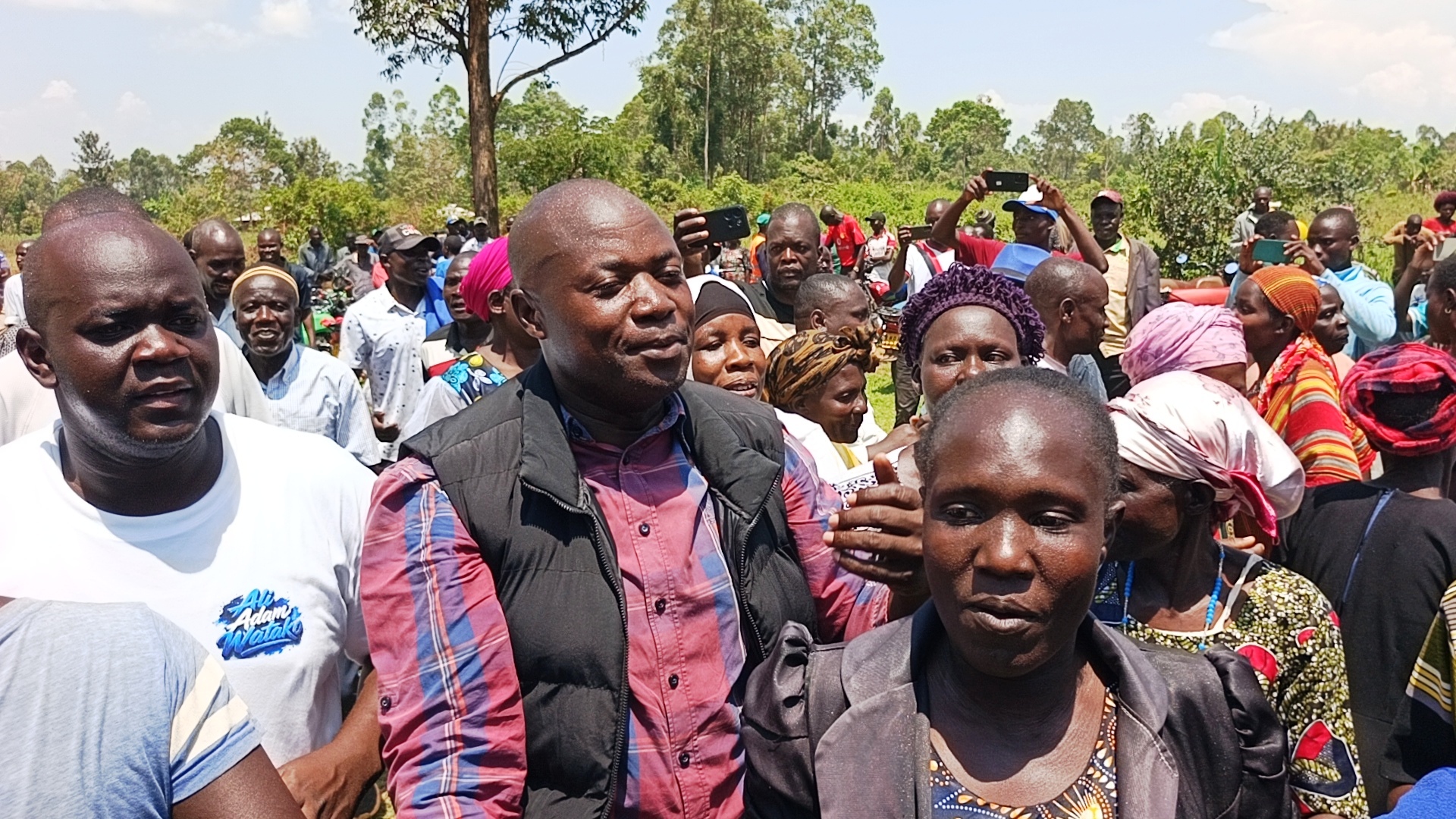
Ali Adam Watako and Augustine Asomba are taking their message from village to village, urging young people to reject political incitement, violence and hatred—and demanding that leaders offer the youth something more valuable than campaign handouts: jobs, opportunity and a future.
The two have embarked on a peace awareness mission to sensitise young people against being used by politicians to cause chaos, attack opponents or deepen political divisions.
They delivered that message passionately at Echengo in Marachi East, Butula Sub-County, where they urged the youth to refuse to become political weapons in the run-up to the 2027 General Election.
“We have started this journey to move across the country asking politicians not to polarise the country with incitement,” said Watako. “We are also opposing the misuse of youth by politicians during rallies.”
For Watako, the time has come for young people to break free from a cycle in which politicians compete for power while ordinary youth are left to confront one another.
“As youth, we must say no to being used by politicians to fight their opponents. We are saying no to incitement,” he said.
The campaign comes as political alignments ahead of 2027 begin taking shape, raising fresh concerns that political rivalry could spill over into communities. The two speakers urged politicians to compete on ideas and development rather than mobilising supporters against their rivals, and challenged them to invest in young people through jobs, enterprise opportunities and skills instead of mobilising them for confrontations.
Asomba said the youth must reclaim their place in society and refuse to fight battles that belong to politicians.
“As youth, we must say no to being used by politicians to fight their opponents. We are saying no to incitement,” he said.
The peace campaign comes at a time when political competition is already taking shape ahead of the 2027 elections, with memories of previous election-related tensions still fresh among many Kenyans.
Asomba also criticised former President Uhuru Kenyatta over recent remarks revisiting the disputed outcome of the 2022 presidential election, in which he has been reported as saying Raila Odinga was denied victory.
“What Uhuru has started has tainted him badly. He should earn respect as a statesman. He should have pointed out this anomaly in the early times after the elections and not wait until we are headed to another election to raise the matter,” he said.
The youth leaders also declared their support for President William Ruto’s re-election bid, arguing that his administration had undertaken development projects they said had not been witnessed before. They further argued that the broad-based arrangement between President Ruto and the late Raila Odinga had changed the traditional opposition-versus-government political equation.
Asomba then turned the spotlight on Western Kenya’s political history, reminding the gathering that for decades the region has often rallied behind opposition leaders, including Raila Odinga.
He used the same platform to confront what he described as decades of political frustration in Western Kenya, questioning whether that political loyalty had translated into tangible economic benefits for ordinary residents.
“Baba has been entering handshakes but we get nothing. Other areas have been growing economically while Western remains behind,” he said.
He painted a picture of a region struggling with poor infrastructure, inadequate industrial investment and markets that, according to him, have not received the attention they deserve.
“We are not privileged with any industry, cash crop. We rely on business. Our markets are in deplorable state because of sticking to opposition. Roads lack tarmac. Villages are in darkness without electricity,” he said.
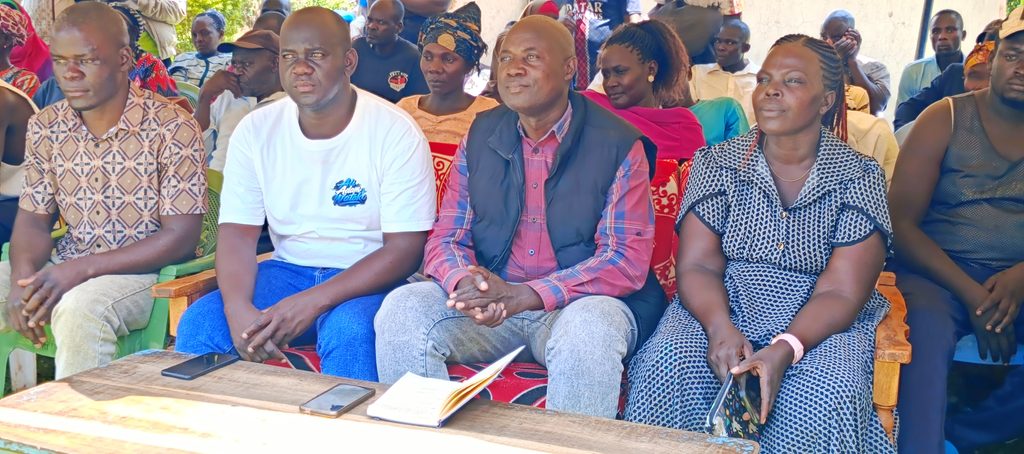
He urged residents to reconsider the traditional political divisions and work with whichever government is in power if doing so can unlock development opportunities.
“We must work with the government to have our markets constructed with modern amenities,” he said.
His message was direct: political allegiance, he argued, should not come at the expense of schools, hospitals, roads, jobs and functioning markets. He challenged residents of Marachi East to examine whether their political choices were delivering the development they wanted.
“If ODM is in the opposition, who are we, the people of Marachi East, not to support the government?” he posed.
He said the region needed to focus on securing opportunities for its young people and improving basic services rather than remaining trapped in political loyalties. According to him, residents want good schools for their children, employment opportunities for young people and better-equipped markets, hospitals and roads.
The campaign also exposed simmering local frustrations over development in Busia County. Asomba criticised Governor Paul Otuoma over what he described as inadequate development in Marachi, particularly around markets.
He claimed that local markets generate substantial revenue for the county government but complained that residents were not seeing sufficient investment in return.
“The County Government of Busia collects a lot of revenue from our markets but it is not giving back,” he said.
He singled out Echengo, Ogalo and Butula markets, calling for their modernisation and better facilities for traders. He also raised concerns about what he described as unequal distribution of bursaries and subsidised farm inputs in the county.
“Everyone deserves to get the county’s subsidised fertiliser and bursary,” he said.
Asomba promised to take the concerns of Marachi East to President Ruto, seeking government intervention in development projects, including construction of a modern market and improvement of local schools.
But beyond politics and development, the central message of the gathering was directed at the young people themselves—do not be sacrificed for politics.
Watako and Asomba want young people to understand that they have more to lose from political violence than the politicians who mobilise them.
When the rallies end, politicians go home. When the election is over, political opponents can shake hands. But the young people are left to face each other on the streets and live with the consequences.
They want the youth to reject the old script in which political competition turns ordinary citizens against one another.
As the country moves towards another election, the two hope their peace caravan can carry that message far beyond Echengo—to communities where political rivalry has previously left behind broken relationships, injured citizens and shattered dreams.
For the youth, they said, the choice should be between building their future and becoming instruments in somebody else’s political battle.