
By BOB AMALEMBA
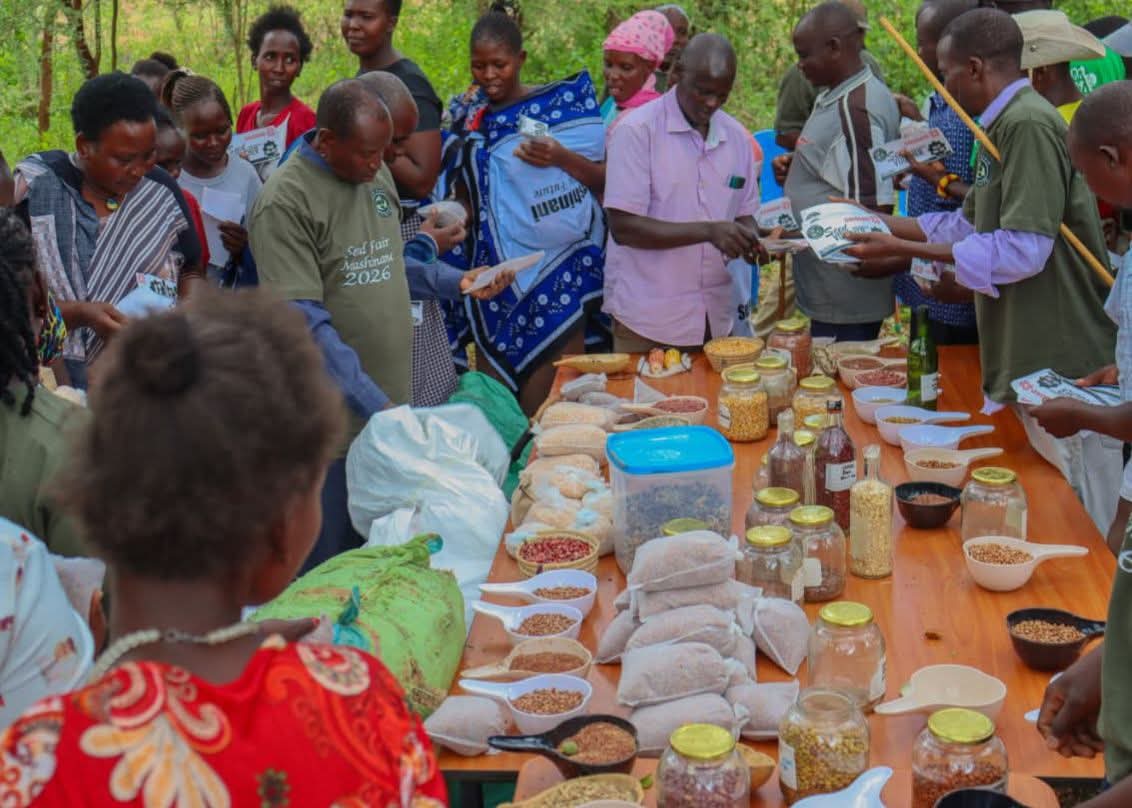
March 10, 2026| More than 1,200 farmers across Kenya have taken charge of preserving the country’s agricultural heritage through community-led seed fair initiatives held at the beginning of every planting season, with women emerging as the primary custodians of indigenous seeds.
The seed fairs, locally known as “mashinanis,” are organised entirely by seed ambassadors at the village level each March and September. The grassroots gatherings facilitate the exchange of indigenous seeds and enable knowledge sharing on proper farming practices among smallholder farmers, with Seed Savers Network providing backstopping support only when requested.
The initiative received significant legal backing following a recent court ruling on seed sovereignty, which now allows farmers to freely save, exchange, and market their indigenous seeds without legal impediment. The ruling has removed decades of uncertainty that had previously constrained farmer-led seed systems.
During the National Seed Fair held in Laikipia, Seed Savers Network officially launched the Community Seed Banking Platform, a digital innovation owned and managed by farmers themselves to promote the exchange of seeds, knowledge, and best practices among community seed banks across the country. The platform is also expected to facilitate self-regulation among community seed banks, ensuring that seed quality is maintained at the local level through peer-to-peer accountability.
Mercy Ambani, an official at Seed Savers Network, emphasised that the organisation merely provides secretariat services while farmers lead the initiative.
“It is a dialogue and training space for hosts and leads. The farmers own it,” Ms Ambani said. “We focus on maintaining seed quality and provide training on soil management, water conservation, and seed preservation techniques when farmers invite us.”
The platform currently connects approximately 125 community seed bank groups across the country through social media channels, including WhatsApp groups where farmers interact directly. Seed Savers Network acts only as the secretariat, with ownership and leadership resting firmly with the farmers themselves.
“We have held national seed fairs in Kisumu and Laikipia where farmers launched this initiative,” Ms Ambani added. “It provides a networking space for connecting researchers, farmers, and seed custodians. For example, velvet beans available in western Kenya can now be accessed by a farmer in Nakuru who needs them, arranged directly between the farmers.”
Two farmers from Vihiga County in western Kenya addressed participants at recent events, speaking to the importance of indigenous seeds and the role of seed fair mashinanis in preserving agricultural biodiversity from the farmer’s perspective.
Thomas Mdirika from the Esunga nutrition group in Emuhaya village described how the seed fairs have transformed their operations. Following training that farmers requested from Seed Savers Network and Bioversity International, farmers in his group now understand their legal right to exchange seeds following the recent court ruling.
“I never knew there was a law barring the exchange,” Mr Mdirika said. “I learnt it when it was ruled unconstitutional, and I have more zeal to exchange seeds and multiply them.”
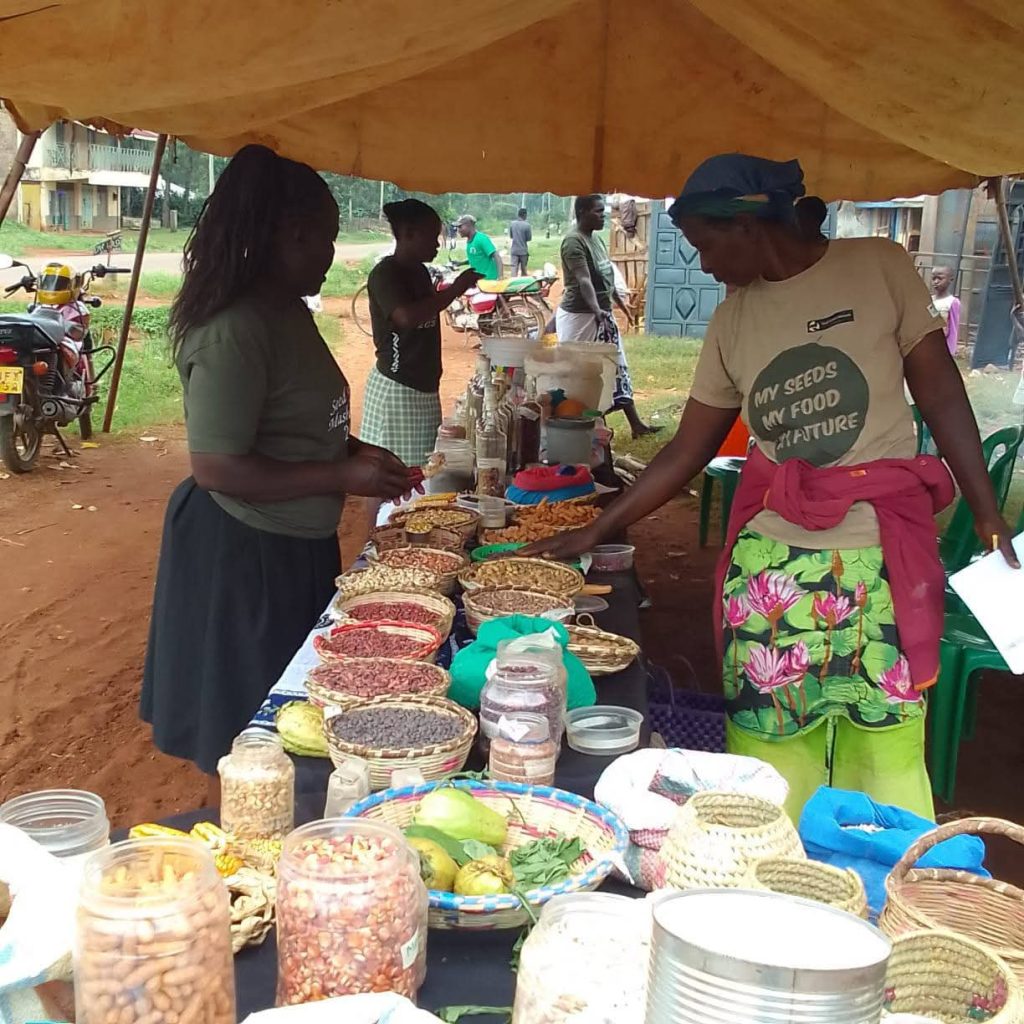
His group operates an exchange system where a farmer who receives a cup of seeds returns a quarter-cup after harvest, creating a sustainable community-managed seed bank that operates independently of external support.
Christine Namai, also from Vihiga, highlighted the practical benefits of the seed fair system and the new digital platform that farmers are now using to connect with each other.
“The seed savers platform helps us get information in real time,” Ms Namai said. “We know each other through it and share seeds and posts on best methods of preserving indigenous seeds. It is us farmers talking to each other.”
Ms Namai has been at the forefront of reviving traditional grains. She processes finger millet flour, which she mixes with maize flour to make ugali or porridge. A two-kilogramme tin of her finger millet flour sells for between Sh300 and Sh400, compared to maize flour which sells for Sh90, demonstrating the economic viability of indigenous crops that farmers are choosing to prioritise.
Josec Mukuna, another seed champion from Emuhaya, explained how the platform connects farmers across county lines without intermediary involvement. Through the digital seed savers platform that farmers operate, he obtained Sutsa (Solenostemon scutellarioides) from a farmer in neighbouring Kakamega County, diversifying his seed stock and strengthening local biodiversity through direct farmer-to-farmer exchange.
Rael Amisi, looking to the future, expressed ambition among the farmers to take their work to the next level through their own efforts.
“We hope to certify our seeds in the near future if we get support from partners,” Ms Amisi said, envisioning a time when their grains could be sold as certified seed, linking them formally to markets and the national gene bank while maintaining farmer control.
Ms Ambani noted that visible changes are already evident among participating farmers who now drive the agenda.
“Most are now trained, and platform leaders are well-informed. They are engaging in research with breeders and have developed good booklets that can be disseminated to all. Seed Savers Network merely responds to what they ask for,” she said.
The Community Seed Banking Platform is designed to be farmer-owned, with Seed Savers Network serving only as a secretariat that responds to farmer requests. The initiative aims to address policy gaps while ensuring that community seed quality is maintained through peer-to-peer learning and self-regulation among farmers themselves.
The recent court ruling on seed sovereignty has provided legal clarity that empowers farmers to continue their conservation work without fear of contravening seed laws that previously favoured commercial seed systems over traditional farmer-managed seed exchange networks. Farmers across the country are now conducting their seed fairs with confidence, knowing the law protects their right to save, exchange, and market the indigenous seeds they have preserved for generations.