
By SHABAN MAKOKHA
October 26, 2026| A renewed push to protect the historic political, social and economic relationship between the Luo and Luhya communities is gaining momentum, with Jaoko Oburu Oginga stepping forward to rebuild a bond shaken by the death of former opposition leader Raila Odinga.
Jaoko, who is eyeing the Bondo parliamentary seat, says the relationship between the two neighbouring communities must not be allowed to weaken or drift into uncertainty following the loss of Raila, whose political influence and longstanding alliances played a central role in bringing leaders from Nyanza and Western Kenya together.
At the heart of his mission is a simple but powerful message: the Luo-Luhya relationship is bigger than Raila, bigger than individual political careers and bigger than the shifting alliances that define Kenya’s competitive political landscape.
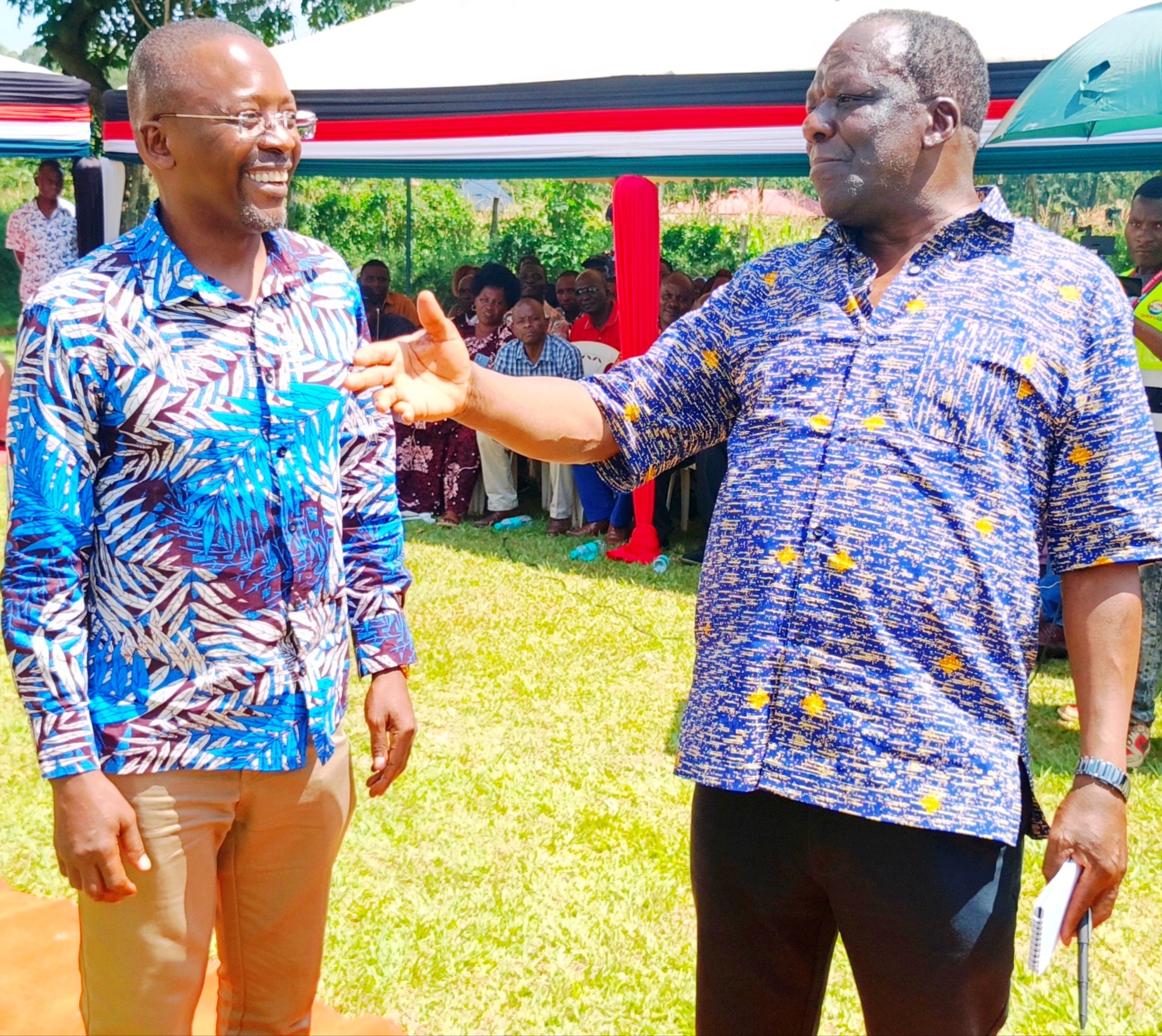
Speaking in Butere during a visit to Co-operatives Cabinet Secretary Wycliffe Oparanya, Jaoko said the two communities share a bond built over generations through family ties, cultural exchanges, trade, friendship and common political experiences.
“This strong tie has existed from the days of our grandparents that we cannot wish it away,” Jaoko said.
His remarks come at a defining moment for the politics of the Lake and Western regions, where questions are increasingly being raised about the future of relationships previously anchored on Raila’s leadership, political networks and ability to bring together leaders with shared interests.
With Raila gone, the challenge is no longer simply about preserving his political legacy. It is also about protecting the relationships he helped nurture, ensuring that the Luo and Luhya communities continue to engage with one another and creating a foundation for cooperation that can withstand changes in leadership.
For Jaoko, the task is to ensure that the historic connection between the two communities does not become a casualty of political realignments. He is looking to Oparanya’s longstanding friendship and political association with Raila as a bridge through which the two communities can renew their engagement.
The Bondo parliamentary hopeful believes Oparanya’s experience, networks and established relationships across Western Kenya place him in a strategic position to help sustain the connection between leaders from the two regions.
“Through Oparanya, who was Raila Odinga’s closest ally, we shall bring the two communities to share one table,” he said.
The initiative is intended to move beyond memories of past political cooperation and establish a new platform for dialogue, mutual understanding and practical collaboration. It also reflects recognition that Raila’s departure has created a political vacuum that cannot be filled merely by invoking his name. The relationships he built must be deliberately maintained, nurtured and protected by leaders willing to put the long-term interests of their communities above short-term political calculations.
Jaoko’s latest engagement follows an earlier visit in which he led a delegation of Luo leaders to Oparanya’s home about a month ago. The visit was intended to honour the close friendship between Oparanya and the late Raila while reinforcing the bonds that connected leaders from Nyanza and Western Kenya.
By returning to that relationship as a foundation for renewed engagement, Jaoko is signalling that the Luo-Luhya connection should remain a living partnership rather than a chapter of political history.
The emerging conversation about the future of Luo-Luhya relations also places renewed attention on Nairobi Senator Edwin Sifuna and the wider question of how the next generation of political leaders will preserve relationships forged by their predecessors.
Sifuna represents a generation of political leaders whose choices, alliances and public engagement will help shape the future direction of opposition politics and the relationship between communities across the Lake and Western regions.
His place in this unfolding political conversation raises an important question: can the next generation sustain the bridges built by Raila while creating a broader, more durable basis for cooperation between the Luo and Luhya communities?
For Jaoko’s initiative to succeed, the preservation of these ties cannot be left to a handful of veteran politicians or occasional meetings between prominent leaders. It must also involve emerging political voices, including leaders such as Sifuna, alongside grassroots organisers, professionals, businesspeople, young people and community institutions.
The objective should not be to force political uniformity or suggest that the two communities must always support the same candidate. Rather, it should be to protect a relationship in which political disagreements do not destroy social trust, economic partnerships or the ability to work together on issues of shared concern.
The Sifuna factor therefore adds a generational dimension to the debate. It underscores the need for leaders who can carry the relationship forward without making its survival dependent on a single political personality.
The future of the Luo-Luhya partnership will ultimately be determined not only by who inherits political influence, but also by who is prepared to invest in dialogue, mutual respect and a shared vision for the region.
Beyond the immediate question of sustaining historical ties, the renewed outreach also intersects with a wider political ambition: the growing conversation about Western Kenya’s place in the national leadership equation and the possibility of the Lake and Western regions working together to shape the country’s political future.
For decades, the Luo community has been associated with Raila’s national political campaigns, while Luhya leaders have continued to pursue their own ambitions for greater influence in national leadership.
The two regions have often found common ground, but their political cooperation has also been tested by competing ambitions, differences in strategy and the changing interests of individual leaders.
The emerging question is whether the historical relationship between the two communities can evolve into a more structured partnership capable of influencing national conversations on leadership, development and the distribution of political power.
For sections of the Luhya political establishment, the ambition of producing a future national leader has remained an important part of Western Kenya’s political conversation. Such aspirations inevitably raise questions about how the region can consolidate its political influence while building mutually beneficial relationships with neighbouring communities.
A stronger Luo-Luhya partnership could create room for wider consultations on leadership, shared development priorities and the role of the Lake and Western regions in shaping Kenya’s future.
However, such cooperation would need to be founded on mutual respect, transparent political engagement and recognition that both communities have legitimate leadership ambitions.
Protecting the relationship does not mean one community must surrender its political aspirations to the other. It means creating a framework through which those aspirations can be discussed and pursued without undermining the bonds that connect them.
For Jaoko, the immediate task is to keep the two communities talking. The broader political question is whether those conversations can eventually translate into a lasting partnership with influence beyond the two regions.
The significance of Jaoko’s initiative extends beyond electoral calculations.
The Luo and Luhya communities share geographical proximity, commercial networks, cultural exchanges, family connections and a long history of interaction. Their relationship has been shaped by generations of movement between communities, friendships across regional boundaries and cooperation in business and public life.
These connections have continued through different political administrations and changing electoral alliances.
That history offers a strong foundation for cooperation even as the political landscape changes. It also provides a reminder that ordinary citizens often maintain relationships that are far more enduring than the alliances negotiated by political elites.
Families, traders, farmers, transport operators, professionals and young entrepreneurs have practical reasons to sustain good relations between the two regions.
A breakdown in political trust can easily spill into public discourse and deepen divisions, while constructive engagement can create opportunities for economic collaboration, peaceful coexistence and joint advocacy on development priorities.
The challenge is therefore to transform the language of historical friendship into programmes that deliver tangible benefits to people on both sides.
Regular consultations between community leaders, youth exchanges, business forums, cultural engagements and joint development initiatives could help give the relationship a practical foundation.
Such efforts would also help insulate the partnership from the disruptions that often accompany changes in political leadership.
While Oparanya’s relationship with Raila provides a compelling starting point, the long-term survival of the Luo-Luhya bond will require more than personal friendships between influential politicians.
Personal relationships can open doors, create goodwill and bring leaders around a table. But lasting cooperation requires structures that remain active even when political circumstances change.
Jaoko’s outreach could therefore mark the beginning of a broader process involving elected leaders, elders, religious institutions, professional associations, business communities and youth representatives from both regions.
Such a framework would allow the two communities to identify shared priorities, address emerging disagreements and develop a common approach to issues affecting their people.
It would also provide space for honest discussions about political competition, regional interests and national leadership without turning every disagreement into a threat to the wider relationship.
The message is particularly important in the post-Raila era, when the future of many political alliances is being reconsidered.
Raila’s contribution to bringing leaders together remains an important part of the relationship’s history. Yet the most effective way to preserve that legacy may be to build a partnership that does not depend entirely on one individual.
That is the challenge now facing leaders across Nyanza and Western Kenya: to turn a historic connection into a sustainable framework for cooperation.
As the next phase of Kenyan politics takes shape, the Luo-Luhya relationship could become an important test of whether historical community ties can survive the pressures of succession politics, electoral competition and competing national ambitions.
Jaoko’s intervention places the emphasis on continuity rather than rupture. It calls on leaders to recognise that the death of a prominent political figure should not mark the end of the relationships he helped establish.
The two communities do not have to agree on every political question to preserve their friendship. They need a shared commitment to dialogue, respect and cooperation that allows their differences to be managed without sacrificing their common interests.
For now, Jaoko is banking on the historic bond between the Luo and Luhya communities and Oparanya’s relationship with Raila to open a new chapter of engagement.