
By SHABAN MAKOKHA
June 6, 2026| President William Ruto’s allies in Kakamega County have intensified a grassroots campaign aimed at winning back public confidence, urging residents to judge the President not by political rhetoric but by the development projects they say have transformed the region.
At the centre of the campaign is a message of gratitude, unity and political strategy: support President Ruto for a second and final term, then position the Mulembe Nation to pursue the presidency in 2032.
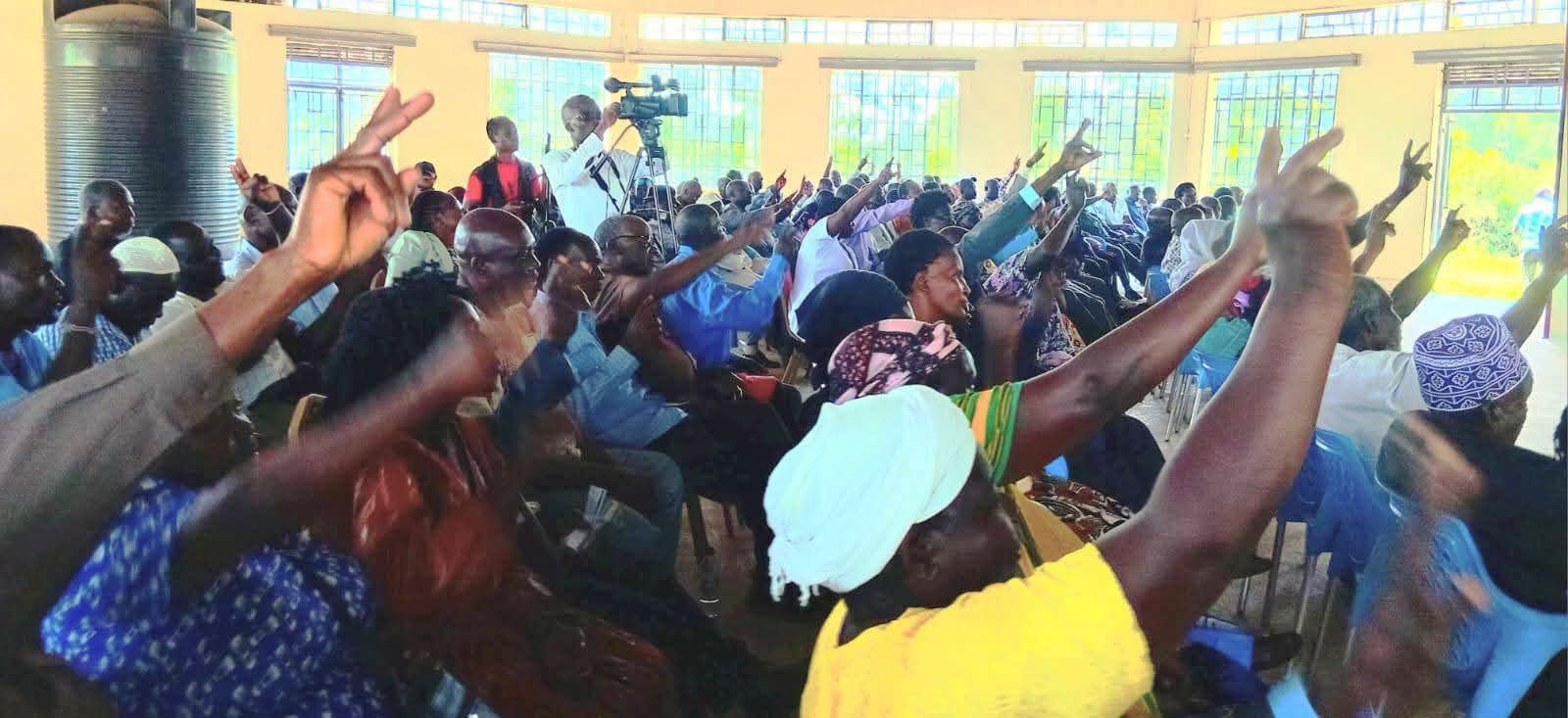
That message echoed during a meeting bringing together Commission on Revenue Allocation (CRA) Commissioner Hadija Nganyi, Kakamega Deputy Governor Ayub Savula, former Mumias East MP Benjamin Washiali, Mayoni Ward MCA Frederick Watitwa, Kakamega County Assembly Speaker James Namatsi, and chiefs and their assistants drawn from Mumias West, Mumias East and Matungu sub-counties.
But beyond politics, the leaders sought to honour a group they described as the forgotten foot soldiers of the government—chiefs, assistant chiefs and village administrators.
The leaders who had organized an empowerment initiative for chiefs, assistant chiefs and village administrators, said the officers remain the backbone of government service delivery despite the financial hardships they endure.
The leaders contributed to a welfare fund to support the administrators, saying the officers shoulder enormous responsibilities while often silently battling financial hardship and family obligations.
Speaking during the event, Ms Nganyi said chiefs and their assistants remain the first point of contact whenever communities face insecurity, disasters, conflicts or social crises, yet many continue to serve with limited resources and little public recognition.
“As leaders from both the national and county governments, we chose to stand with these administrators because we understand the critical role they play in serving our people at the grassroots,” she said.
She noted that behind every government uniform is a parent, a breadwinner and a community leader struggling to educate children, care for sick relatives and meet daily family responsibilities.
“These are our brothers, our fathers and our uncles. They carry enormous responsibilities both at work and at home. We should not only see the badge they wear—we must also see the human being behind it,” she said.
Nganyi argued that President Ruto’s administration has significantly increased the government’s development footprint across Western Kenya, saying roads, markets, electricity projects and other public investments have narrowed the development gap between the region and other parts of the country.
“When you travel from Nairobi to Kakamega today, you can clearly see the transformation taking place. Our region is steadily catching up with the rest of the country because development has reached our people,” she said.
She urged residents to support the President’s re-election bid, arguing that continuity would ensure ongoing projects are completed while opening the door to even greater opportunities for Western Kenya. Mr Savula, who has emerged as one of President Ruto’s most vocal campaigners in the region, called on the Luhya community to remain politically united and avoid fragmenting its vote.
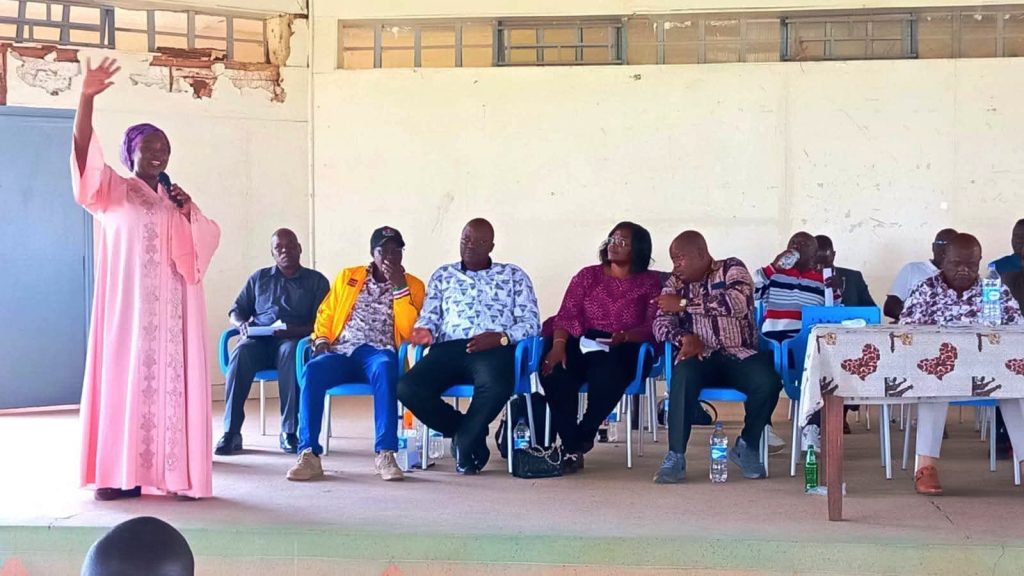
He warned that divided voting patterns have historically weakened the region’s bargaining power and urged leaders to rally behind a common political strategy.
According to Savula, supporting Ruto through 2032 would strengthen Western Kenya’s bargaining power and improve the region’s chances of producing Kenya’s next President after Ruto completes his constitutional two terms
“The future of Western Kenya lies in political unity,” Savula said. “If we stand together today and support President Ruto, we shall have a stronger voice when the country begins discussing the leadership of Kenya after 2032.”
Savula also unveiled an ambitious grassroots mobilisation drive centred on National Identity Card registration and voter enlistment, directing chiefs and assistant chiefs to mobilize eligible youth and adults to obtain identification documents and register as voters ahead of the next General Election.
He challenged local administrators to ensure no eligible resident is left out of the electoral process, saying every identity card issued today represents a stronger democratic voice tomorrow.
“We want every eligible young person to have an identity card and every qualified voter to be registered. Participation in elections begins with documentation,” he said.
Mayoni Ward MCA Frederick Watitwa urged residents to evaluate the Kenya Kwanza administration based on tangible development rather than political emotions.
He argued that continued support for President Ruto would safeguard Western Kenya’s influence in national affairs while accelerating development projects across the region.
He urged residents to evaluate leaders through tangible development rather than political emotions.
“The politics of isolation has never built roads, created jobs or improved livelihoods,” Watitwa said. “Our people deserve leaders who can engage the government, attract resources and deliver meaningful development. That is the conversation we should be having.” “The greatest reward for any community is to remain part of national decision-making,” he added.
“Development follows stability, partnership and constructive engagement with the government of the day.” He added that local leaders will continue conducting youth empowerment initiatives and community engagements aimed at strengthening grassroots support for the President.
Former Mumias East MP Benjamin Washiali and Speaker James Namatsi also pledged to continue mobilizing residents behind President Ruto’s re-election campaign, describing the 2027 contest as a defining moment for Western Kenya’s political future.
As political temperatures slowly rise across the country, the battle for Western Kenya has already begun.
For President Ruto’s allies, the campaign is no longer just about winning another election—it is about convincing ordinary wananchi that roads, schools, markets, electricity projects and inclusive governance tell a more powerful story than campaign slogans.
Whether that message resonates with voters will become clear in 2027, when the people of Western Kenya once again walk to the ballot box to determine the region’s political direction.