
By SHABAN MAKOKHA
March 29, 2026| In a fresh push for Sh550 trillion compensation, Mau Mau war veterans have selected President William Ruto to steer their pursuit for justice amid growing anxiety as Kenya enters a new chapter in confronting colonial atrocities.
Seventy years after they confronted the might of the British Empire, the aging veterans are once again pleading for recognition — and for the world to finally acknowledge the depth of the brutality committed during the brutal emergency period.
In a show of unity and resolve, the veterans endorsed President Ruto as the association’s national patron, to be assisted by former deputy president Rigathi Gachagua, Prime Cabinet Secretary Musalia Mudavadi, and Interior Cabinet Secretary Kipchumba Murkomen.
The selection of new leaders breathes life into a decade-long wait for the Sh550 trillion compensation for atrocities, land dispossession, and systematic injustices endured under colonial rule.
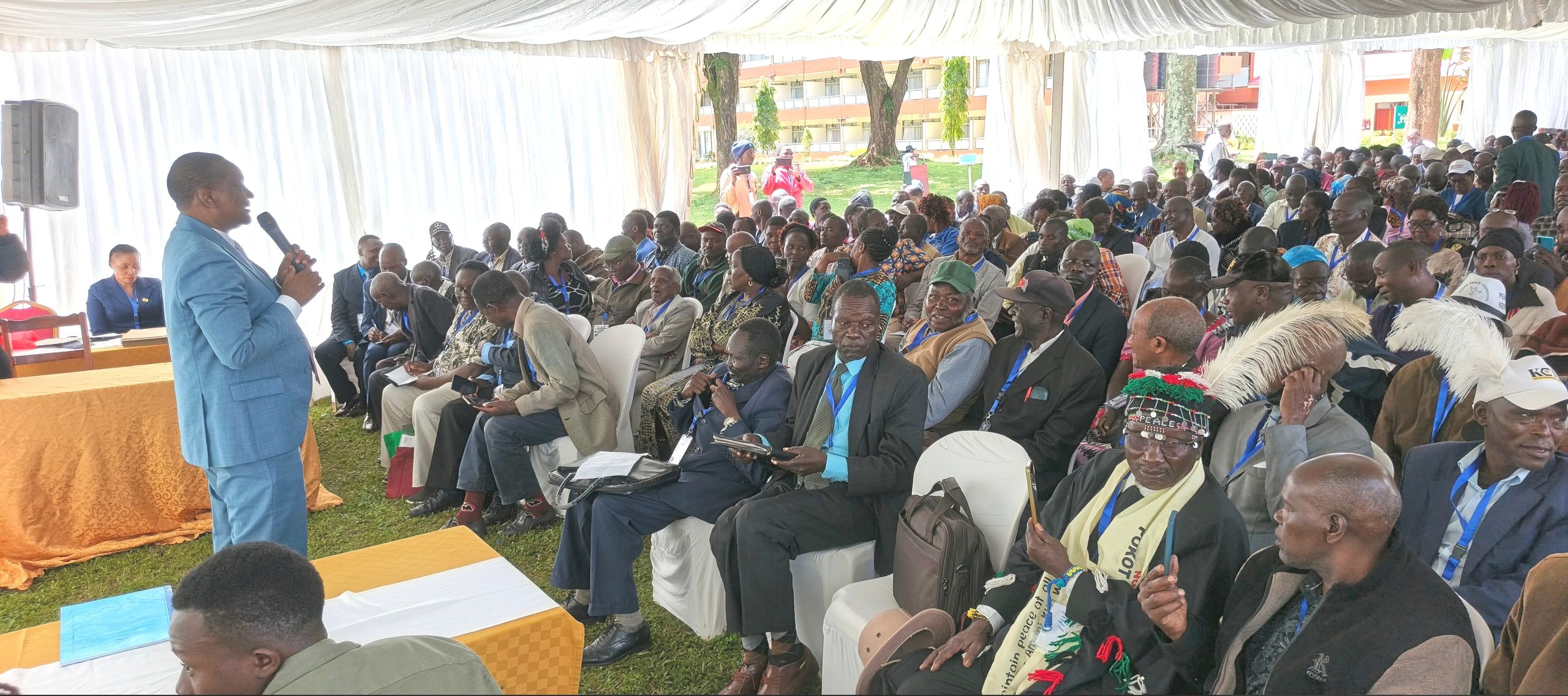
The veterans, who converged at the Golf Hotel in Kakamega for their annual general meeting, said their decision to rally behind President Ruto was grounded in hope that his administration would finally champion their fight on the global stage.
They said Ruto has previously signaled interest in addressing historical land grievances, while Gachagua — whose own family suffered under colonial rule — has been vocal on Mau Mau recognition.
“He understands our pain,” said Mzee Andrew Njeru from Meru, referring to Gachagua. “We believe this team will finally give us a seat at the table.”
According to Mau Mau War Veterans Association national director James Mahuria, the veterans are pushing for a joint Kenya-UK compensation framework, an official apology from the British monarchy, the return or compensation for stolen land, and the establishment of a National Restorative Justice Fund.
“We want him to come in as our national patron, but we shall push him to be the patron of the World Federation so that people who fought in the First and Second World Wars can also be compensated,” he said.
They argue that the previous partial settlement of Sh2.6 billion paid by the British government in 2013 to 5,228 victims was a drop in the ocean, covering only a fraction of the victims without addressing land restitution or broader historical injustices.
“This was just a symbolic commitment by the British government. Only a small fraction of victims benefited,” Mahuria added. “What we are asking for is substantive. We are not begging; we are demanding what was taken from us.”
The veterans urged the Kenyan government to fast-track formal negotiations with the UK before more veterans pass on. They revealed that the youngest surviving Mau Mau fighters are in their late 70s. Many fear dying before justice is delivered.
“We have buried too many comrades while waiting. Let us not be the next. We need justice now, not after our funerals,” pleaded Mzee Njeru, emotions running high, tears flashing from his eyes yet carrying unmatched determination to see justice delivered before the sunset of his life.
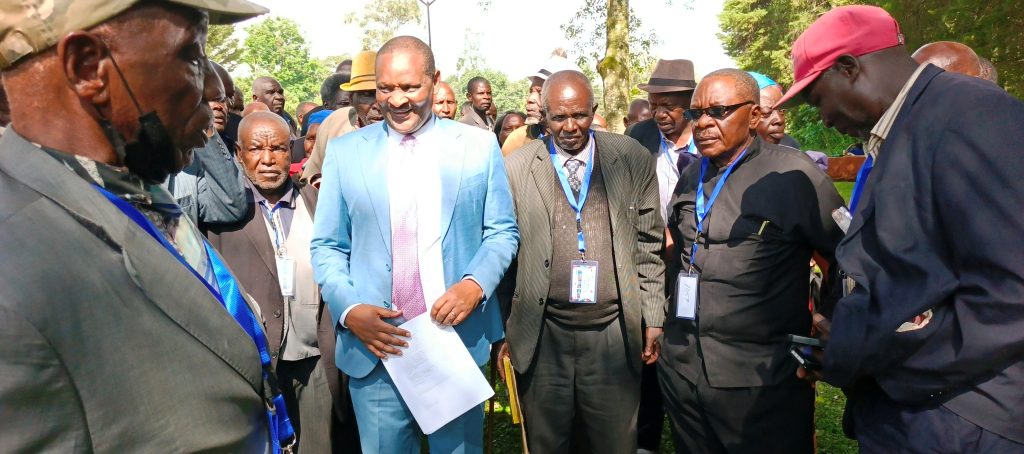
Those who have died are now represented by their sons or daughters in the pursuit of compensation and justice — a reminder that the fight for independence did not end in 1963, and that the ghosts of colonialism continue to shadow Kenya’s quest for healing.
History records that more than 1.5 million Kenyans were forcibly relocated into concentration villages between 1954 and 1959, while tens of thousands were detained without trial. Many survivors still bear both physical and emotional scars.
Mzee Joseph Ngumo, the Nyandarua branch chairman, said the scars they sustained fighting for the country’s liberation have not faded, yet many of them are living in abject poverty.
“We want to die knowing that Kenya remembers its heroes, so that our children can inherit what was taken from us,” Ngumo said quietly, gripping his walking stick. “We want justice before God calls us home.”
The veterans plan to present a formal petition to President Ruto in the coming weeks, followed by international legal consultations aimed at mounting a renewed case in London. The petition details compensation for land dispossession, torture, and other injustices suffered under British colonial rule.
They explain that the Sh550 trillion demand from the British government is a symbolic figure reflecting the 1.2 million hectares of ancestral land seized by colonial rulers between 1900 and 1963; the loss of family livelihoods for over three generations; torture, killings, forced labor, rape and displacements committed by British soldiers; the destruction of cultural identity; economic disadvantages; and the psychological and physical trauma that persist to this day.
“This amount reflects the land stolen, the torture inflicted, and the multi-generational socio-economic damage suffered by our communities,” said Mahuria.
Struggling with poverty and the lingering trauma of war, they feel the world has conveniently forgotten them.
“We fought for this country before most leaders were born,” Ngumo said with a trembling voice. “We need justice now, not compensation written on our graves.”
Kenyans argue that the impact of colonial violence still shapes economic inequalities in modern Kenya.
“We can trace contemporary landlessness, urban poverty, and rural inequality directly to the dispossession experienced by Mau Mau families,” explained Dr. Boni Khalwale, Kakamega senator. “Paying reparations is not about money — it is about accepting responsibility for structural injustices.”
He said many freedom fighters feel betrayed by post-independence governments.
Khalwale noted: “Even after independence, no one is helping them. Their children grew up poor while others enjoyed the freedom they fought for. Many of them hoped that after independence, land would be returned and they would be honored as national heroes. Instead, several say they were sidelined, stigmatized, and forced into a life of poverty.”
Already, the British government has distanced itself from accepting legal liability for the actions of the colonial administration. In June 2013, then-British Foreign Secretary William Hague told the House of Commons that the Sh2.6 billion payment was made in “full and final” settlement after five victims who suffered under British colonial administration brought the matter forward.
He stressed that the British government continued to deny liability for the actions of the colonial administration and indicated that it would defend claims brought from other British colonies.
“We do not believe that this settlement establishes a precedent in relation to any other former British colonial administration,” he said.