
By SHABAN MAKOKHA
June 22, 2026| Every month, when her menstrual cycle began, 15-year-old Mary* faced a difficult choice.
She could attend school and risk embarrassment if her improvised protection failed, or remain at home and miss valuable lessons. More often than not, she chose the latter.
For days, she would stay away from class, afraid of staining her uniform and becoming the subject of ridicule among her peers. By the time she returned, lessons had moved on, assignments had been given and examinations were drawing closer.
“It was painful because I wanted to be in school like everyone else,” she recalls. “But sometimes we did not have money to buy sanitary pads. I felt ashamed and helpless.”
Mary’s story is not unique.
Across many rural communities in Kenya, thousands of girls continue to face what experts describe as period poverty — a situation in which girls and women lack access to affordable menstrual hygiene products.
For families struggling to put food on the table, sanitary pads often become a luxury rather than a necessity.
The result is a hidden education crisis that silently robs girls of learning opportunities, undermines their self-esteem and widens the gender gap in education.
In Kathieno B Sub-location, however, a quiet revolution is taking place.
At the centre of this transformation is Assistant Chief Joash Ogola, whose determination to ensure that no girl misses school because of menstruation is changing lives and restoring dignity to vulnerable learners.
When Mr Ogola began interacting closely with residents and schools in his area, he noticed a worrying trend.
Teachers frequently reported cases of girls missing classes for several days every month. Some learners who had shown academic promise were gradually falling behind in their studies.
Initially, many people attributed the absenteeism to indiscipline, domestic chores or lack of interest in education.
But a deeper look revealed a different reality. Many girls simply lacked sanitary pads.
In households burdened by poverty, parents often struggled to meet competing demands.
With limited income, priorities naturally shifted towards food, shelter and school fees, leaving menstrual hygiene needs unmet.
Some girls resorted to using old pieces of cloth, blankets, mattress foam, tissue paper and other improvised materials.
Besides being uncomfortable, these alternatives exposed them to infections, anxiety and social stigma.
“It was heartbreaking to learn that some girls were staying at home because of something that can easily be addressed,” says Mr Ogola.
“Menstruation is natural. It should never be a reason for a child to miss school or lose confidence.”
Rather than merely sympathising with the affected girls, Mr Ogola decided to act.
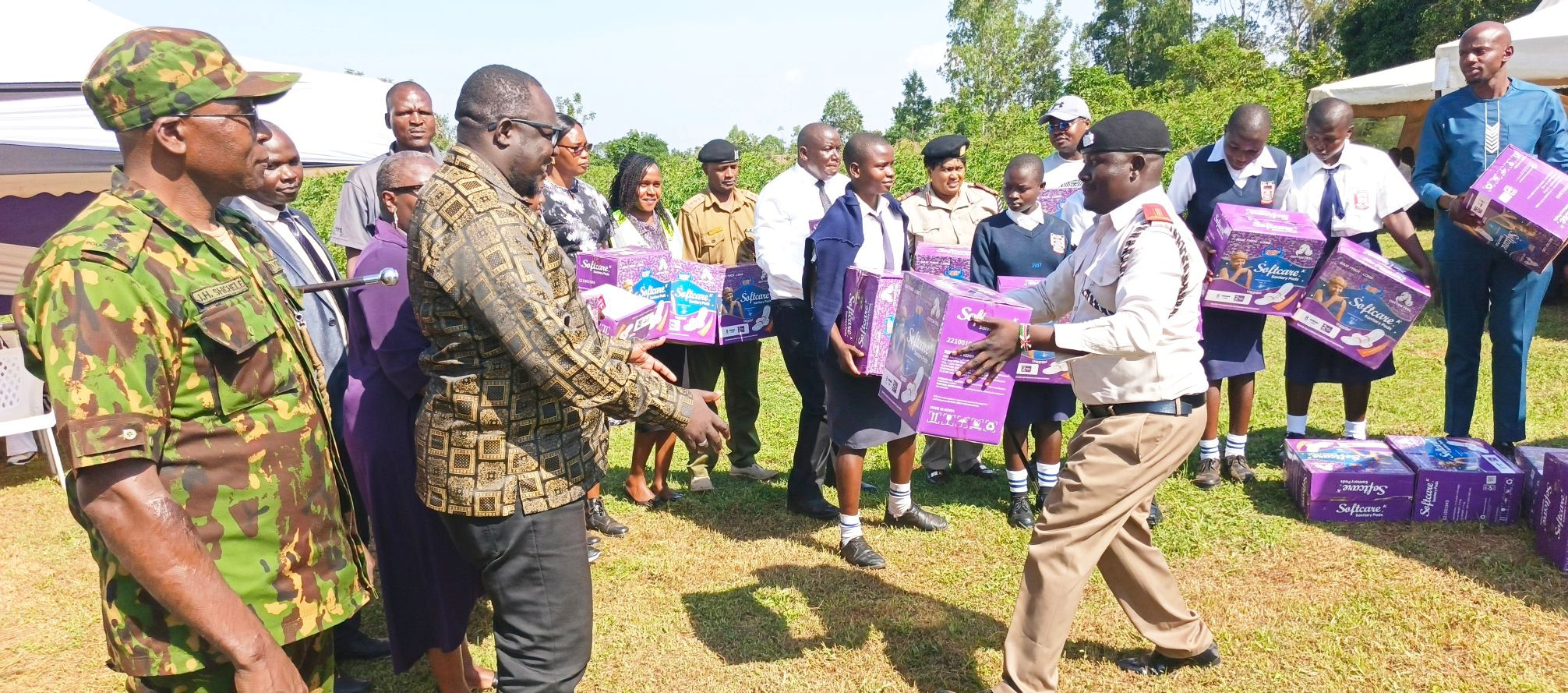
Using his position as a community administrator and working with friends, well-wishers and local stakeholders, he began mobilising sanitary pads for needy learners across schools in Kathieno B.
His mission was simple: ensure that every girl has the confidence to attend school throughout the month.
The initiative started modestly but quickly gained support after community members witnessed its impact.
Teachers reported improved attendance among girls. Parents expressed relief and, most importantly, the girls themselves regained confidence.
“Since the onset of this programme, we have witnessed a significant reduction in cases of girls missing school,” says Rev Francis Ochieng Ogutu, the headteacher of Urengo Secondary School.
Today, sanitary pad distribution has become one of the most visible and impactful community support programmes within the sub-location.
During a recent mentorship session held at IGM Church in Bar Ndege village, girls not only received sanitary pads but were also guided on menstrual hygiene, personal health, self-esteem and the importance of education.
Through sanitary pad donations, school fee support and community empowerment, Mr Ogola is helping vulnerable girls remain in school, pursue their dreams and break the cycle of poverty.
“We want them to understand that menstruation is normal and should never stop them from achieving their dreams,” he says.
Education experts have long warned that menstrual health challenges contribute significantly to absenteeism among adolescent girls.
Research conducted across various African countries shows that many girls miss between three and five school days every month due to lack of menstrual products and inadequate support systems.
The challenges facing girls in Kathieno B mirror a much bigger national problem.
Despite progress in expanding access to education, period poverty remains one of the most overlooked barriers to girls’ learning in Kenya.
According to data cited by menstrual health advocates and development partners, about 65 per cent of Kenyan girls and women lack sustainable access to sanitary products, forcing many to rely on unsafe alternatives such as old cloth and tissue paper.
The consequences are far-reaching. Estimates indicate that more than one million school-going girls in Kenya miss three to four days of school every month because of menstruation and lack of sanitary products.
Education experts warn that these missed lessons accumulate over time. Data from the Ministry of Education shows that a girl who misses four school days every month can lose approximately 39 learning days annually — equivalent to nearly six weeks of schooling.
Prof Erick Otieno Nyambetha, the Vice-Chancellor of Maseno University, regrets that menstruation is becoming a barrier to education as thousands of girls continue to miss classes due to lack of sanitary products.
“When a girl stays home during her period, she loses valuable learning time, falls behind academically and may eventually lose interest in school altogether,” he says.
“Initiatives that provide sanitary pads to vulnerable girls directly address one of the hidden causes of absenteeism in schools.”
Across Sub-Saharan Africa, UNESCO estimates that one in every 10 girls misses school during her menstrual cycle, contributing to poor academic performance, low self-esteem and, in some cases, school dropout.
Beyond education, period poverty exposes girls to health risks, stigma and social exclusion. In some vulnerable communities, girls have reportedly engaged in risky behaviours to obtain money for sanitary products, increasing their vulnerability to exploitation, early pregnancy and school dropout.
According to UNICEF, menstruation is a monthly reality for approximately 9.3 million women and girls of reproductive age in Kenya, underscoring the need for sustained investment in menstrual health and hygiene programmes.
It is against this backdrop that grassroots initiatives such as the sanitary pad programme spearheaded by Mr Ogola are gaining significance.
While the donations may appear small, education stakeholders say they are helping address a challenge that affects thousands of girls across the country.
Teachers in Kathieno B say the availability of sanitary pads is helping reverse this trend.
“Previously, we could almost predict which girls would be absent during certain periods of the month,” says Francis Ochieng Ogutu, the headteacher of Urengo Junior Secondary School.
“Now we are seeing fewer absenteeism cases and greater participation in classroom activities.”
The improvement extends beyond academics.
Girls who once remained withdrawn are becoming more active in school life.
Teachers say they now participate in sports, group discussions and leadership activities without fear or embarrassment.
Without proper menstrual products, many girls experience stress that affects their emotional wellbeing. Some avoid interacting with classmates while others suffer in silence.
The sanitary pad initiative is helping change these experiences in Kathieno B.
“When a girl receives sanitary pads, she receives confidence,” says Millicent Ochuth, a parent.
“She knows she can attend school comfortably and focus on learning.”
Community health workers say the programme is also helping break long-standing taboos surrounding menstruation.
Walter Odongo, the area Community Health Practitioners leader, says discussions around menstrual health have for generations been treated as private or embarrassing.
Parents also appreciate the relief brought by the programme.
Ms Ochuth says the initiative has reduced financial pressure on her household.
“Sometimes you have to choose between different needs because resources are limited,” she says.
“Receiving sanitary pads for our daughters helps us a lot.”
Residents say the initiative demonstrates how community leaders can play an active role in solving practical challenges affecting ordinary families.
While sanitary pad distribution has become one of his most celebrated initiatives, it forms part of a broader effort by Mr Ogola to uplift vulnerable members of the community.
He has also been supporting bright but needy students through school fee assistance, helping them remain in school despite financial hardships.
In addition, he has been working with women previously involved in the production, sale and consumption of illicit brew by linking them to alternative income-generating activities.
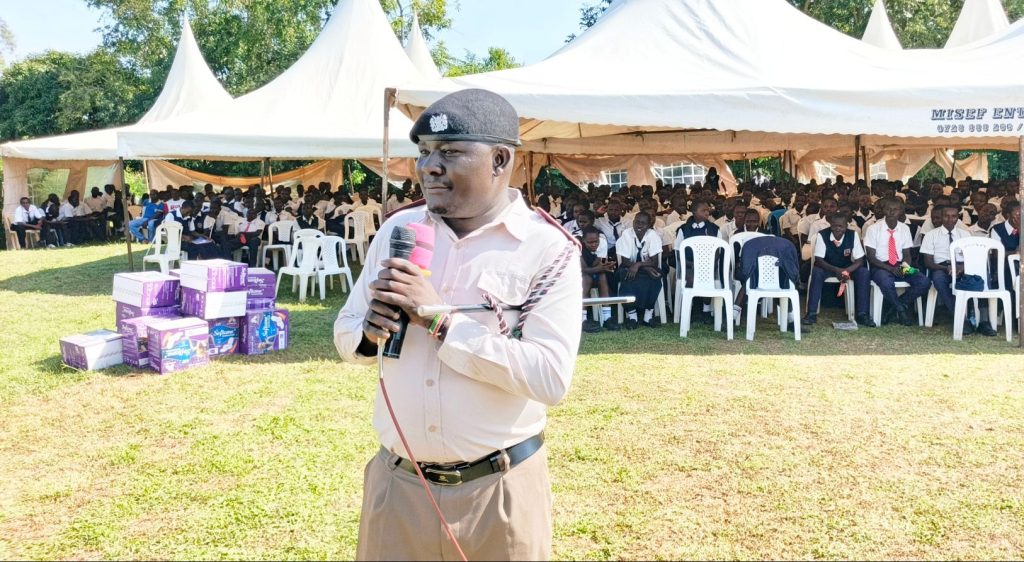
Community members say these interventions are producing visible results.
School enrolment has improved, dropout cases are declining, while crime and substance abuse are reducing and households are becoming more economically stable.
“The transformation we are witnessing is remarkable,” says village elder Francis Sewe.
“When you educate a child and empower a mother, you strengthen the entire community.”Despite the progress achieved in Kathieno B, stakeholders acknowledge that much more remains to be done.
They are calling for increased support from government agencies, development partners, private organisations and well-wishers.
Schools also require stronger menstrual health programmes, improved sanitation facilities and continuous awareness campaigns.
Among the beneficiaries is Mary, who no longer fears the arrival of her monthly period.
Today, she attends lessons consistently, participates confidently in class and dreams of becoming a nurse.
What changed her life was not a scholarship worth millions of shillings or a major government project.
It was something much simpler — a sanitary pad.
For Assistant Chief Joash Ogola, that simple item represents far more than menstrual hygiene.
It represents dignity, opportunity and equality.
And for hundreds of girls in Kathieno B, it represents a future that no longer has to be interrupted by poverty.
As the final school bell rings in Kathieno B, girls walk home carrying books, ambitions and renewed confidence.
For many of them, the sanitary pads they receive may appear to be a small gift. Yet behind each packet lies something far more valuable: uninterrupted education, restored dignity and the promise of a brighter future.
In a country where period poverty continues to keep many girls out of classrooms, the efforts of Assistant Chief Joash Ogola demonstrate that lasting change does not always begin with grand policies or multimillion-shilling programmes.
Sometimes, it begins with one community leader who chooses to act — and a simple sanitary pad that keeps a girl’s dream alive.