
By SHABAN MAKOKHA
March 13, 2026| A silent crisis is unfolding in public schools across Kakamega County, where severe congestion is threatening learning outcomes, child welfare, and teacher morale. New data reveals classrooms hosting more than three times the recommended number of learners, turning the dream of free education into a daily struggle for survival.
The strain is most acute in sub-counties such as Mumias West, Butere, Lurambi, and Matungu, where population growth and economic pressures have driven thousands of families from private academies to public institutions—just as junior secondary enrollment surges under the Competency Based Curriculum.
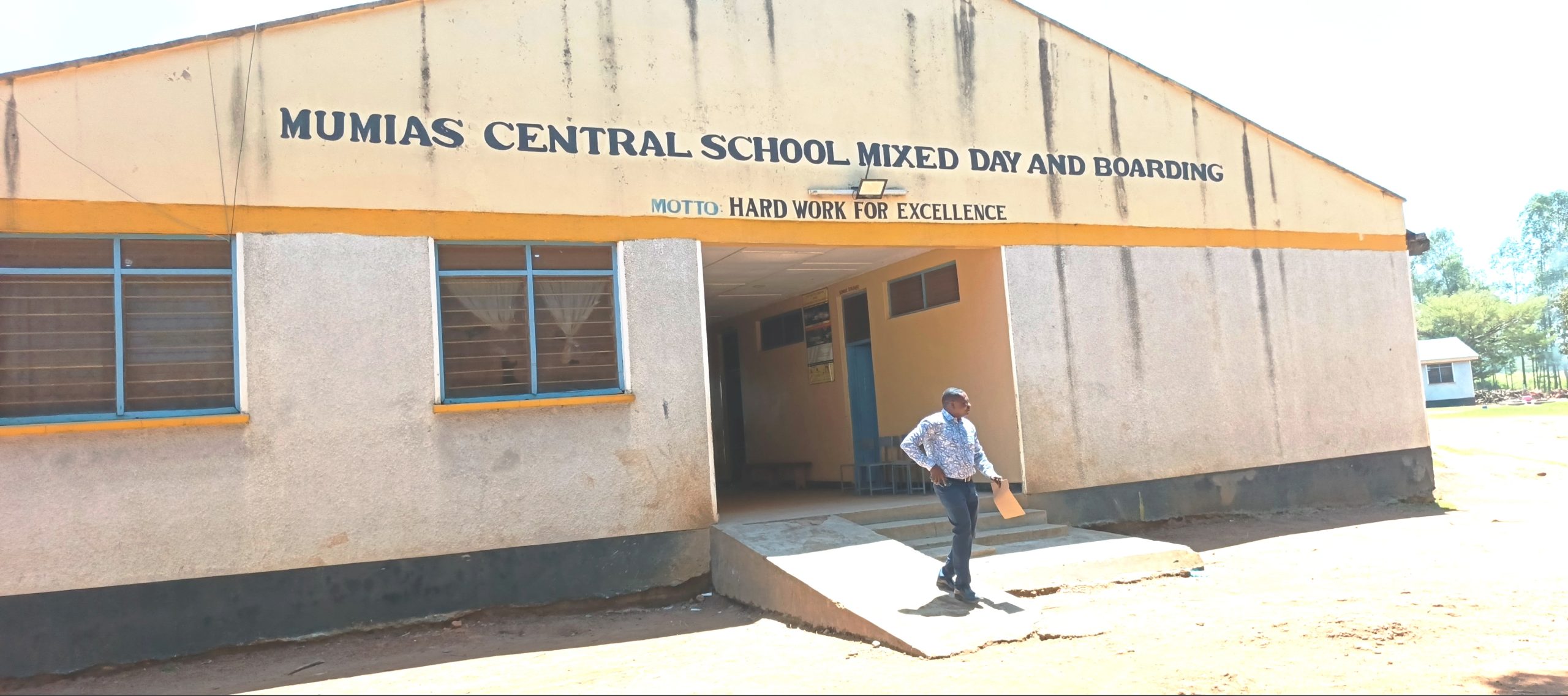
At 6am, the playground of Central Comprehensive School in Mumias is already swarming with children—far too many children. The school bell rings over the crowded compound, echoing the weight of a crisis that grows heavier with every new admission.
Built to accommodate fewer than 2,000 pupils, the school now crams 3,500 learners into its ageing facilities, thanks to the government’s 100 percent transition policy. By the time the first bell fades, more than 90 pupils are squeezing into Grade 8T—a classroom designed for 45. Desks are packed so tightly that learners must climb over them just to reach their seats.
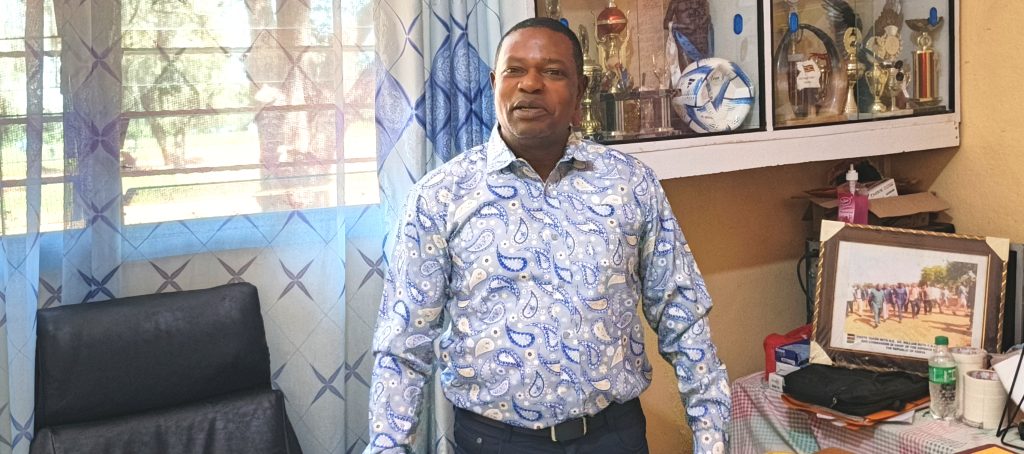
“The situation is taking a toll on both learners and educators,” says Francis Obwamu, the school’s Head of Institution. “Every lesson feels like a test of endurance. Teachers have to shout for the learners to hear. By the time you finish a single lesson, you are exhausted. And many of the students have not understood, but there’s no time to attend to individuals.”
For teachers, burnout has become routine. Junior secondary school instructors report handling 13 to 15 lessons daily, with no room for individualized support. Marking, remedial work, and managing classes bursting at the seams have left many feeling helpless.
“We appreciate free education,” Obwamu adds. “But when 100 children share one teacher, is that truly quality education? Our children deserve better.”
The consequences play out quietly in the faces of the children. Eleven-year-old Simon, who sits at the back of his overcrowded classroom, says he often copies notes incorrectly because he cannot see the board clearly. Musa squints at the whiteboard, repeating sentences wrong for weeks simply because he cannot read what the teacher writes. “I try,” he whispers, “but there are too many heads in front.”
Break time brings no relief. Queues for toilets stretch long—one latrine serves up to 90 pupils in some schools, nearly double the recommended ratio. The playground, meant for a fraction of the current population, teems with more than 3,000 learners.
The school has only two science laboratories, woefully inadequate for the surge of students pursuing STEM subjects under the new curriculum.
Education advocates warn that without urgent action, the gains of free primary and junior secondary education will be undone. Kennedy Echesa, an education consultant, describes overcrowding as a crisis that puts children’s futures at risk.
“Many children want to learn, but there are too many of them. Sometimes they have to wait for others to finish and ask what the teacher wrote,” he says.
Local education office data paints a bleak picture: teacher-pupil ratios average 1:63, with some schools reporting ratios as high as 1:85—far above the UNESCO standard of 1:30.
“We appreciate free education, but the children are being packed like luggage,” Echesa laments. “How do you expect a child to compete in national exams when 100 others are sharing one teacher?”
Parents share the despair. Linet Khayanga, a mother, fears that without swift intervention, education—often hailed as the great equalizer—may become the great divider.
“We want education for our children, but not like this. Children are packed like maize in a sack. How can they compete nationally in such conditions?” she asks.
At St Peter’s Boys High School, enrollment has overstretched boarding facilities. Principal Chrispinus Owino acknowledges that some students are temporarily housed in part of the dining hall, though he notes that a storey building under construction should ease the pressure soon.
County education officers concede the severity of the crisis but cite limited funding and delayed infrastructure grants. One official, speaking on condition of anonymity, admitted: “We are dealing with an infrastructure gap that has outpaced funding. Without urgent investment in classrooms, teachers, furniture, and sanitation facilities, the quality of education will start to decline.”
Obwamu is appealing to the national and county governments, as well as the National Government Constituency Development Fund (NG-CDF), to intervene urgently. He proposes the construction of storey buildings to maximize the school’s exhausted land.
“The demand has outgrown the facilities. We urgently need more classrooms, teachers, and sanitation blocks. Without intervention, learning outcomes will decline,” he warns.
Despite the overwhelming challenges, each child carries a dream. But the space to nurture those dreams is shrinking by the day.
Up Unless the government shifts from over concentration on curative services to preventive health,non of us is safe at all.
Good work seen mr reporter.