
By SHABAN MAKOKHA
March 16, 2026| In classrooms across Kakamega, the signs are subtle but devastating: children too weak to hold a pencil, stomach pains dismissed as normal, and empty desks that tell a story of chronic illness. Health officials have identified the invisible culprit—intestinal worms—and are now launching a massive campaign to remove this silent barrier to education. But this time, they are arming teachers, not just tablets.
In many rural schools across Kakamega County, the warning signs are easy to miss but hard to ignore. Children struggle to stay awake. Others complain of persistent stomach aches. Many simply stop coming to school.
Health officials say intestinal worm infections remain one of the biggest—and most overlooked—barriers preventing thousands of learners from reaching their full potential.
Empowering Teachers, Protecting Learners
To tackle this, the Ministry of Health has intensified teacher training sessions across the county, equipping educators with the knowledge to support school-based deworming programs. The initiative aims to protect vulnerable learners by training teachers in safe drug administration, record-keeping, basic diagnosis, and hygiene promotion.
The effort is part of a broader, countywide mass deworming exercise targeting over four million school-aged children and youth—from ECD centers all the way to universities. College students received their doses a week ago, while primary and ECD learners are scheduled for a one-day drive next Thursday.
Public health experts warn that worm infections—caused by poor sanitation, contaminated soil, and inadequate hygiene—continue to afflict millions of Kenyan children. According to the World Health Organization, over 1.5 billion people globally are infected with soil-transmitted worms, with school-age children among the most vulnerable.
In Kakamega, where many families rely on small-scale farming and schools struggle with sanitation infrastructure, the impact is severe.

The Classroom Impact
“When children are infected with worms, they lose nutrients, become anemic, and their ability to learn drops significantly,” said Dr. Antony Ngaira, Lurambi sub-county public health officer. “Some learners come to school weak and unable to concentrate.”
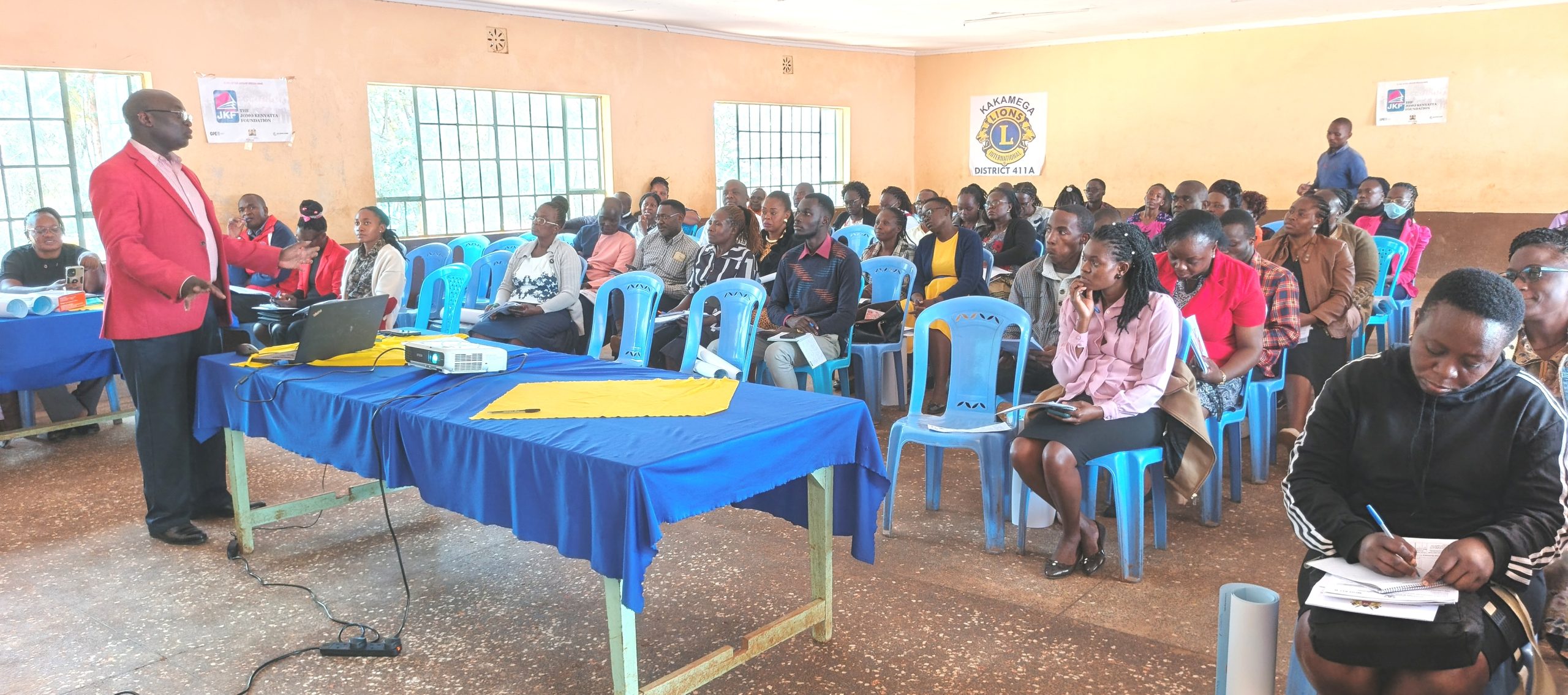
During a training session for teachers from Kakamega Central and Kakamega South at Kakamega Primary School, Dr. Ngaira emphasized the critical role of educators. “We want teachers to feel confident in administering deworming tablets, identifying symptoms, and communicating with parents. They interact with learners daily and understand their needs better than anyone else.”
For many teachers, the training has been transformative.
“We used to think stomach aches were just normal complaints from children,” said Doreen Sore, a teacher from Matende Primary School. “Now we understand that worms could be the hidden reason behind absenteeism and poor performance.”
Proven Results
Education officials say the results are already visible. Peter Sikolia, a TSC official in Kakamega Central—where the program targets 45,120 learners—noted that absenteeism has dropped by 25 percent since deworming initiatives began.
“Empowering teachers with the right knowledge improves uptake, reduces misconceptions, and enhances the overall effectiveness of school deworming campaigns,” he said.
Health expert Dr. Linet Odanga highlighted the wide-ranging impact of infestations: reduced concentration, high appetite, skin infections (mashilingi), stunted growth, and chronic absenteeism. “With empowered teachers, we expect reduced infection rates and improved learner well-being,” she said, assuring parents that the deworming drugs are safe with no expected complications.
A Community Effort
The program extends beyond the classroom, encouraging collaboration between teachers, parents, and community health workers to address the sanitation issues that allow parasites to spread. It will also reach children aged 2 to 15 years who are out of school.
Mr. Gerald Ndombi, Kenya Primary Schools Heads Association chairman in Lurambi, confirmed that teachers are fully authorized to participate and urged parents to support the initiative.
By placing trusted educators at the frontline, health officials hope to break the cycle of infection—ensuring that children in Kakamega grow healthier, stronger, and ready to learn.